


AI
September 1 2026
Virginia, Colorado, and Utah are the U.S. states creating the most jobs from AI adoption, according to a 2026 Floxy study. Virginia leads with over 27% business AI adoption and 228 data center jobs per 100,000 residents; Colorado has the highest overall AI adoption rate at over 30%. A new report by IP address provider Floxy reveals that Virginia is
Corner of Fifth

Virginia, Colorado, and Utah are the U.S. states creating the most jobs from AI adoption, according to a 2026 Floxy study. Virginia leads with over 27% business AI adoption and 228 data center jobs per 100,000 residents; Colorado has the highest overall AI adoption rate at over 30%.
A new report by IP address provider Floxy reveals that Virginia is the top state where artificial intelligence is creating jobs rather than replacing them. The August 2026 study analyzed AI adoption, digital job openings, tech employment, and data center jobs across all 50 states, identifying where AI is expanding economic opportunities.
Which States Have the Highest AI Exposure and Opportunity?
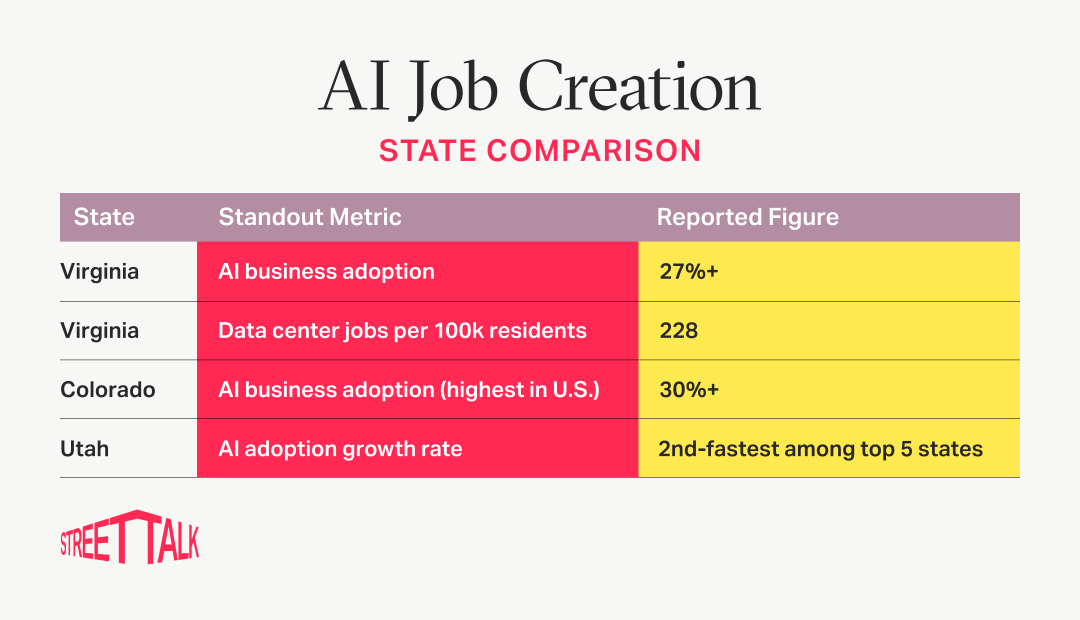
Virginia stands out with over 27% of businesses already using AI and 228 data center jobs per 100,000 residents, placing it in the high exposure, high opportunity quadrant. Colorado follows closely, boasting the highest AI adoption rate in the country at over 30%, while Utah shows the second-fastest adoption growth among the top five states.
The research highlights a clear geographic divide: states with high AI exposure and opportunity are concentrated on the East and West coasts, whereas those with low exposure and opportunity are mostly in the South and Midwest. This disparity underscores the varying levels of AI readiness across the country.
How is AI Creating Jobs Instead of Cutting Them?
The study used two indices to classify states. The AI Exposure Index measured current adoption rates and growth over two years, while the AI Opportunity Index assessed structural capacity for future AI growth, including digital job openings, tech employment share, STEM graduation rates, and data center jobs per capita. States scoring above 50 on both indices were deemed high exposure, high opportunity.
Virginia’s leadership is driven by its proximity to Washington, D.C., and a strong concentration of cloud computing infrastructure. Colorado’s high adoption rate and solid talent pipeline sustain its growth, while Utah’s rapid adoption and high density of data center jobs make it a hub for tech investment.
The findings suggest that in these leading states, AI is acting as a catalyst for job creation, particularly in tech and data-driven sectors. The study offers valuable insights for policymakers and businesses looking to harness AI’s potential for economic growth. Aimen Hallou, chief technology officer at Floxy, said most discussions about AI focus on which jobs will disappear.
“That is the wrong question,” Hallou said. “The right question is which places will adapt. States with strong tech employment and STEM graduation rates are not immune to automation, but they have something that low-opportunity states lack: a workforce that can retrain quickly. When a warehouse worker in Delaware loses a job to AI, there are few tech employers nearby to hire them. When a similar worker in Virginia loses a job, there are data centers and cloud companies across town looking for people with basic digital skills. The geography of opportunity matters more than the number of jobs lost. And that geography is not evenly distributed.”
Related article: Consumers Want AI to Shop with Them, Not for Them
Street Talk is the weekly newsletter for retail and fashion executives who want analysis, not noise. New issues every Thursday. Subscribe today.