

Analysis
March 30 2026
As we step deeper into 2026, the footwear industry is navigating a transition. The market was once defined by predictable seasonal cycles, now it seems to have transformed into a volatile landscape where cutting-edge 3D printing and AI-driven design must contend with the “new normal” of aggressive global tariffs. It’s a high-stakes game where only the stronger brands can survive.
Arthur Zaczkiewicz

As we step deeper into 2026, the footwear industry is navigating a transition. The market was once defined by predictable seasonal cycles, now it seems to have transformed into a volatile landscape where cutting-edge 3D printing and AI-driven design must contend with the “new normal” of aggressive global tariffs.
It’s a high-stakes game where only the stronger brands can survive.
The Technology Leap: Beyond Prototyping
For years, 3D printing was the industry’s “someday” technology — relegated to high-end prototypes or $500 limited editions. In 2026, that “someday” has arrived.
The 3D-printed footwear market is projected to reach $4.2 billion this year, growing at an annual rate of 20%, which is nearly four times the speed of the traditional shoe market, according to 3DPrint.com. Brands are moving away from the “Forecast-Produce-Stock” model and toward a “Sell-Produce-Deliver” cycle.
Key Innovations:
- Mono-materiality: Startups such as Zellerfeld and STARAY are producing shoes printed in a single piece. By eliminating glues and multiple materials, these shoes are 100% recyclable, solving a long-standing sustainability crisis in footwear.
- Variable Density Printing: Using new materials like Roamr’s TPU Air HR, brands can now print a single part with different zones — stiff in the heel for stability and soft in the forefoot for comfort — without adding any extra components.
- AI as the Co-Designer: AI is no longer just for marketing. It’s being used to run millions of simulations on “lattice” structures, creating midsoles that redirect vertical impact into forward energy, as seen in the latest evolutions of Adidas’s 4DFWD technology.
Adidas’s 4DFWD running shoes also happen to look really cool:

The Tariff Tangle: A Margin War
So, while technology pushes the industry forward, geopolitics is pulling on the purse strings. And everyone is feeling the sting. Earlier this year, the industry was rocked by a “tariff whiplash” following a series of Supreme Court rulings and executive actions.
The Footwear Distributors and Retailers of America (FDRA) reports that 99% of shoes sold in the U.S. are imported. As of February 2026, new Section 122 temporary global tariffs of 10% have taken effect, following the strike-down of previous “liberation day” tariffs, according to the Business & Human Rights Resource Centre.
The Real-World Impact:
- Price Hikes: Major players such as Nike and Under Armour have reported hundreds of millions in incremental costs. Nike alone estimated an annualized cost of $1.5 billion due to trade barriers.
- Supply Chain Reshuffling: Brands are frantically rerouting production to countries like Vietnam and Indonesia, or leaning into North American trade pacts (USMCA) to avoid the heaviest hits.
- Margin Compression: Luxury and performance brands are increasingly forced to choose between raising prices for an already value-conscious consumer or eating the costs to maintain market share.
Design Trends: The Death of Quiet Luxury
This was bound to happen. The “clean girl” aesthetic and muted “quiet luxury” of 2024/2025 have officially faded. This season Maximalism is the manifesto of the market. Driven by Gen Z’s $400 billion spending power, footwear has become the focal point of the outfit rather than an afterthought.
Here’s What’s Trending:
- Hyper-Maximalism: Think sculptural heels, sharp angles, metallic finishes, and “clowncore” color palettes.
- The Jelly Comeback: Nostalgic 1990s-style jelly shoes are returning, but with a modern twist — using bio-based, translucent materials that are both eco-friendly and high-fashion.
- Eco-Futurism: A blend of organic textures (cork, mushroom leather, yes, you read that right) with futuristic silhouettes. Consumers are no longer satisfied with “eco” as a label; they want performance parity where sustainable shoes look and feel better than their petroleum-based predecessors.
Category Winners: Running and Recovery
If 2026 has a shoe of the year, it likely belongs to the performance running or recovery categories. These segments are outperforming lifestyle sneakers as consumers prioritize wellness over pure fashion.
The Rise of Recovery:
The so-called recovery shoe has moved from the locker room to the living room. Brands like Kane (with their sugarcane-based Revive) and OOFOS are dominating. These shoes feature raised nodes to improve circulation and massive arch support, catering to a population that spent the last year realizing that “flat” sneakers aren’t great for foot health.
Performance Evolution:
In the running world, the super-shoe technology has trickled down to daily trainers.
- Top Performer: The Asics Novablast 5 and Saucony Endorphin Speed 5 are cited as 2026’s top-tier daily trainers, offering carbon-plate-style energy return at a price point accessible to casual joggers, according to RunRepeat.
- Max Cushioning: The “stack height” (the thickness of the sole) continues to grow. New models like the Mizuno Neo Vista 2 feature stack heights exceeding 45mm, offering “legal” super-foam comfort for the masses.
Summary of the 2026 Market
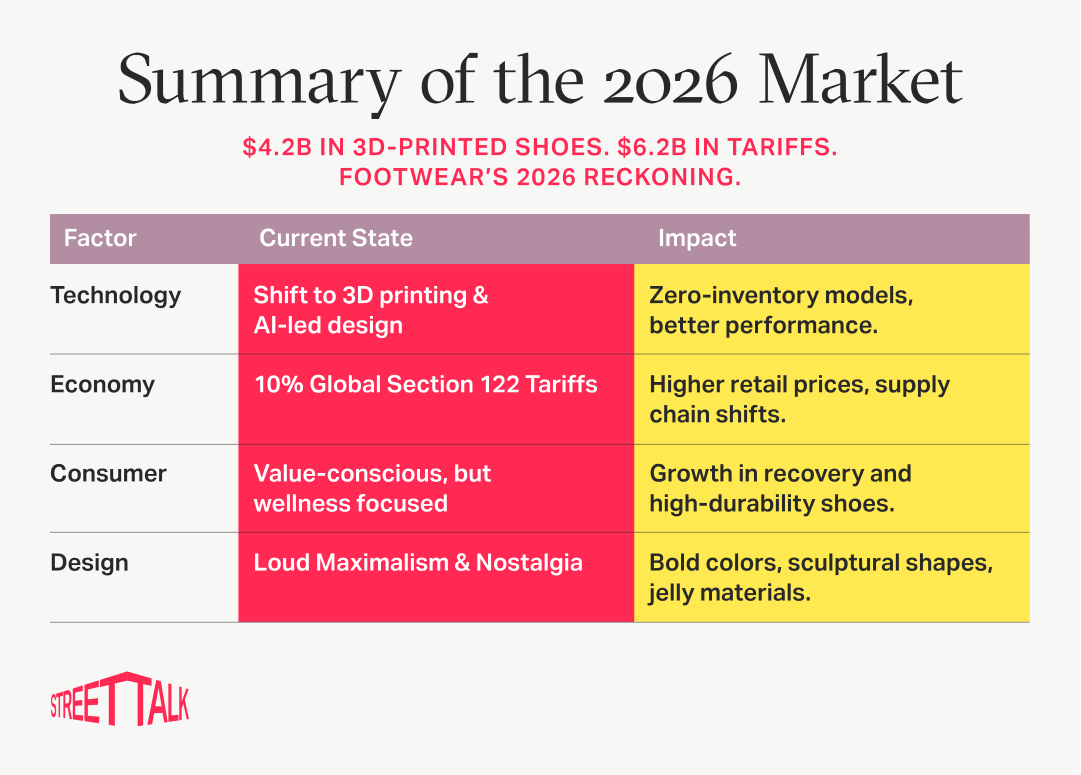
The footwear market of 2026 is a study in contrasts. It is an industry capable of printing a shoe from a digital file in hours, yet it remains tethered to century-old trade disputes. For brands to survive, they must be agile — a word McKinsey & Co. uses to describe the only successful path forward in this challenging new reality.
Related content: Trend Spy: Retail Outlook 2026
Sign up for the Street Talk newsletter: Retail Intelligence for C-Suite Leaders.