


Service
May 5 2026
A 2025 survey by resume.io finds that nearly 40% of professionals accept job offers without negotiating their compensation — with anxiety cited as the primary reason. The gap is widest among Gen Z workers, who are three times more likely than Gen X peers to have skipped negotiation in the past six months. Career experts recommend rigorous market research, a
Arthur Zaczkiewicz

A 2025 survey by resume.io finds that nearly 40% of professionals accept job offers without negotiating their compensation — with anxiety cited as the primary reason. The gap is widest among Gen Z workers, who are three times more likely than Gen X peers to have skipped negotiation in the past six months. Career experts recommend rigorous market research, a full-package mindset beyond base salary, and framing the conversation around quantifiable value delivered.
In an increasingly competitive job market, the ability to advocate for one’s worth is becoming as critical as the job skills themselves. However, a new survey from resume.io suggests that a significant portion of the workforce remains paralyzed by the prospect of salary negotiation.
According to the data, nearly 40% of professionals have accepted a job offer without negotiating their compensation package, citing anxiety as the primary barrier. The trend shows no signs of slowing, with roughly 8% of respondents admitting they bypassed negotiations within the last six months alone.
Why do women and Gen Z workers feel less confident negotiating pay?
The findings reveal a confidence gap that varies across both gender and generational lines. Women are notably more likely than men to report that they have never had the opportunity to negotiate, while men tend to engage in these discussions more frequently.
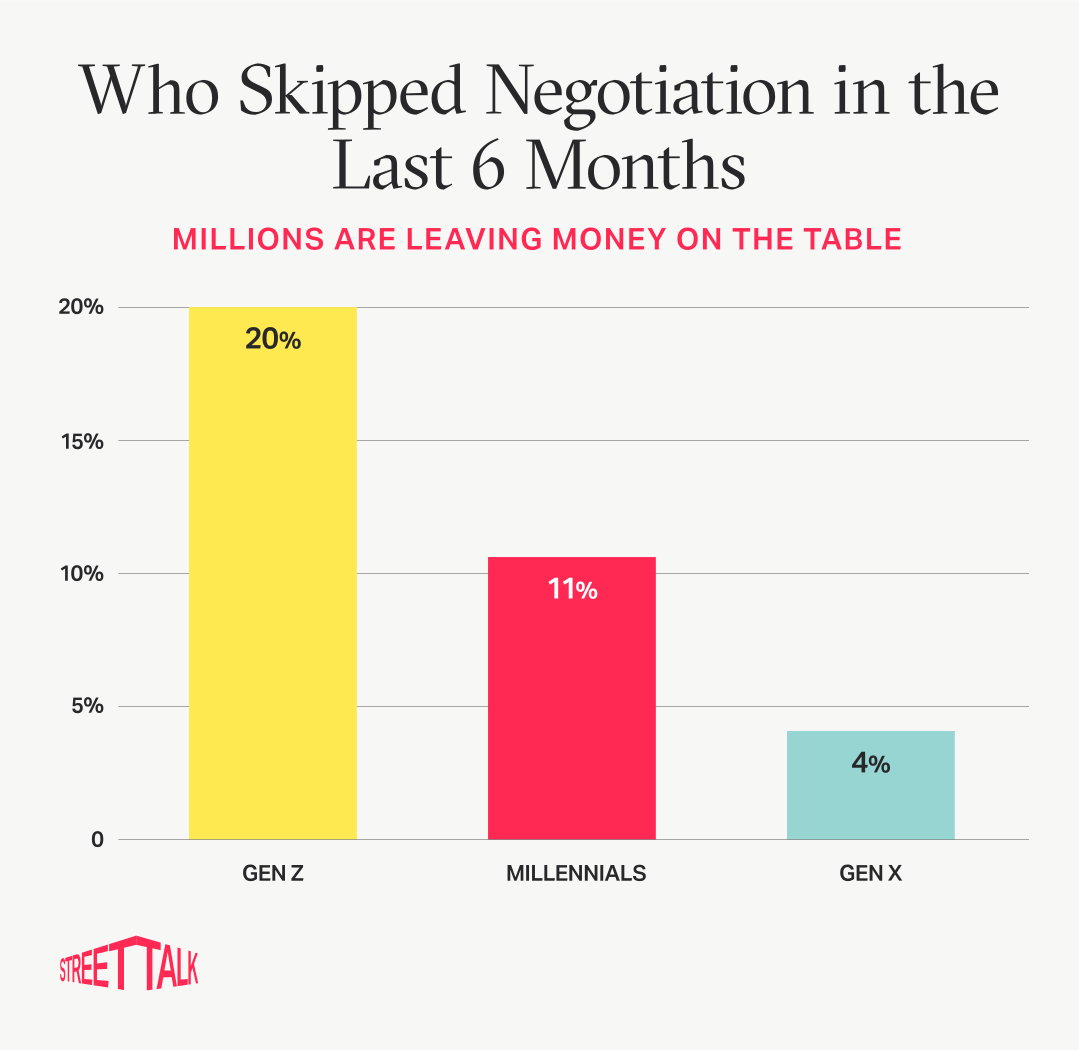
Generationally, the pressure is most acute among younger workers. Nearly 20% of Gen Z polled said they accepted a job without negotiating in the past six months. This compares to 11% of Millennials and 4% of Gen X who did the same. This disparity suggests that while younger workers are entering a transparent era of work, the confidence to navigate financial discussions often only comes with years of experience.
Beyond individual hesitation, the survey points toward systemic issues in the hiring process. Over 17% of professionals polled said they were never even given the chance to negotiate, raising questions about employer transparency and the rigidity of modern hiring practices. To combat this, career experts emphasize that preparation is the most effective antidote to negotiation-induced stress.
What’s the Most Effective Way to Negotiate a Job Offer?
Amanda Augustine, a resident career expert for resume.io and a certified professional career coach, said many professionals mistakenly believe a salary offer is a final decree rather than a starting point. She suggests that the foundation of a successful negotiation begins with rigorous market research. By utilizing data from sites such as Glassdoor or PayScale, candidates can enter discussions with a realistic range based on their specific industry and location. Augustine advises candidates to look beyond base pay, considering the “full package” including signing bonuses, flexible hours, or additional paid time off if the salary ceiling has been reached.
The authors of the report said a compelling case for higher pay is built on tangible metrics rather than vague promises. Rather than simply stating they improved productivity, candidates should offer specific figures, such as streamlining a process to boost output by a specific percentage over a year. Using leverage strategically (such as mentioning competing offers or market value), can also strengthen a candidate’s position without coming across as confrontational.
Ultimately, maintaining a professional and collaborative tone is essential for a win-win outcome, the report noted. Augustine said advocating for fair compensation is not a sign of being difficult, but a professional standard that sets the tone for a long-term career trajectory. By framing the conversation around the specific value and impact an individual brings to an organization, professionals can transform a potentially uncomfortable conversation into a successful career milestone.
“@context”: “https://schema.org”, “@type”: “Article”, “headline”: “Why Are Millions of Professionals Still Afraid to Negotiate Their Salary?”, “description”: “Salary negotiation remains one of the most under-utilized tools in professional advancement. Here is why millions still avoid it — and what the research says about how to change that.”, “datePublished”: “2026-05-05”, “dateModified”: “2026-05-05”, “author”: { “@type”: “Person”, “name”: “Arthur Zaczkiewicz”, “url”: “https://corneroffifth.studio/about/” }, “publisher”: { “@type”: “Organization”, “name”: “Street Talk”, “url”: “https://corneroffifth.studio”, “logo”: { “@type”: “ImageObject”, “url”: “https://corneroffifth.studio/wp-content/uploads/2026/02/Street-Talk-Logo-300×120.png” } }, “mainEntityOfPage”: { “@type”: “WebPage”, “@id”: “https://corneroffifth.studio/salary-negotiation-tips/” }, “keywords”: “salary negotiation tips, how to negotiate salary, professional pay gap, retail salary negotiation, fashion industry salaries”, “about”: { “@type”: “Thing”, “name”: “Professional Development and Salary Negotiation” } }Related article: Workers to Foot the Bill for Corporate AI: 54% of U.S. Companies Cutting Pay to Fund Tech Investments
Photo by charlesdeluvio
The Street Talk newsletter delivers the sharpest fashion, beauty, and retail analysis every Thursday — straight from Arthur Zaczkiewicz, former Executive Editor at WWD. Subscribe today.