

Podcast
August 3 2026

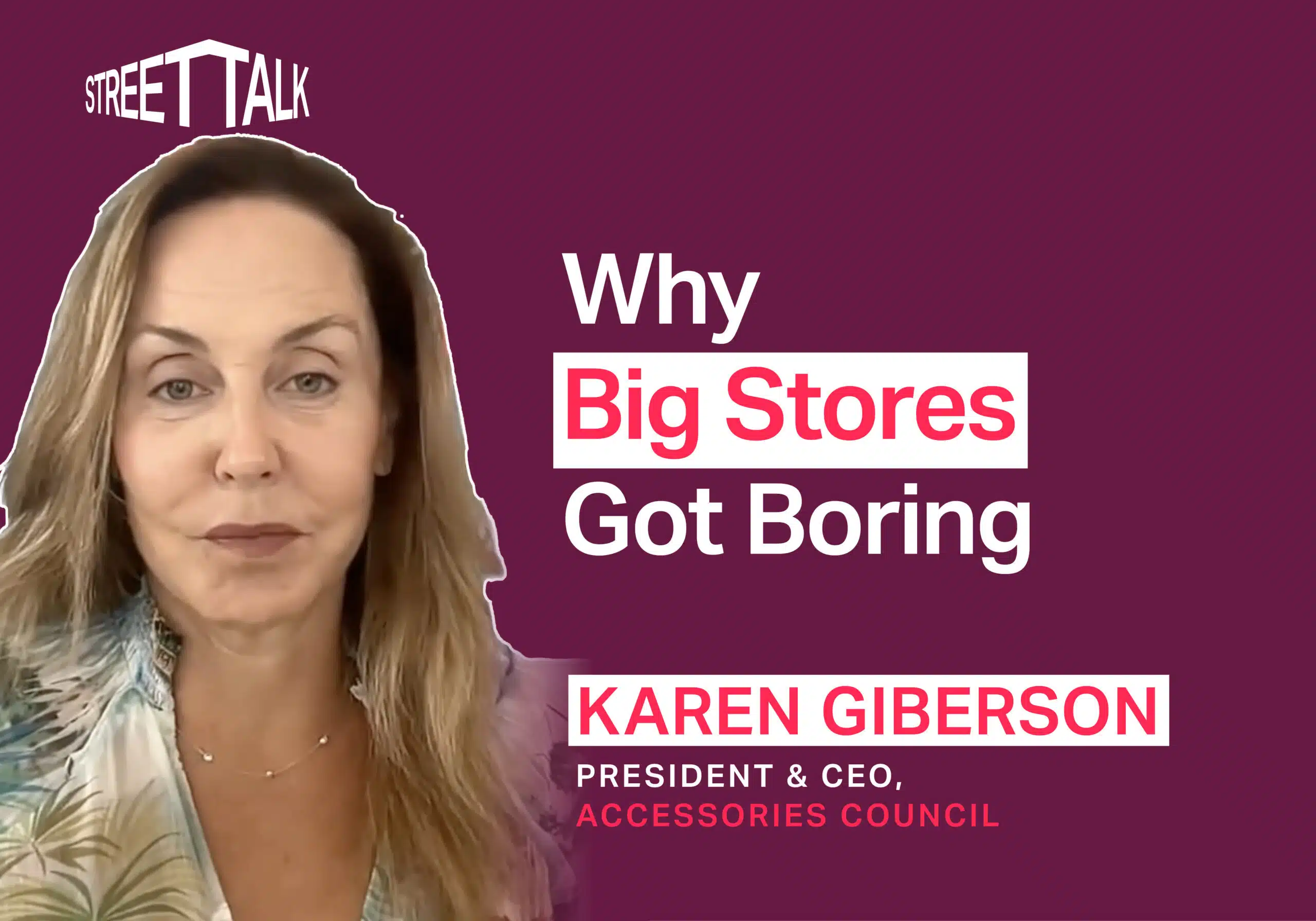
Karen Giberson, President and CEO of the Accessories Council, explains why independent and specialty retailers are gaining share from department stores as accessories remain the industry’s most reliable impulse-purchase category. She connects tariff pressure, California sustainability law, and a growing luxury resale market to how accessory brands are managing margin and sourcing in 2026. Half of independent retailers in the
Cass Spencer

Karen Giberson, President and CEO of the Accessories Council, explains why independent and specialty retailers are gaining share from department stores as accessories remain the industry’s most reliable impulse-purchase category. She connects tariff pressure, California sustainability law, and a growing luxury resale market to how accessory brands are managing margin and sourcing in 2026.
Half of independent retailers in the US — and three-quarters in the UK — are growing, not shrinking. According to Karen Giberson, President and CEO of the Accessories Council, that’s not a fluke of the moment. It’s what happens when department stores trade discovery for planograms, and specialty stores step into the gap with something a big box can’t replicate: surprise.
The Headwinds Facing Accessories Past and Future
Accessories sit at the center of that shift. Jewelry, eyewear, handbags, scarves — categories that live on impulse, not intent — are exactly what a curated main floor needs to pull a customer in. Giberson has watched the category absorb two rounds of tariff shocks (handbags were hit first, years before the rest of fashion caught up) and now a fresh wave of California producer-responsibility law that forces brands to fund a product’s afterlife before they’ve sold a single unit.
Consumer behavior is shifting too. As department-store staples get squeezed by inflation and tightening discretionary spend, Giberson is seeing dollars move from logo handbags into fine jewelry — pieces bought as much for resale value as for wear. The luxury resale market she describes, approaching $30 billion, isn’t a side hustle anymore; it’s underwriting the original purchase decision.
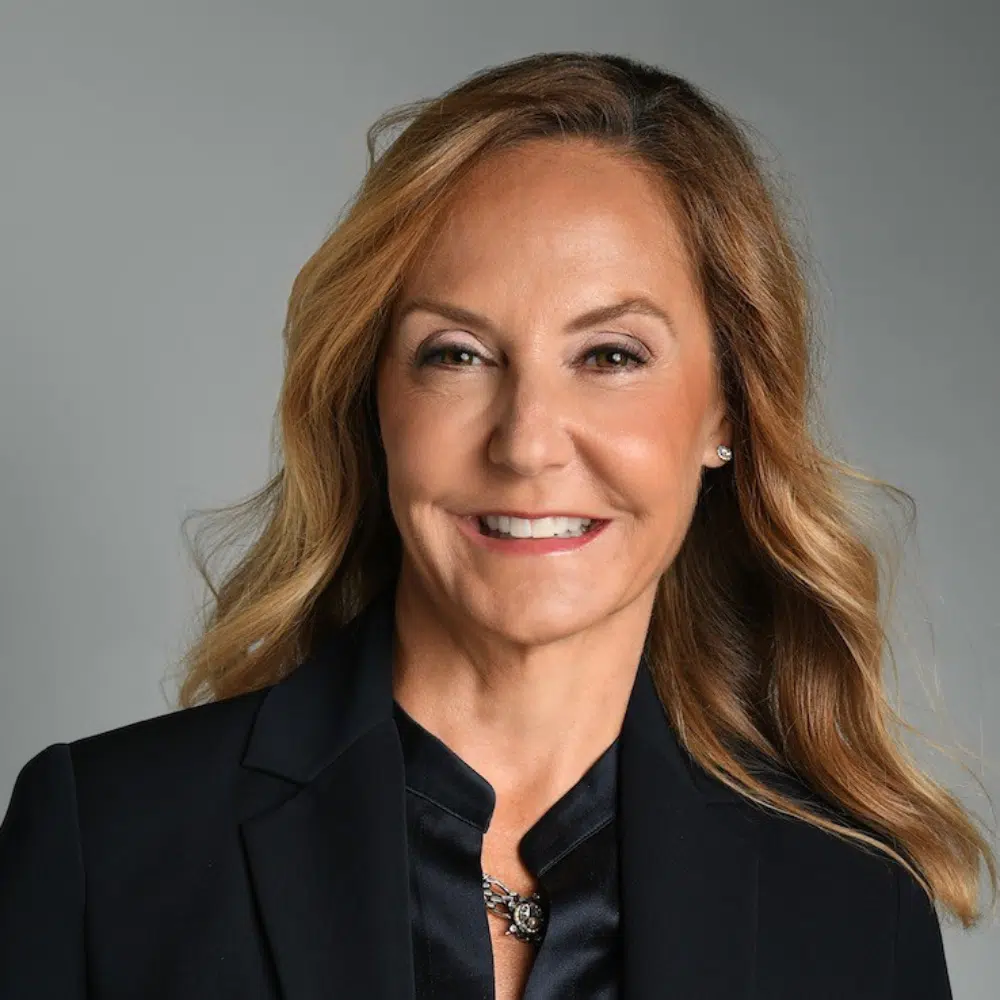
Giberson has run the 300-plus-member Accessories Council for years, and she’s candid about where the category is exposed and where it’s genuinely built to last. This conversation with Arthur Zaczkiewicz gets into all of it — tariffs, materials, resale, and what it actually takes for an emerging designer to break into a category built on trust.
Read the full transcript
Arthur Zaczkiewicz: Hello, I’m Arthur Zaczkiewicz and welcome to Street Talk. This is where we invite industry leaders and executives to discuss trends and share insights about fashion, apparel, retail technology, sustainability and much more. Today we’re going to be talking about accessories, and we welcome Karen Giberson, who’s the President and CEO of the Accessories Council. Karen, welcome.
Karen Giberson: Thank you for having me.
Arthur Zaczkiewicz: Before we hit the record button, Karen and I were discussing some research I found really interesting from Faire, the wholesale platform. They’ve been collecting data for a decade now, and they decided to crunch it into a report and try to make some sense of the trends. What I found interesting was that about fifty percent of retailers in the US are independent retailers — in the UK, that’s seventy-five percent. And the report’s researchers said it keeps growing: independent retailers are growing despite tariffs, inflation, higher operating costs, and labor issues. It’s a market that’s taking advantage of big chain stores closing. The other interesting thing is that the areas for growth were smaller towns, not major cities. I found that fascinating. So, Karen, what are your thoughts on that?
Karen Giberson: Not surprised at all. We watched department stores consolidate — they consolidated their buying lines, they stopped buying so much regionally — and I think the net result is that it got a little boring. So the specialty store really has an opportunity to do something that’s unique to the area, customized, with vendors that surprise and delight when you walk in. It’s harder for a big store to do that because of all the setup and process that’s required, but the opportunity for a specialty store to have something differentiated is massive, and clearly they’re taking advantage of it — which would speak to the success.
Arthur Zaczkiewicz: Explain that. If you’ve read anything about retail history, that’s how department stores cut their teeth in the first place — by having a sense of discovery, trunk shows, things you didn’t know were going to be there when you got there. Now it’s all based on planograms, and it’s just not as exciting, I think.
Karen Giberson: I think it lost it. And I do think it’s coming back. I see retailers making an effort — whether that’s Nordstrom trying to do a special shop, or Macy’s reinventing what their main floor is. Bloomingdale’s seems to have really put some effort into it too. Hopefully they’ll keep making those adaptations. But the specialty store has a faster track to making decisions and bringing product in than a big store does.
Arthur Zaczkiewicz: The other data point they found is that independent retailers are adding more physical space but making less online investment, which I think is interesting because we’ve been talking about this on the show for a while — people want the experience of going into a physical store, experiencing that brand, seeing things that are new and fresh, and interacting with people and experts. So that’s good news.
Karen Giberson: It’s really true for the accessories category, because most accessory categories are impulse buys. You don’t wake up in the morning and think, “I’m going to go buy a new pair of earrings.” You walk into a store and see those earrings and think, “I need those earrings.” I think that goes for a lot of the categories we work in — certainly there are special occasions where you plan a purchase, but the more people that are in the stores, the better it is for jewelry, scarves, hats, gloves, and all the things that go with the apparel.
Arthur Zaczkiewicz: Tell us about the Accessories Council — what’s its mission, what do you do there, and who does it serve?
Karen Giberson: The Council was founded over thirty years ago by the industry, at a point in time when runway fashion was extremely minimal — think Calvin Klein sending models out without handbags, optical, sunglasses, hats, or gloves. It was very stark. So a number of manufacturers got together and said, “If we’re not going to get promoted on the runways, what might we do to promote ourselves?” Our mission has always been to increase consumer awareness — which is a fuzzy way of saying, let’s help our brands sell more product, whatever it is. Companies join as a not-for-profit 501(c)(6), and we have over 300 members. The mission hasn’t changed from the beginning — we just do a lot more now, and we have many more tools than we used to. But it’s all still done through that original lens: is this going to help our members grow?
Arthur Zaczkiewicz: You’ve also been an advocate for the industry on the policy front. With everything happening with tariffs — every day there’s something new — how is that impacting the industry? How is it affecting decision-making, merchandise planning, and logistics?
Karen Giberson: It’s so challenging. My heart breaks for the companies trying to plan and price their goods. The handbag category got hit really early — in the first administration, when tariffs came out, handbags weren’t in a very early group of tariffs for some reason I can’t explain. So we had to get involved before other fashion categories did, because we had such a large group of brands sourcing from China at that point. I became a fast student — at the time we had a lobby group, and I testified in front of Congress. We were deeply entrenched early on. This time around there’s less you can do — there’s no real appeal method. Thankfully the IEEPA tariffs and the Section 301s were overturned. The ones announced yesterday, I haven’t had enough time to dig into whether they’ll also be deemed illegal — using forced labor as a justification for such a wide swath of tariffs across so many countries seems shaky, but I’m not the legal expert. Our brands need to plan as if the tariffs are permanent, and if they’re overturned, they’ll be refunded — but it absolutely impacts cash flow and pricing. It’s impossible not to.
Arthur Zaczkiewicz: Just for our listeners — we’re recording this on July 24th. Yesterday the first round of tariffs expired, and the administration put new tariffs in place, and everyone’s trying to sort through what that means. What are some of the other challenges you think your members are facing?
Karen Giberson: Material-use issues, California sustainability laws — California is always a lot of fun for our industry. Some of the changing regulations there will really force sustainability, forcing brands into prepaying for the afterlife of their product. A lot of our companies had to register this month if they’re selling into California. We try, as much as we can, to bring in a close circle of experts around us in every category — we’re not experts ourselves — so we can be proactive when possible and react with sound decisions and advice when we didn’t see something coming.
Arthur Zaczkiewicz: Over the past few years, a lot of brands have shifted from heavy wholesale reliance to direct-to-consumer, and now we seem to be backing into trying to balance both. How are you seeing leading accessory brands successfully negotiate margins and floor space with department stores and specialty retailers?
Karen Giberson: Thankfully, accessories have traditionally always been part of a department store’s main floor. Some of that’s impulse, some of it is that those are purchases the consumer looks for and comes back for, but it’s also just a great way to have the brand up front — whether that’s an organically started brand in the category or a licensed brand. It brings an amazing presence to the main floor of a store, and it’s an important part of the mix and the allure.
Arthur Zaczkiewicz: We’ve touched on this before, but accessories are often seen as an entry point into luxury — what we call the aspirational luxury shopper. But the economy is shifting, with people living with ongoing inflation and higher prices. Do you see more of a value-driven mindset now? How is the category managing that — is it impacting price points?
Karen Giberson: I was speaking with one of our members yesterday, who’s with a big public company, and they started their annual report with a chart showing the cost of gas against traffic in their stores — the higher the gas price, the lower the traffic. So for a certain budget-conscious customer, it’s absolutely impacted her ability to have discretionary spend, and it’s impacted business. For other customers, we still see people making luxury purchases and commitments. I’m seeing a bit of a category shift over the last year or so — for a while it was designer, very high-end handbags, but as those prices crept up, we’re seeing a shift into fine jewelry. If I’m going to drop a thousand dollars, people think, I should buy something — maybe gold — that will have a higher value later on.
Arthur Zaczkiewicz: So it’s like luxury products are becoming an investment for the consumer.
Karen Giberson: If you buy a handbag and treat it well, you’ll have it forever — or you resell it. The resale market works very well in certain categories. So they’re investment pieces, and if you’re watching your money and need to justify a purchase, it’s: am I going to buy an outfit that’s the trend of the moment, or do I want to buy a staple piece I’ll have for years?
Arthur Zaczkiewicz: Speaking of the resale market — I could be wrong, but I think it’s approaching thirty billion dollars now, and a lot of brands have started their own resale platforms. Do you see that being sustained in the future? Is it not going away? Is it viable? Is that what consumers want?
Karen Giberson: It’s funny — I was thinking about the start of resale. Years ago, maybe fifteen or twenty years back, there was a company called Bag Borrow or Steal, all handbags. That was really the first one, and I think at the time it was a great idea, maybe a little ahead of its time — buying something used was still a little taboo. Not anymore. Now the savvy customer who wants something is looking across all channels to figure out how she can get what she wants — that could be a resale site, an auction site — and she’s happy and comfortable buying reused product head to toe. I also think it helps inform new purchases — if I’m thinking about buying a handbag, I know I can use it for a while and then resell it and make some money later.
Arthur Zaczkiewicz: Let’s go back to the Council — you have three hundred member companies. What categories are we talking about? You mentioned handbags, jewelry, eyewear — what else?
Karen Giberson: Head to toe, except for clothes: footwear, jewelry, optical, sunglasses, hats, gloves, scarves. We even have a couple of members in fragrance. It doesn’t really matter the category or the price point — sometimes we do things very specific to a category, like fine jewelry or optical and sun, but oftentimes we mix it up and mix up the price points too, because we assemble our events the way a customer dresses.
Arthur Zaczkiewicz: There’s been a lot of buzz around new materials and technologies — lab-grown gems, for example, and mushroom leather. Are these here to stay, or are they just flashy and interesting for the consumer before we move back to more traditional materials?
Karen Giberson: There are a number of very smart people looking at innovative, alternative materials that provide a more sustainable product. At the same time, I think there’s a sensible balance with traditional materials — leather, exotics, even fur to some degree — that you purchase and that will last a lifetime if you take care of them; they’re not disposable. And if something lasts a very long time, is that not sustainable too? I also think some of the flashier materials — while there are some amazing ones, and I’m seeing new things all the time — it’s not always evident whether something is actually clean or green. It might be made from mushroom leather, but backed with a PVC coating for strength. Choosing something vegan is cool, but that doesn’t necessarily mean it’s better for the earth. You have to look at every material — from traditional, real, and luxury materials all the way to the innovations — and ask questions. I think it’s a journey; we’re learning all the time.
Arthur Zaczkiewicz: Luxury has been on my mind, because of a lot of reports I’ve been reading about how the consumer is changing. In your opinion, what do shoppers expect in a luxury shopping experience? What are the expectations?
Karen Giberson: I expect to have an amazing experience during the shopping — a product that’s terrific quality or has a very authentic story — but I also want the service after the fact. If I buy something and it breaks, or I have a problem, I want to know I can go back and have it fixed or cleaned. I want to feel valued all the way through the process of owning that product.
Arthur Zaczkiewicz: Accessories are, I think, particularly appealing to emerging designers who want to break in with a new idea — the scope of accessories and the different career paths varies quite a bit. What does it take for an emerging designer to succeed today? What do they need to do?
Karen Giberson: First of all, it’s a lot of work — you’re bombarded with, what should I do online, what should I do in social, what should I do at retail. So I think it’s picking your spots and excelling where you feel you can. It’s about building a brand with a foundation and determining what categories your customer gives you permission to extend into — logical extensions. There are certain categories that are easier to get into than others, because of their unique nature. It would be a lot harder to start a line of optical frames, because it’s a medical device with real considerations, or even footwear, where you have sizing and need to make sure your fit is on target — a bigger investment in inventory. Jewelry typically has lower minimums, so there are a lot easier ways to get into that category. It’s a thoughtful process about what makes sense, and then finding the right sourcing and the right partners to help you.
Arthur Zaczkiewicz: We’re almost out of time, but last question — what does fashion accessories mean to you, both on a personal level and a professional level?
Karen Giberson: Personally — we recently consolidated. We had an apartment and we moved everything into a house, so I had to go through my closet, and I found jewelry I’d had since I was a teenager. I pulled out one bracelet in particular and thought, “You know what, I’m going to wear that — it’s really cool.” For me, these are things I collect — you don’t get rid of them. They’re a closet full of memories and things I value and treasure, and my daughter will raid my closet sometimes and keep them for years. Professionally, I’ve worked in this industry, either directly or on the side, my entire career, and it’s just some of the nicest, smartest, most creative people — that’s why I stay.
Arthur Zaczkiewicz: Well, we’re out of time, but Karen, we’ll have to get you back again — maybe as we get closer to the holidays, and we could talk about trends or something interesting like that. Thank you again, and thanks for tuning in. See you next time.
Karen Giberson: Happy to. Thanks, Arthur.
Related episode: Ep. #017: ‘Confidence Is the Sexiest Thing a Woman Can Wear’ — Dora Lau, Dora L. International
The Street Talk newsletter delivers the sharpest fashion, beauty, and retail analysis every Thursday — straight from Arthur Zaczkiewicz, former Executive Editor at WWD. Subscribe today.