


artificial intelligence
May 13 2026
Agentic AI is the autonomous tier of artificial intelligence — capable of executing multi-step tasks across systems without human intervention. Unlike predictive AI, which forecasts outcomes, or generative AI, which produces content, agentic AI in retail acts: initiating supplier conversations, updating inventory, and notifying customers in sequence. For retail C-suites, this distinction matters because agentic AI doesn’t augment existing teams
Arthur Zaczkiewicz

Agentic AI is the autonomous tier of artificial intelligence — capable of executing multi-step tasks across systems without human intervention. Unlike predictive AI, which forecasts outcomes, or generative AI, which produces content, agentic AI in retail acts: initiating supplier conversations, updating inventory, and notifying customers in sequence. For retail C-suites, this distinction matters because agentic AI doesn’t augment existing teams — it operates alongside them as a specialized digital employee.
The retail industry is experiencing a structural change that it driven by the rapid diversification and deployment of artificial intelligence.
While the industry once relied on basic automation, the retailers and brands must now distinguish between several distinct archetypes of intelligence: predictive, generative and the emerging agentic AI. Each serves a very specific pillar of the value chain, moving the needle from simply understanding past purchases to actively shaping the future of consumer behavior itself.
What Does Predictive AI Do in a Modern Retail Operation?
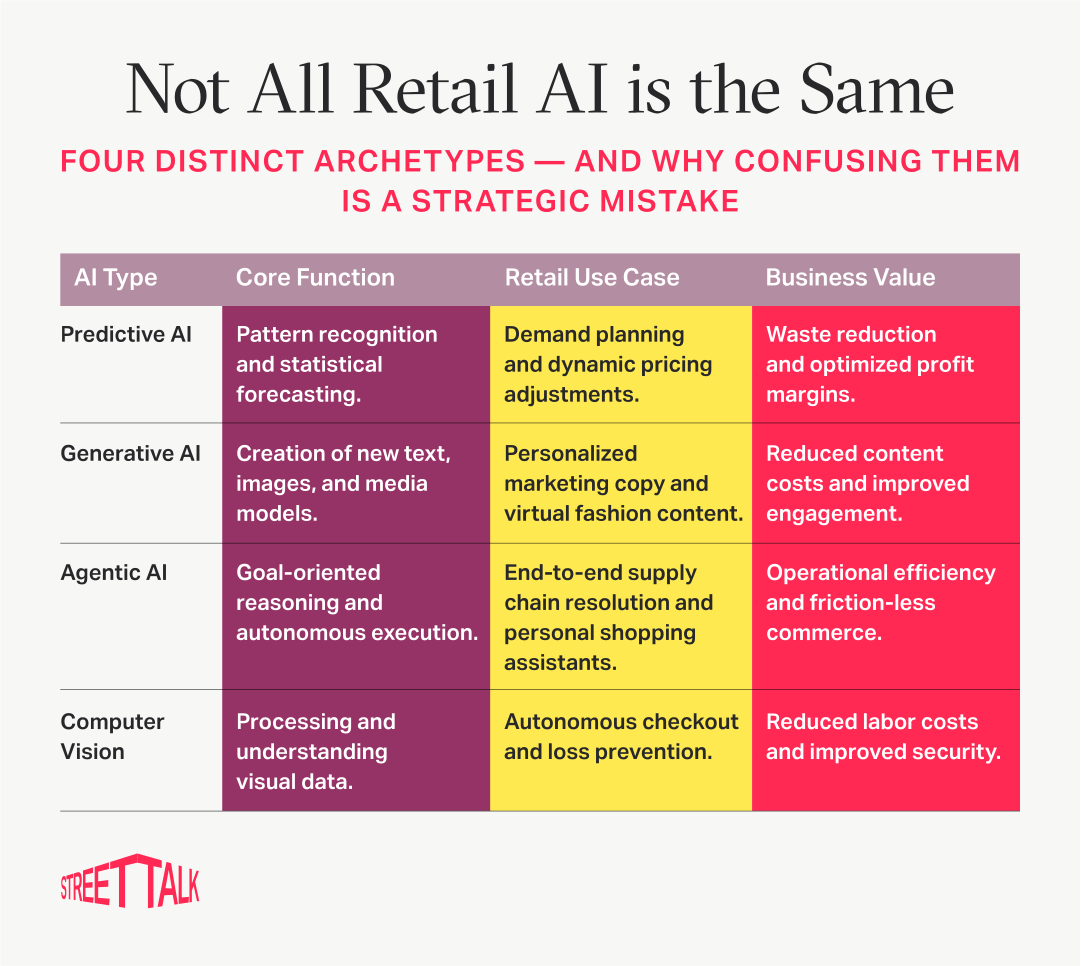
Predictive AI remains the foundational tool for modern inventory management and demand forecasting. By utilizing historical data, seasonal trends, and economic indicators, this form of machine learning allows retailers to anticipate what will happen next. In the current market, it is the primary engine behind “just-in-time” supply chains, helping brands minimize overstock and maximize full-price sales.
Beyond the warehouse, predictive models analyze individual customer clickstreams to determine the probability of a purchase, enabling highly targeted marketing spend that focuses on users with the highest lifetime value.

How Is Generative AI Changing Retail Content And Customer Experience?
Generative AI has shifted the focus from analysis to creation. Unlike its predictive predecessor, which identifies patterns in existing data, generative AI uses those patterns to produce entirely new content.
In the retail sector, this technology is reimagining digital storefronts through the creation of hyper-realistic product descriptions, localized marketing copy and synthetic imagery for virtual try-ons.
Retailers and brands are utilizing Large Language Models (LLMs) to power more natural customer service interfaces that can handle nuanced inquiries, moving away from the rigid scripts of traditional chatbots toward more fluid, conversational assistance. And shoppers love it.
What Makes Agentic AI Different — And Why Does It Matter For Retail C-Suites?
As we’ve discussed before, the most recent and perhaps most disruptive evolution is agentic AI. While generative AI can write a response and predictive AI can suggest a product, Agentic AI possesses the agency to execute multi-step tasks autonomously. An AI agent does not just recommend a replacement for an out-of-stock item, it can initiate a conversation with a supplier, negotiate a shipping window, update the inventory database and notify the customer of the delay — all without human intervention.
This represents a complete shift from AI as a tool to AI as a specialized digital employee capable of reasoning through complex workflows to achieve a specific goal. Here’s a breakdown on how each is deployed:
How Do Leading Retailers Integrate All Three Forms Of Ai Into One System?
The most successful retailers are not choosing one form of AI over another but are instead creating an integrated ecosystem where these technologies interact. A predictive model might identify a looming stockout in a specific region, which triggers an agentic AI to scout for alternative vendors. Simultaneously, a generative AI can draft a targeted email to customers in that region offering a discount on a similar, available product.
This orchestration represents the “autonomous retail” future, where the speed of business is limited only by processing power rather than human bandwidth.
Sources and References:
- Gartner Research: Top Strategic Technology Trends for Retail (2024)
- McKinsey & Company: The Economic Potential of Generative AI in Retail
- Harvard Business Review: From Generative AI to Agentic AI
- MIT Sloan Management Review: Predictive Analytics in the Modern Supply Chain
- National Retail Federation (NRF): The Impact of AI on the Consumer Journey
Related articles: Adobe Builds the Operating Layer for a Zero-Click Commerce Era
The Street Talk newsletter delivers the sharpest fashion, beauty, and retail analysis every Thursday — straight from Arthur Zaczkiewicz, former Executive Editor at WWD. Subscribe today.