

Retail Real Estate
November 3 2026
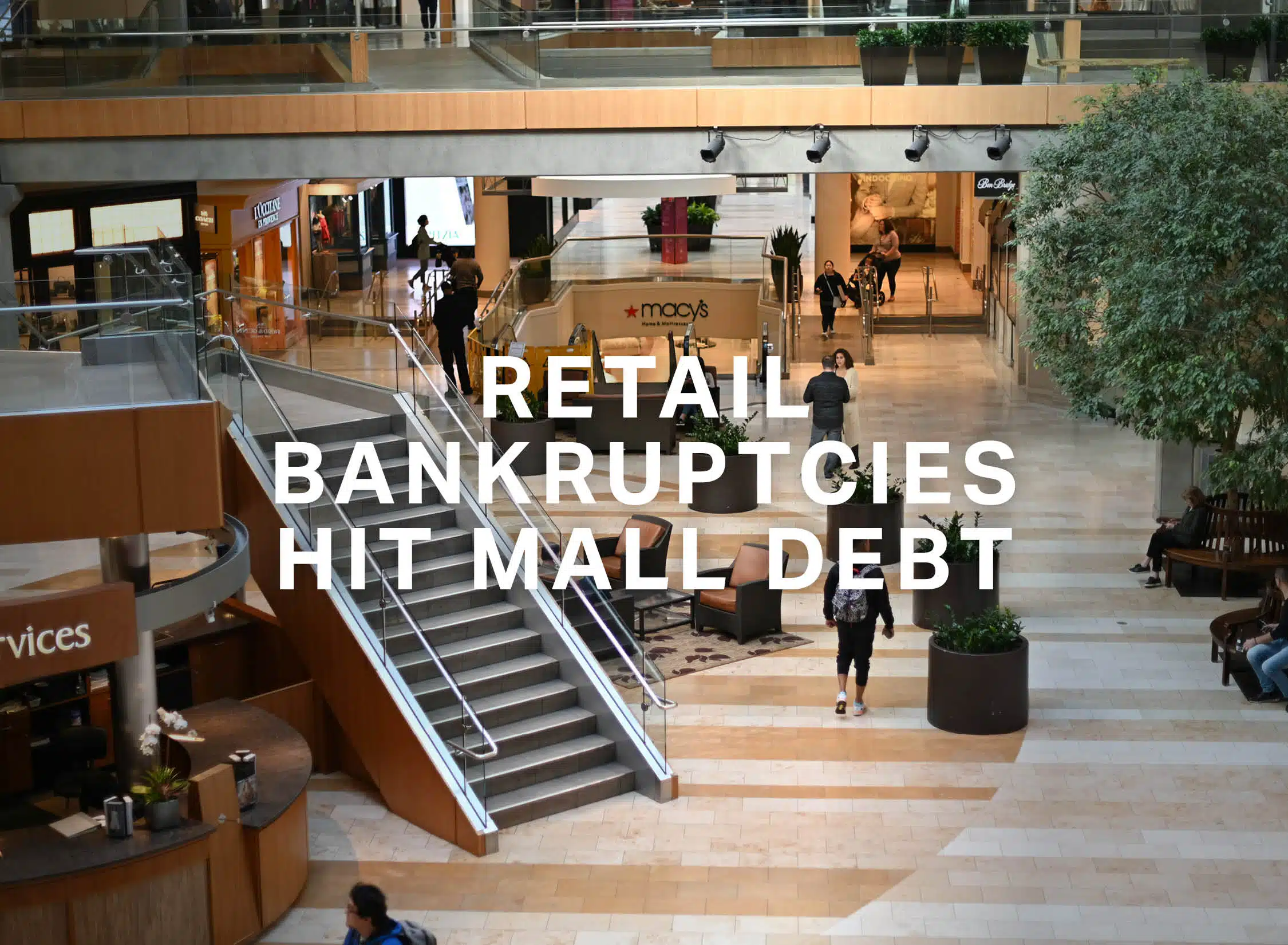
Mid-tier retail bankruptcies and a wave of maturing commercial mortgages are converging on regional malls, putting owners, lenders and the retailers that depend on them under pressure at the same time. The systemic pressures on the American retail sector find their most severe expression at the intersection of corporate balance sheet distress and commercial real estate (CRE) debt obligations. And
Corner of Fifth

Mid-tier retail bankruptcies and a wave of maturing commercial mortgages are converging on regional malls, putting owners, lenders and the retailers that depend on them under pressure at the same time.
The systemic pressures on the American retail sector find their most severe expression at the intersection of corporate balance sheet distress and commercial real estate (CRE) debt obligations. And that pressure is growing.
As mid-tier retailers grapple with compressed margins, falling mall productivity and restricted inventory financing, they face a financial wall. Their inability to generate robust cash flows impairs their capacity to service lease obligations and corporate debt, triggering a wave of restructuring events, Chapter 11 filings and commercial property defaults.
Why Are Mid-Tier Retailers Going Bankrupt?
Mid-tier department stores and mall-based specialty apparel chains occupy the most precarious segment of the retail ecosystem. Lacking the massive capital reserves and low-cost supply chains of big-box giants like Walmart or Target and the high-end luxury cachet that insulates “Class A” lifestyle centers, mid-tier operators are exposed to shifts in consumer spending. When households pull back on discretionary apparel and home goods to service rising credit card and auto loan payments, mid-tier sales decline rapidly.
This revenue compression has triggered a recurring cycle of mid-tier retail bankruptcies and liquidations. Retailers that expanded aggressively during lower-interest-rate eras find their legacy operating cost structures unsustainable amid inflation and high-wage pressures. Because these brands anchor regional shopping centers, their financial distress immediately impacts real estate values.
When a mid-tier anchor files for bankruptcy or announces widespread store closures, it strips the host mall of vital foot traffic and triggers clauses allowing specialty inline tenants to withhold rent or exit leases. Operational distress at the retail tenant level thus translates directly into financial distress for property owners.
What is the CRE Maturity Wall and Refinance Gap?
The real estate side faces an unprecedented structural reckoning driven by the commercial mortgage maturity wall. Approximately $875 billion to nearly $1 trillion in commercial and multifamily real estate debt is scheduled to mature, creating a massive refinancing hurdle. Much of this debt originated during 2015–2021 when interest rates hovered between 3.5% and 4.5%. As these loans mature, property owners must refinance into a capital-markets environment where average loan rates have jumped significantly, often exceeding 6%.
For retail property owners, particularly those holding “Class B” and “Class C” regional malls, the reality of refinancing is severe. Property valuations have fallen sharply due to declining net operating income (NOI) and surging capitalization rates. When a property’s value drops below its outstanding mortgage balance, a massive “refinance gap” is created.
Meanwhile, Commercial Mortgage-Backed Securities (CMBS) and traditional bank lenders now demand conservative Loan-to-Value (LTV) ratios and higher debt yields. For example, a retail property that supported a $50 million loan a decade ago may now only qualify for $30 million in new debt under today’s stricter LTV thresholds and higher interest rates. This leaves a multimillion-dollar equity gap that sponsors must bridge out of pocket.
Given the gloomy outlook for secondary and tertiary retail real estate, many equity sponsors are choosing to hand keys back to lenders rather than throwing fresh capital into distressed assets. This dynamic has pushed retail CMBS delinquency rates near 7%, reflecting mounting defaults across secondary retail properties.
What Does This Mean for Retailers and Landlords?
The convergence of mid-tier retail bankruptcies and the commercial real estate debt wall highlights a profound structural evolution across the market. The era of cheap capital and overbuilt physical retail space has closed, replaced by an environment where financial discipline, omnichannel efficiency, and balance sheet resilience dictate survival.
For retailers and property owners alike, the implication is a continuation of aggressive footprint rationalization. Weak malls will continue to see elevated defaults, forced restructurings, and conversions or demolitions into alternative uses like mixed-use residential or logistics hubs. Brands tied too closely to failing mid-tier department stores must pivot rapidly toward digital channels and partnership models with thriving discount and big-box giants.
Subsequently, lenders and investors are adopting a stricter, cold-eyed approach to risk, ensuring only operationally sound retailers and well-capitalized properties retain access to credit in a higher-for-longer interest rate economy.
Sources:
Equifax National Consumer Credit Trends Report
Federal Reserve Bank of St. Louis (FRED) Delinquencies Data
Mortgage Bankers Association (MBA) Commercial Real Estate Loan Maturity Volumes
Apers AI Commercial Real Estate Maturity Wall and Refinance Gap Analysis
Quinn Emanuel Commercial Real Estate and Restructuring Update
Chamberlain Hrdlicka Commercial Real Estate Bankruptcy Trends
Coresight Research State of the American Mall Analysis
Related article: Mall Foot Traffic Grew Across Every Format in September, Placer.ai Reports
Street Talk is the weekly newsletter for retail and fashion executives who want analysis, not noise. New issues every Thursday. Subscribe today.