


Analysis
September 16 2026
The American consumer presents a complex economic paradox. Headline economic indicators portray a resilient population keeping the economy afloat through steady demand, yet underneath this surface lies growing financial fragility. While top-line spending remains positive, high cumulative inflation, persistent interest rates and stagnant real wage growth for lower- and middle-income households have squeezed personal balance sheets, leaving millions operating on
Arthur Zaczkiewicz

The American consumer presents a complex economic paradox. Headline economic indicators portray a resilient population keeping the economy afloat through steady demand, yet underneath this surface lies growing financial fragility.
While top-line spending remains positive, high cumulative inflation, persistent interest rates and stagnant real wage growth for lower- and middle-income households have squeezed personal balance sheets, leaving millions operating on the edge of financial instability.
Retail Sales and the Frontline of Spending
Recent data highlights that nominal consumer spending continues to grow, with retail sales rising modestly on an annual basis. Industry forecasts from the National Retail Federation project total annual retail sales growth of over four percent, suggesting that household spending remains a major pillar of broader economic expansion.
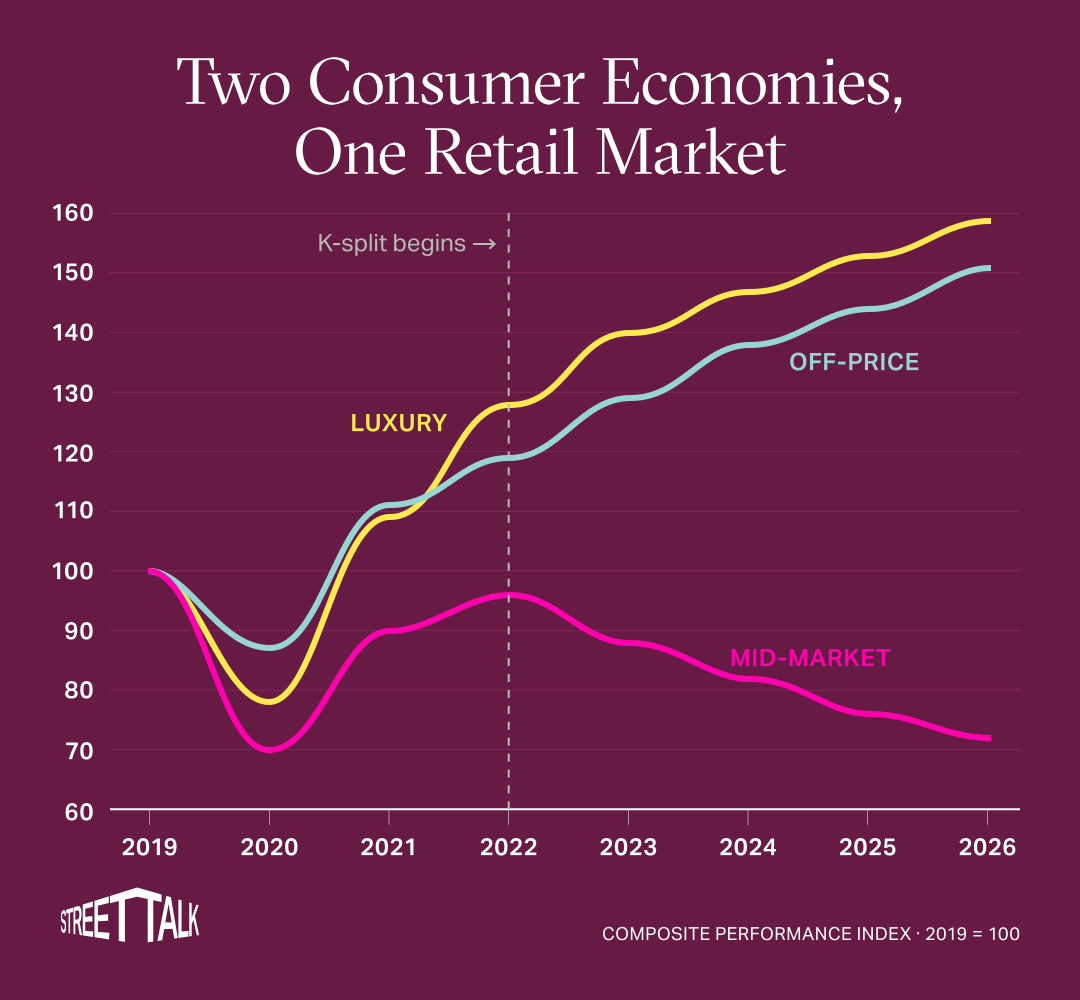
However, a closer examination of the data reveals a pronounced divergence in behavior across demographic groups. The growth in overall retail volume is primarily sustained by higher-income households who benefit from asset appreciation in real estate and equities. Conversely, mass-market and lower-income consumers are increasingly pulling back on non-essential purchases.
Across discretionary categories — such as home furnishings, apparel, food delivery, and leisure activities — net spending intentions have turned negative. Households are prioritizing essential goods, shifting toward value retailers, and waiting for promotional events before committing capital to non-essential items.
Debt Accumulation and Escalating Loan Delinquencies
To maintain living standards in an expensive economy, households have relied heavily on debt. Total U.S. household debt stands near $18.8 trillion, supported by substantial balances in mortgages, auto loans, credit cards and student debt.
The cost of servicing this debt has created localized stress points across credit markets. While credit card delinquency rates have stabilized slightly following stricter bank underwriting standards, overall revolving credit lines remain near record highs. The broader concern centers on fixed-obligation debt. Auto loan distress remains elevated among subprime borrowers who took on vehicle debt during periods of peak pricing and high interest rates.
Simultaneously, mortgage delinquency rates have recorded incremental increases, ending a prolonged period of historic lows. As household debt-service ratios edge upward, reduced excess savings mean any disruption in employment or unexpected expense directly threatens a family’s ability to maintain timely minimum debt payments.
Sentiment, Inflation, and the Paycheck-to-Paycheck Reality
Consumer confidence measures reflect deep skepticism among households regarding their future financial trajectories. The Conference Board’s Expectations Index and the University of Michigan’s Consumer Sentiment Index indicate that short-term outlooks for business conditions, labor markets, and personal income remain subdued.
The primary driver of this persistent pessimism is the cumulative impact of inflation. Even as month-over-month inflation figures moderate from previous peaks, the absolute price levels for foundational daily necessities — housing, rent, groceries, utility bills, transportation and health insurance — remain significantly higher than pre-pandemic baselines. Because nominal wage gains have largely failed to outpace compounding price increases over a multi-year horizon, real purchasing power has eroded for a vast swath of the population.
This erosion explains why a majority of working households report living paycheck to paycheck. Monthly income is absorbed almost entirely by non-discretionary costs and fixed monthly debt obligations. Without a financial buffer, families rely on continuous credit access to handle routine income gaps or emergency expenses.
The current landscape illustrates a bifurcated consumer economy. Aggregate economic data continues to show expansion, but the foundation rests on top-tier earners. For the median household, managing high living expenses alongside debt obligations requires constant sacrifice, maintaining consumer resilience at a considerable financial cost.
Related article: “The Fall of Legacy Malls is Not a Sign Physical Retail is Dying. It’s a Sign Boring Retail is Dead.” — Arthur Zaczkiewicz’s column
Street Talk is the weekly newsletter for retail and fashion executives who want analysis, not noise. New issues every Thursday. Subscribe today.