


Retail
November 19 2026
Brands are spending less to sell more online this holiday season. The exception is the category where ad dollars are outrunning the supply chain. Recent data from CommerceIQ shows a very clear trend in the digital retail space: e-commerce revenue is still growing into the peak holiday season despite brands cutting back on ad spend and promotional discounts. E-commerce conversion
Corner of Fifth

Brands are spending less to sell more online this holiday season. The exception is the category where ad dollars are outrunning the supply chain.
Recent data from CommerceIQ shows a very clear trend in the digital retail space: e-commerce revenue is still growing into the peak holiday season despite brands cutting back on ad spend and promotional discounts.
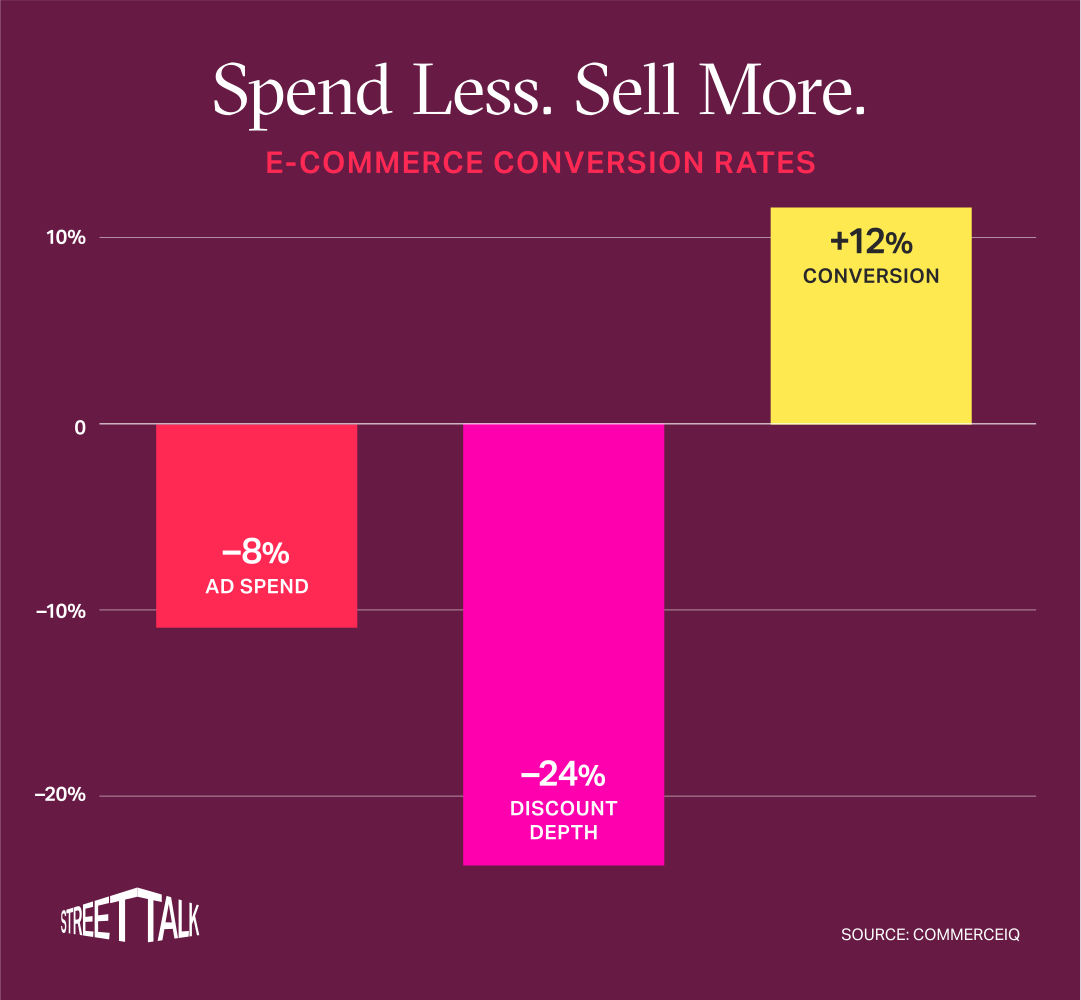
E-commerce conversion rates are up 12% year on year. That suggests that the modern consumer is browsing with intent and making up their minds to buy rather than being driven to a purchase by heavy discounting.
At the same time brands were showing greater pricing discipline heading into the holidays. CommerceIQ data shows discount depth across the board down by around 24% year on year. Average selling prices were down by a small 3% but unit gross margins were up a significant 26% YoY. The margin expansion is being driven primarily by mix and category performance rather than any broad-based price reduction. That’s enabling the brands to maintain their profitability even as their ad spend has been cut by around 8%.
Why Is Furniture Converting Less Despite More Ad Spend?
The data also points to a number of underlying structural issues, particularly around the big ticket and the execution of supply chains. Take furniture as an example.
There was clearly consumer interest in the product (product views up 9%) but conversions were down 14% as we saw a 45% increase in ad spend and a massive 41% drop in purchase order fill rates. That’s a clear demonstration of the kind of friction that can be generated by a demand and supply mismatch in a category which is going to have a complex supply chain and a fairly high level of consumer spend.
What Should Retailers And Brands Do About It?
- Shift from a volume to a margin focus: The findings suggest that brands don’t need to be out there with massive discounting or huge ad spends to get the consumer’s attention. You can in fact protect and grow your bottom line through a focus on product mix and price discipline.
- Reassessing the efficiency of retail media: with ad spend down and conversions up, marketing teams need to be looking at their paid search and retail media networks (RMNs). The spend needs to be much more targeted at the high intent shopper rather than just going out and spending broadly across the upper funnel which is clearly becoming less and less effective.
- Inventory and fulfilment alignment: the categories that are constrained in supply (furniture and large home goods) need to get the digital consumer demand in line with actual inventory levels. You can easily see the risk of losing high intent traffic if your purchase order fill rates can’t keep up with the seasonal browsing interest.
Related article: Why Converting Failing Malls to Mixed-Use Residential Makes Financial Sense
Street Talk is the weekly newsletter for retail and fashion executives who want analysis, not noise. New issues every Thursday. Subscribe today.