


Retail
May 20 2026
Online product returns cost brands and retailers an estimated $850 billion annually, with apparel driving 38% of all returns — primarily because there is no industry-wide sizing standard. Until brands agree on what a medium or a size 8 actually means, fit-technology solutions treat a symptom rather than the cause. Categories with precise, standardized measurements see dramatically lower return rates.
Arthur Zaczkiewicz

Online product returns cost brands and retailers an estimated $850 billion annually, with apparel driving 38% of all returns — primarily because there is no industry-wide sizing standard. Until brands agree on what a medium or a size 8 actually means, fit-technology solutions treat a symptom rather than the cause. Categories with precise, standardized measurements see dramatically lower return rates.
Online retailers are facing a surge in product returns, and new research shows that clothing remains the biggest pain point by a wide margin.
Across all categories, returns are a costly problem. Analysts estimate product returns cost brands and retailers more than $850 billion a year. That’s billion with a “B.”
Why Does Clothing Have the Highest Online Return Rate?
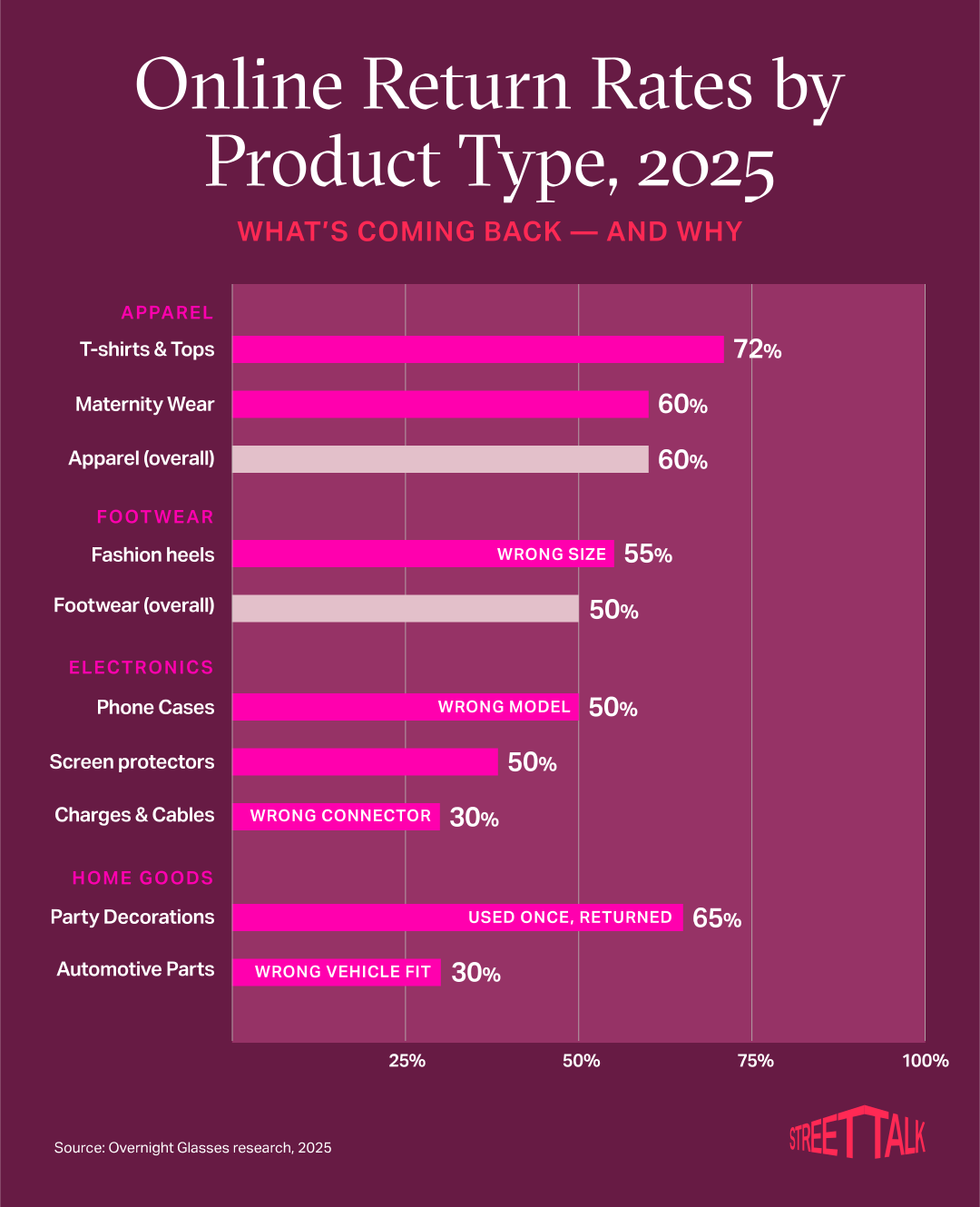
The category accounts for 38.3% of all items sent back, far more than any other type of merchandise, according to research data from Overnight Glasses. Analysts say the core issue is simple: fit. With an estimated 60% return rate, shoppers routinely send back shirts, dresses and pants that don’t match their expectations. T‑shirts and tops are the most frequently rejected, with 72% coming back, while maternity wear sees a three‑in‑five return rate as fluctuating sizing during pregnancy makes accurate ordering difficult.
Most clothing returns arrive within one to two weeks, and retailers refuse about 12% of them.
Why are More than Half of Shoes Purchased Online Returned?
Footwear is the second‑largest contributor to the returns pile, representing 14% of all online send‑backs. More than half of all shoes purchased online are returned, largely because sizing varies widely across brands. Fashion heels lead the category in return frequency, while ankle and combat boots often come back due to mismatched calf widths.
Electronics, which make up 12% of total returns, show a different pattern. Here, the problem isn’t quality but compatibility. Phone cases are the biggest offender, with half returned because buyers accidentally choose the wrong model. Screen protectors follow with a 38% return rate, and chargers and cables see 30% returned due to incorrect connector types. These returns stretch from one day to a full month, depending on how long it takes customers to realize the item won’t work with their device.
Automotive parts, though a smaller share of the total, present their own challenges. The category accounts for 5.4% of returns and has a 30% return rate, driven overwhelmingly by incorrect vehicle applications. Vintage and classic car parts are especially problematic, with a 32% return rate as buyers struggle to verify compatibility online. Retailers reject 16% of auto part returns, often because the items show signs of installation attempts.
Why are Party Supplies Returned at a 65% Rate?
Home goods and party supplies make up 3.1% of returns, with a 31% return rate fueled partly by customer misuse. Party decorations are returned 65% of the time, often after being used for a single event. Even novelty items, such as singing cactus toys, see a 65% return rate, typically within a week. Retailers refuse 17% of returns in this category, one of the highest refusal rates across all product types. Gidon Sadovsky, CEO of Overnight Glasses, said the industry’s biggest obstacle is the lack of standardized sizing. “Brands can’t agree on what a medium or size 8 actually means, so shoppers end up ordering three sizes of the same shirt just to find one that fits,” he said. He contrasted apparel with categories that rely on precise measurements — light bulbs, tires, eyeglasses — where clear standards dramatically reduce return rates.