

Tariffs
September 8 2026
Tariffs function as a tax on importing businesses, not exporting nations, and research shows the cost passes through almost entirely to domestic consumers and manufacturers. Rather than protecting industries, sustained tariffs are linked to higher prices, reduced competitiveness, and long-run declines in output growth across decades of cross-country data. In an era defined by geopolitical anxiety and supply chain anxieties,
Arthur Zaczkiewicz

Tariffs function as a tax on importing businesses, not exporting nations, and research shows the cost passes through almost entirely to domestic consumers and manufacturers. Rather than protecting industries, sustained tariffs are linked to higher prices, reduced competitiveness, and long-run declines in output growth across decades of cross-country data.
In an era defined by geopolitical anxiety and supply chain anxieties, protectionism often reemerges as a comforting political slogan. Leaders promise to shield domestic workers, revitalize home industries and punish foreign competitors through the stroke of a pen.
However, economic history and real-time trade disputes repeatedly teach us the exact same lesson: tariffs are an illusion of security. They are not a bridge to industrial independence, but an unsustainable economic trap that raises prices for consumers, starves domestic innovation and inevitably triggers costly foreign retaliation.
Why Do Tariffs Sound Appealing to Policymakers?
The immediate appeal of tariffs lies in their simple promise.
By taxing imported foreign goods, governments hope to make domestic alternatives more attractive. But this strategy relies on a fundamental misconception of how modern supply chains work. A tariff is not a tax paid by the exporting nation; it is an excise tax paid by the importing business at the port of entry. When a government levies duties on raw materials like steel, aluminum, or electronic components, it does not hurt foreign capitals—it forces domestic manufacturers to absorb higher input costs or pass those increases along to everyday households.
Who Really Pays the Cost of a Tariff?
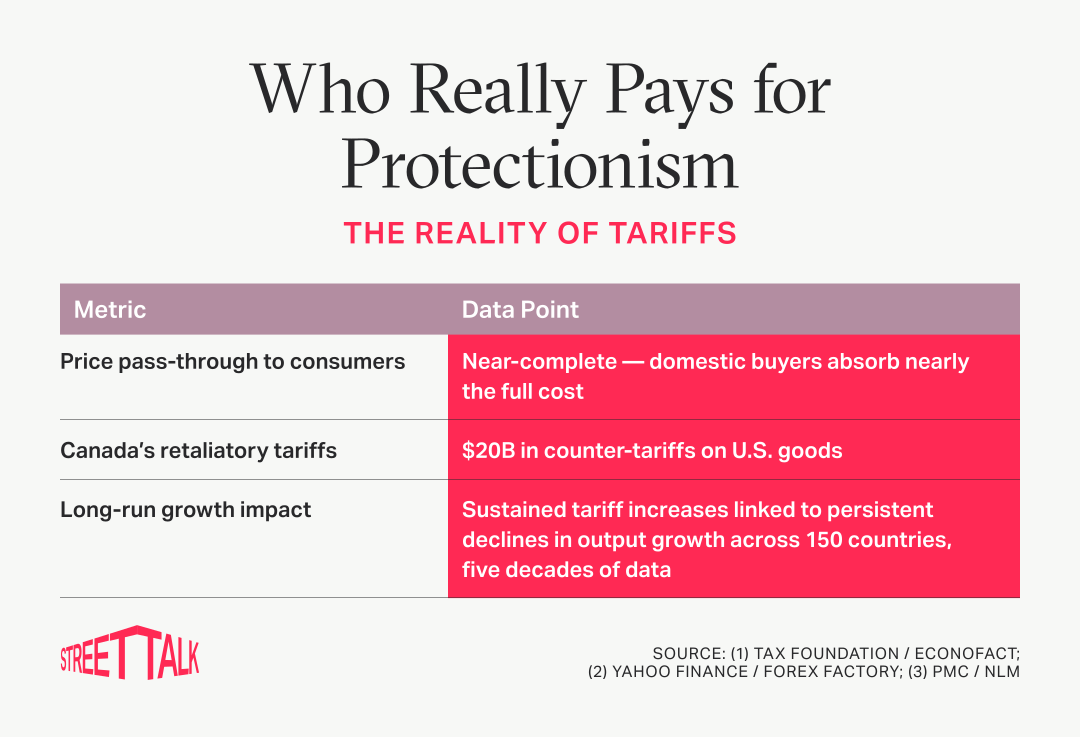
Recent economic data confirms this reality. Exhaustive research on modern protectionist policies reveals an almost complete price pass-through, meaning domestic consumers and local businesses shoulder nearly the entire financial burden of these trade barriers. When intermediate goods become more expensive, local products lose their competitive edge on the global stage.
A factory forced to buy tariffed steel produces machinery that is too costly to compete internationally, undermining the very industrial manufacturing base the tariff was designed to save.
Beyond the direct price hikes imposed on domestic consumers, tariffs carry an inherent structural weakness: they invite instant counterattacks. Modern global commerce operates as an interconnected web of mutual dependencies, making unilateral economic aggression impossible to sustain. The recent escalation in North American trade demonstrates how quickly protectionism spirals into mutual damage.
How Do Tariffs Trigger Retaliatory Trade Measures?
When Washington levied massive new duties on imported Canadian goods, Ottawa responded almost immediately with dollar-for-dollar counter-tariffs on billions of dollars worth of American imports. Covering hundreds of everyday items—from appliances and seafood to tools and electronics—these retaliatory duties specifically target vital export sectors across the border.
To soften the blow of these tit-for-tat escalations, governments often find themselves forced to launch massive corporate bailout packages and industry subsidies. This creates a deeply contradictory economic cycle. First, a nation taxes its own businesses and consumers under the banner of protectionism. Then, as those businesses suffer from elevated costs and foreign retaliation, the government must spend billions of taxpayer dollars to keep those same industries afloat. The result is a costly fiscal drain that stifles national balance sheets without fixing the underlying competitiveness issues.
Furthermore, protectionism operates like a regressive tax that hits lower- and middle-income households the hardest. Wealthier individuals spend a smaller proportion of their earnings on basic consumer goods, meaning they can easily absorb tariff-induced price hikes.
Why Do Tariffs Hit Lower-Income Households Hardest?
Low-income families, however, spend the vast majority of their paychecks on everyday essentials—clothing, food, tools, and household items—that are frequently subject to import duties. By artificially driving up the cost of living, tariffs erode real wages and reduce overall purchasing power, dampening domestic economic demand across the broader economy.
In end, sustainable prosperity requires productivity, capital efficiency and open market access. Shielding domestic industries behind permanent trade walls removes the market pressures that spur technological innovation and structural reform. Decades of macroeconomic studies covering over a hundred nations consistently show that sustained tariff increases lead to persistent declines in output growth, reduced labor efficiency and real exchange rate distortions.
Tariffs may offer politicians a brief headline victory, but as economic realities set in, the strategy crumbles. Protecting an economy by taxing its own consumers, isolating its manufacturers, and provoking trading partners is a recipe for long-term stagnation. True economic strength cannot be taxed into existence. It must be built on competitive innovation, resilient trade networks, and open international collaboration.
Source: one, two, three, four
Related article: Consumers, Retailers and Brand Face Fresh Fallout From New Round of Tariffs
Street Talk is the weekly newsletter for retail and fashion executives who want analysis, not noise. New issues every Thursday. Subscribe today.