


Retail
March 1 2026
For years, the retail industry has been locked in a high-stakes game of follow-the-leader, with Amazon setting the rules. The primary rule? Shipping and returns are free, fast, and frictionless. But as the dust settles on another holiday season, the bill for this strategy has finally come due — and it is staggering. According to the NRF, the 2025 holiday
By Guest Writer: Antony Karabus

For years, the retail industry has been locked in a high-stakes game of follow-the-leader, with Amazon setting the rules. The primary rule? Shipping and returns are free, fast, and frictionless. But as the dust settles on another holiday season, the bill for this strategy has finally come due — and it is staggering.
According to the NRF, the 2025 holiday shopping season is expected to see return rates of approximately 16% to 17% of total merchandise sales, with the total value of returned goods in the U.S. reaching nearly $850 billion annually. Online returns are projected to be very high, at around 18% to 19%. Key trends include tighter, more costly return policies and a rise in “bracketing,” which involves consumers buying multiple sizes or colors with the intent to return.
Rithum (formerly CommerceHub and ChannelAdvisor) released a 2025 Global Returns & Profit Impact Report that culled insights from 6,000 consumer respondents across Canada, France, Germany, the U.K., and the U.S. Researchers found that 68 percent of respondents said they returned apparel or footwear last year, while 36% admitted to bracketing online orders.
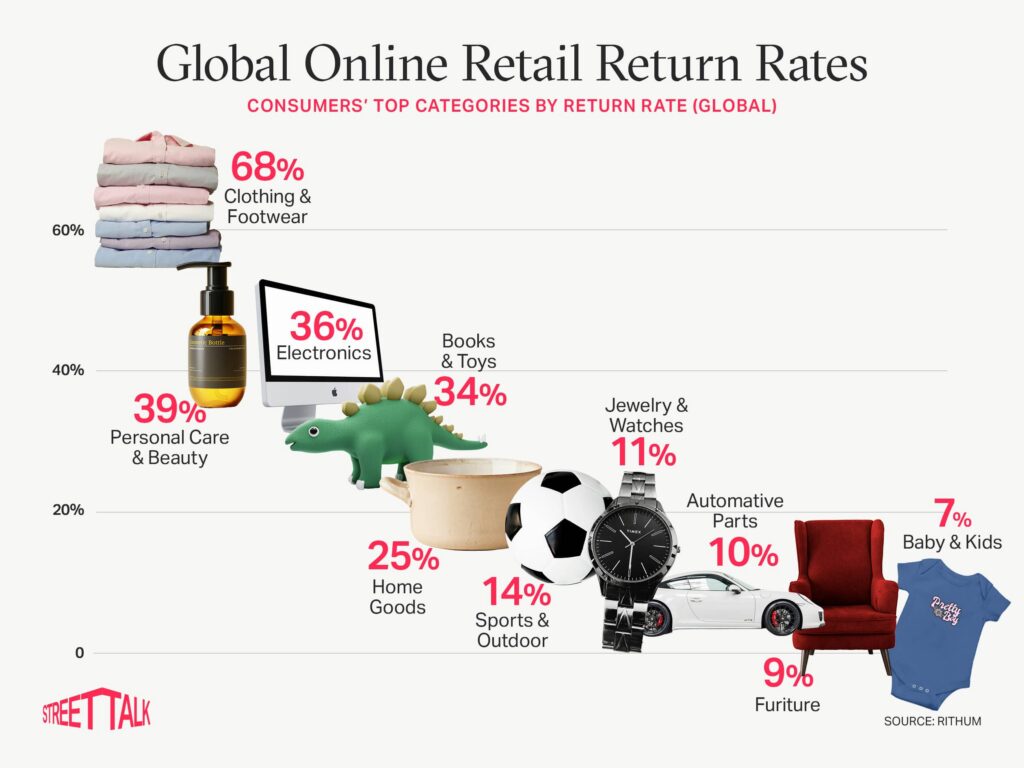
The Hidden Erosion of Profit
The true cost of a return is typically much greater than just the price tag of the item. When a customer returns a dollar’s worth of merchandise, they are often wiping out the entire profit margin for that sale and more.
The “reverse logistics” machine is a meat grinder for margins. First, there is the physical transport — often back to a distribution center that isn’t equipped to resell the item. Then there are the labor costs associated with inspection and refurbishment. Perhaps most damaging is the seasonal mismatch. A heavy winter coat purchased in November and returned in late January is no longer a full-price asset; it is a liability that must be marked down immediately to clear space for spring inventory. Often, returned products are just sent straight to a landfill.
Furthermore, the “Amazon effect” has created a secondary nightmare: brand chargebacks. When items are returned to massive third-party aggregator platforms, they often end up “out of sight, out of mind,” stuck in the wrong warehouse or damaged in transit. The brand that originally sold the item often eats the cost through chargebacks, losing the sale, the shipping fee, and the product value all at once.

The Role of Amazon Prime
As I’ve written about before, retailers originally mimicked Amazon’s generous return policies out of a sense of competitive panic. They feared that without free returns, customers — particularly Gen Z and Millennials — would simply abandon their carts. This fear was not unfounded; studies show that younger demographics often check the return policy as the final step before clicking “buy.” (The Rithum report noted that 41% of shoppers consider return policies to be a key factor when deciding where they are purchasing items.)
However, there is a crucial difference: Amazon has Prime. The subscription revenue from millions of Prime members acts as a massive subsidy for their logistics and storage costs. Other than Costco and to some extent Wal-Mart, virtually no traditional retailers have a multibillion-dollar membership cushion to soften the blow. By trying to play Amazon’s game without Amazon’s wallet, retailers have “trained” the consumer to treat their living rooms as fitting rooms, thereby creating a profit vacuum for the retailer.
The Rise of the “Serial Returner”
Perhaps the most egregious drain on the system is the “serial returner.” In some instances, data has identified segments of customers who return 100% of what they buy, year after year. These are not shoppers; they are professional borrowers.
In the past, catalog businesses dealt with this by simply “blackballing” these consumers — refusing to sell to them or stripping away their ability to return items. Today’s retailers must return to this level of pragmatism. Identifying and restricting serial returners isn’t just a way to save money; it’s a necessary step to protect the ecosystem for honest consumers.
A New Set of Rules to Govern Returns
Even Amazon has begun to realize that the “free-for-all” era is unsustainable. They have tightened return windows and, in some cases, started charging fees for returns dropped off at specific locations. It is time for the rest of the industry to follow suit — not by mimicking the “free” model, but by mimicking the discipline.
To survive, retailers must implement Return Controls:
- Time Constraints: Shortening the return window (e.g., to one week) to ensure goods can be resold within the same season.
- Strategic Drop-offs: Requiring returns to be sent to specific hubs that can actually process and resell them quickly.
- Partial Credits: Moving away from full refunds if a markdown has been taken on the item in the intervening time.
- Tiered Access: Restricting return privileges for those with a history of excessive “serial returning.”
While competitive pressures are real and challenging across the retail landscape, the solution isn’t to keep giving the store away. It is to re-train the customer to understand that convenience comes at a cost. If retailers don’t start backtracking on “free and easy” now, they won’t just be losing the holiday season — they’ll be losing their future profitability.