


Retail
March 20 2026
What Is the Spending Gap — and Why It Matters A new study by payment processing company SensaPay reveals that despite a challenging economic landscape, U.S. consumers in several key regions are refusing to tighten their belts. According to the March 2026 report on American consumer spending, Massachusetts residents spend the most money among all U.S. states. Before the effects
Arthur Zaczkiewicz

What Is the Spending Gap — and Why It Matters
A new study by payment processing company SensaPay reveals that despite a challenging economic landscape, U.S. consumers in several key regions are refusing to tighten their belts.
According to the March 2026 report on American consumer spending, Massachusetts residents spend the most money among all U.S. states. Before the effects of the Iran war settle in, the research shows which states didn’t cut back their spending even as Trump’s tariffs made everyday goods more expensive.
The research looked at consumer spending across all 50 states and Washington D.C. to see where residents kept buying despite significant price increases. By comparing total spending growth against local price changes, the study calculated a spending gap to distinguish between those merely paying higher bills for the same items and those actually increasing their volume of purchases. The results were eye-opening.
New England and the West Coast Lead the Charge
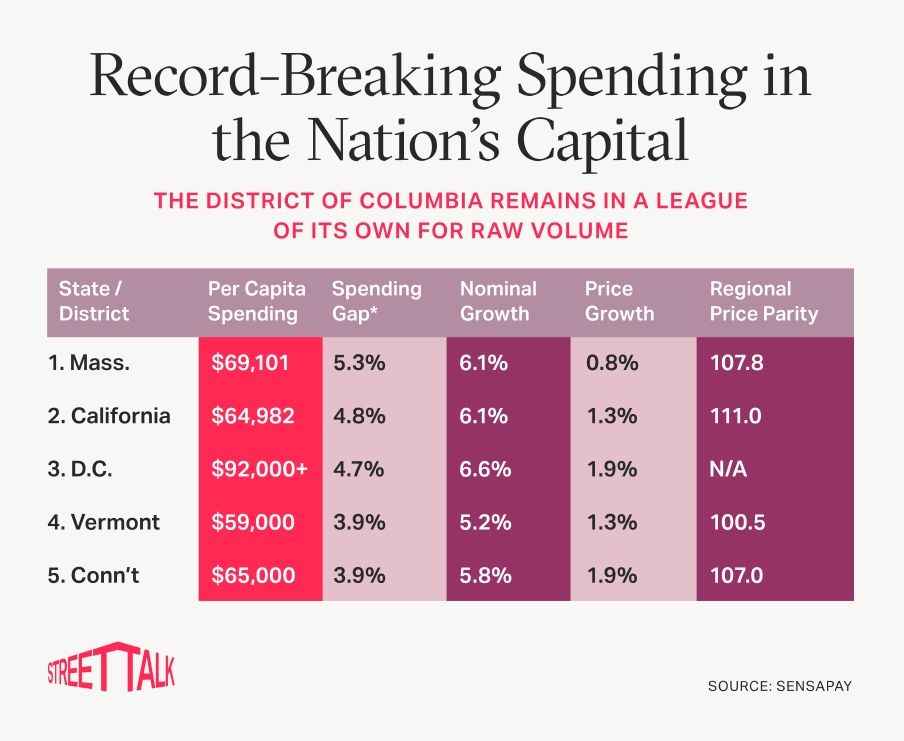
Massachusetts took the top spot with a per capita spending of $69,101. Residents in the Bay State increased their purchases by 6.1% over the past year, while local costs only rose by 0.8%. This resulting 5.3% spending gap is the largest in the country, signaling that locals are genuinely buying more products and services rather than just reacting to inflation.
California follows closely in second place, with consumers spending 4.8% more than the local inflation rate of 1.3%. Despite prices in the Golden State remaining 11% above the national average, Californians have pushed their per-person spending to nearly $65,000, ranking the state among the top five for household budgets.
Record-Breaking Spending in the Nation’s Capital
While it ranks third in terms of the spending gap, the District of Columbia remains in a league of its own for raw volume. D.C. residents spend an average of over $92,000 annually on personal needs — nearly double the national average and $23,000 more than the top-ranked Massachusetts. Although local prices climbed 1.9%, residents still increased their purchasing volume by 6.6% compared to the previous year.
Rounding out the top five are Vermont and Connecticut. Vermont saw a 5.2% jump in spending against a modest 1.3% price increase, while Connecticut residents are buying 5.8% more products this year despite a 1.9% rise in costs. In both states, annual per-person spending has reached or neared the $60,000 mark.
A Looming Shift in the Economic Forecast
Despite the current resilience, experts warn that the spending spree may face a reality check. A financial advisor from SensaPay noted that while Trump’s tariffs have already inflated everyday goods by 3% to 5%, the most significant pressure is yet to come.
With oil prices climbing toward $100 a barrel due to the ongoing Iran war, transportation costs are expected to spike, impacting the price of everything from groceries to electronics. The report suggests that even the most dedicated spenders in Massachusetts and D.C. may finally be forced to scale back once these secondary economic effects fully settle into the market.