

Podcast
June 2 2026

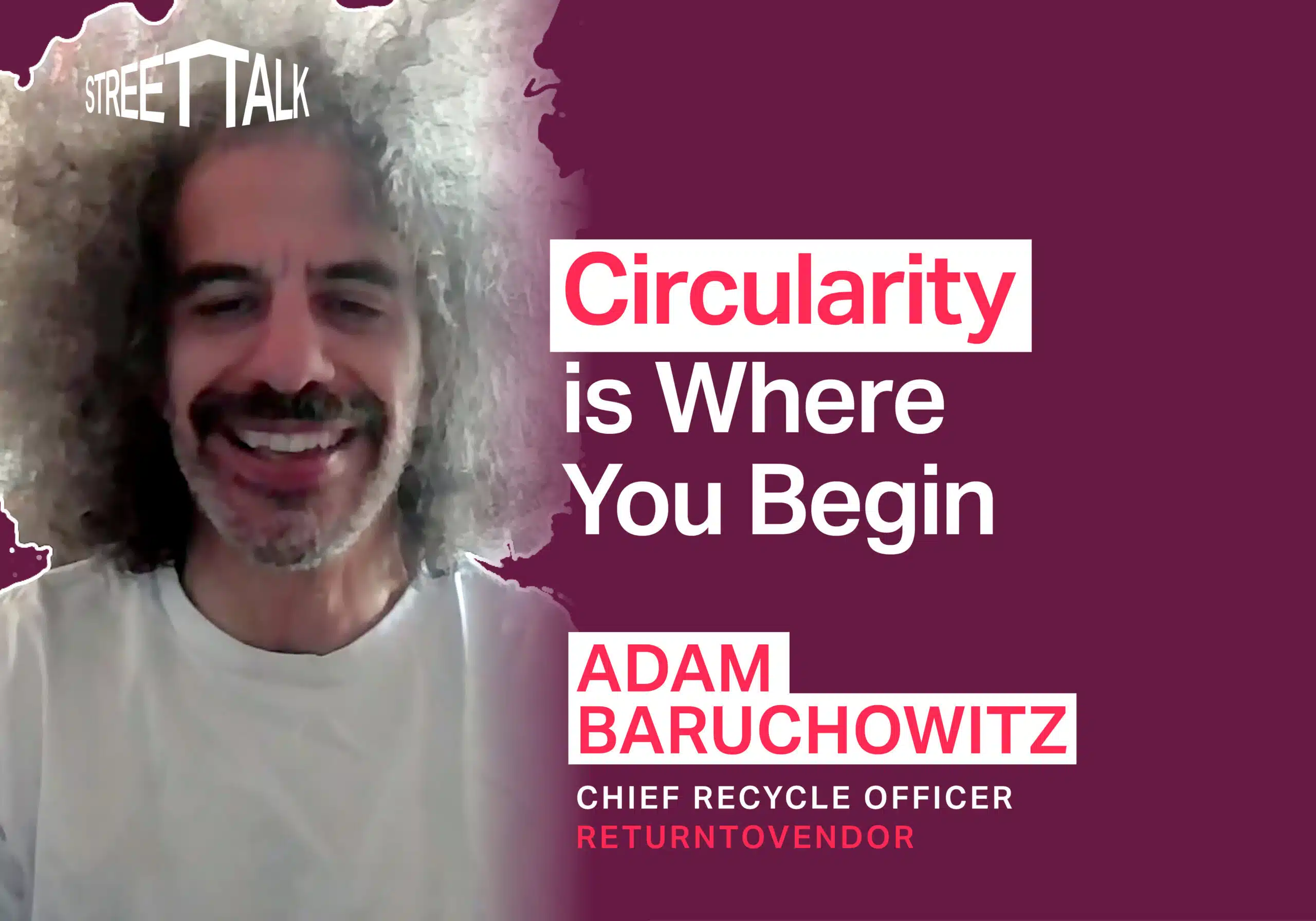
Return to Vendor co-founder Adam Baruchowitz argues that fashion circularity has stalled because brands treat it as an endpoint rather than a design intent. Drawing on 20 years running Wearable Collections — one of New York’s first clothing collection operations — Barukowitz explains how monomaterial design, closed-loop supply chains, and treating end-of-life materials as feedstock from day one are the
Cass Spencer

Return to Vendor co-founder Adam Baruchowitz argues that fashion circularity has stalled because brands treat it as an endpoint rather than a design intent. Drawing on 20 years running Wearable Collections — one of New York’s first clothing collection operations — Barukowitz explains how monomaterial design, closed-loop supply chains, and treating end-of-life materials as feedstock from day one are the only path out of the linear trap.
The fashion industry has been talking about circularity for a decade. It still hasn’t happened. Adam Baruchowitz has a clear diagnosis: the industry is working within the confines of a broken model and calling that progress.
Baruchowitz is co-founder and chief recycling officer at Return to Vendor (RTV), a circular materials platform built on a single conviction — that nylon, ubiquitous in fishing nets and post-industrial waste streams, is already recyclable and already preferred by EU eco-design standards. That conviction didn’t come from a sustainability consultancy. It came from 20 years on the ground in New York City, running Wearable Collections, collecting the city’s clothing waste before ‘circularity’ was a word anyone in fashion used.

Why does circularity keep stalling?
In this conversation with Arthur Zaczkiewicz, Barukowitz strips the concept back to its economics. Why does circularity keep stalling? Because a multi-trillion dollar industry is celebrating million-dollar investments. Because sustainability departments at the world’s largest retailers are staffed by two people with no budget, while marketing teams spend without limit. Because a nylon tote bag gets sewn with a polyester thread — not for any technical reason, but because nobody in the supply chain is responsible for what happens at end of life.
The fix, Barukowitz argues, is not a program. It’s a design posture. Monomaterial from the start. The nylon thread. The nylon button. The nylon label. Small choices that determine whether a garment can close the loop — or becomes feedstock for a landfill. Tune in for one of the clearest-eyed assessments of fashion’s circular gap you’ll hear this year.
Related opinion article: The Digital Product Passport Deadline Is Closer Than Most Brands Think
Related articles: The Sizing Guessing Game Is Driving a Massive Surge in Online Returns
The Street Talk newsletter delivers the sharpest fashion, beauty, and retail analysis every Thursday — straight from Arthur Zaczkiewicz, former Executive Editor at WWD. Subscribe today.