

Economy
June 9 2026
The U.S. Census Bureau and the U.S. Bureau of Economic Analysis said this week that the goods and services deficit was $55.9 billion in April, down $0.7 billion from $56.6 billion in March. But there’s more to the story. While recent headline figures show expanding dollar values for international trade, a deeper look into the numbers exposes a widening rift between nominal
Arthur Zaczkiewicz

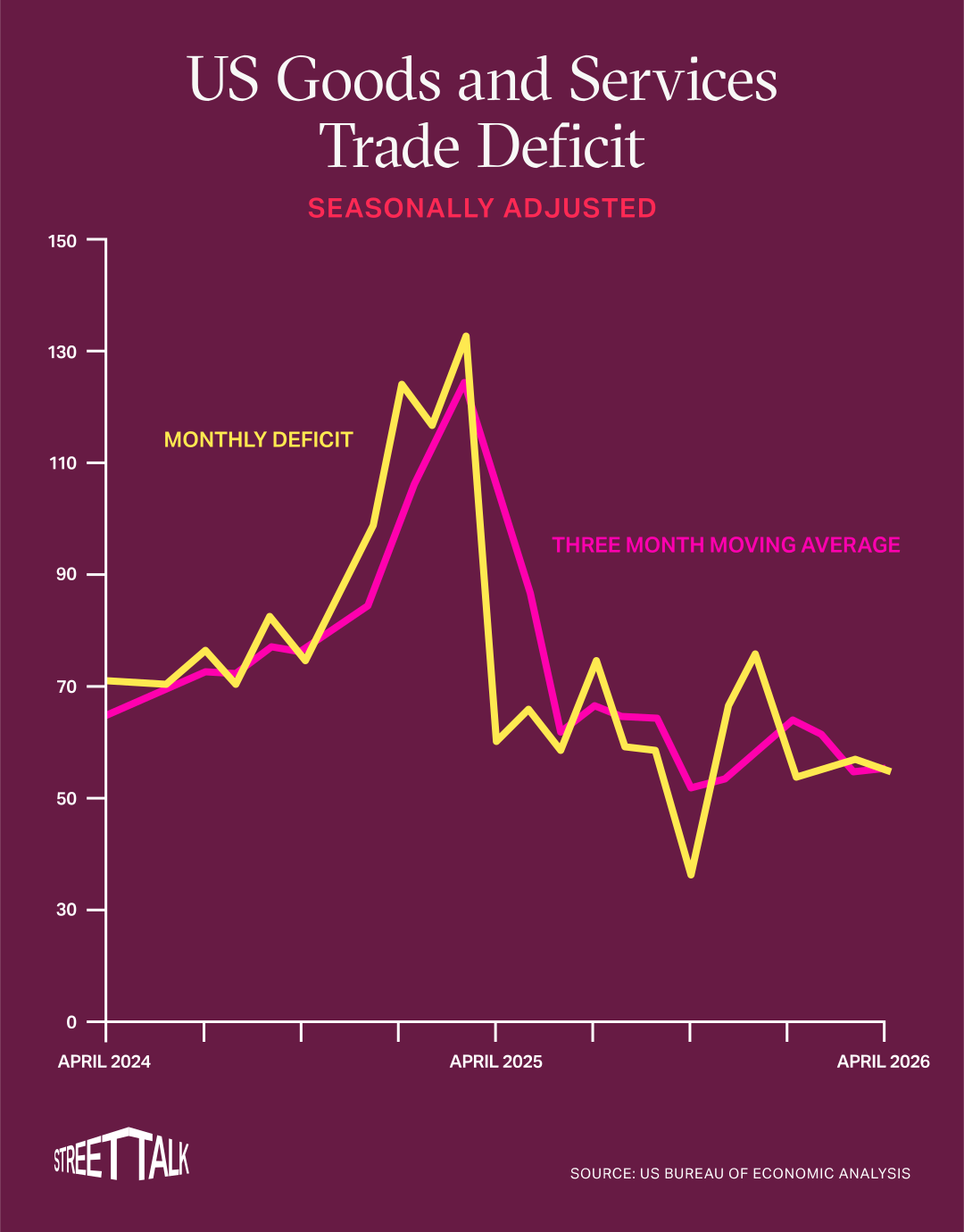
The U.S. Census Bureau and the U.S. Bureau of Economic Analysis said this week that the goods and services deficit was $55.9 billion in April, down $0.7 billion from $56.6 billion in March. But there’s more to the story.
While recent headline figures show expanding dollar values for international trade, a deeper look into the numbers exposes a widening rift between nominal spending and the actual volume of goods moving across borders. This divergence has significant implications for both the broader U.S. macroeconomy and the day-to-day operations of American retailers.
On a macroeconomic level, the ongoing wars involving Ukraine and Iran have fractured traditional supply lines and kept global energy markets highly strained. The U.S. has increasingly leveraged its domestic energy independence to fill these global gaps, fueling a massive $6.4 billion surge in crude oil exports.
Why Are Real US Imports Falling Even as Spending Rises?
While this energy revenue provides a crucial stabilizer for the nation’s gross domestic product, it masks a more troubling reality on the import side.
When adjusted for inflation, real U.S. imports actually fell by 0.1% despite a nominal value increase of 2%. This means the American economy is essentially locked in an inflationary trap, spending more capital to acquire a slightly lower physical volume of goods. This discrepancy suggests that while consumer spending remains resilient in raw dollar terms, physical economic throughput is plateauing, threatening long-term real growth. Not good news for most retailers and brands
Why Are Retailers Stockpiling Semiconductors And Computer Imports Now?
To guard against these escalating geopolitical risks, large-scale distributors and retailers are actively altering their supply chain behaviors. Import data shows a massive $7.0 billion spike in capital goods, driven primarily by surges in computer imports and semiconductors. Because key maritime shipping corridors face continued instability due to conflicts in Europe and the Middle East, businesses are aggressively front-loading their inventory.
Basically, they are choosing to absorb elevated import and freight costs today to stockpile vital components and safeguard against potential blockades or supply shortages down the road.
How Is The Trade Environment Squeezing Mid-Tier Retail Profitability?
For consumer-facing retailers, however, this environment is driving a severe margin squeeze. Because businesses are paying more for the same amount of inventory, they are faced with a volatile operational dilemma. If they choose to pass these elevated costs on to the public, they risk hitting demand destruction, where inflation-weary consumers simply halt discretionary spending.
Conversely, if they absorb the costs to keep shelf prices steady and protect sales volume, their own profitability erodes.
This dynamic is accelerating a sharp polarization across the retail landscape. High-end luxury brands can often transfer elevated costs to affluent buyers who remain insulated from economic pressures, while deep-discount and off-price retailers capture budget-conscious shoppers trading down for essentials.
Mid-tier retailers, particularly those reliant on discretionary merchandise, are left with almost no room to maneuver as high landing costs and defensive consumer habits continue to reshape the market.
Photos by Teng Yuhong and Mika Baumeister
Related article: The Triple Threat Reshaping American Consumer Spending
Street Talk is the weekly newsletter for retail and fashion executives who want analysis, not noise. New issues every Thursday. Subscribe today.