


Analysis
October 13 2026
Holiday 2026 rewards precision over volume. Retailers face cautious, value-led shoppers who start buying in October, and margin is the pressure point. At the start of the important holiday shopping period, merchants and international brands have to work in a situation characterized by consumers being cautious, changing patterns of demand and increasing operational demands. Although the peak season has usually
Corner of Fifth

Holiday 2026 rewards precision over volume. Retailers face cautious, value-led shoppers who start buying in October, and margin is the pressure point.
At the start of the important holiday shopping period, merchants and international brands have to work in a situation characterized by consumers being cautious, changing patterns of demand and increasing operational demands.
Although the peak season has usually been the most profitable quarter of the financial year, achieving success this year depends on having a clear understanding of a very selective consumer group and on carrying out highly targeted retail strategies.
How Are Value-Focused Shoppers Changing Holiday Spending?
If retailers and brands want to understand the present state of the retail sector, they have to look at the financial situation of today’s average consumer. After years of inflation and high interest rates, households still face clear budgetary limitations. Even though official economic figures indicate that employment levels are stable and wages are growing only slightly, actual spending power has still been greatly reduced.
The tendency to look for value has moved from being a short-term trend to becoming a long-standing way of shopping. Shoppers are now making purposeful decisions to switch to cheaper options, choosing store-branded products and putting off buying non-essential items until sales take place. Moreover, credit card balances are still very high, so shoppers are depending heavily on flexible payment options like buy now, pay later options in order to spread their holiday expenses over a number of payment periods. Adobe’s figures point the same way: buy now, pay later enabled $692.3 million in online sales (6% of orders) during Prime Big Deal Days, up 4% from last October, and Adobe forecasts $21.3 billion in BNPL spending across the holiday season, including more than $1 billion on Cyber Monday.
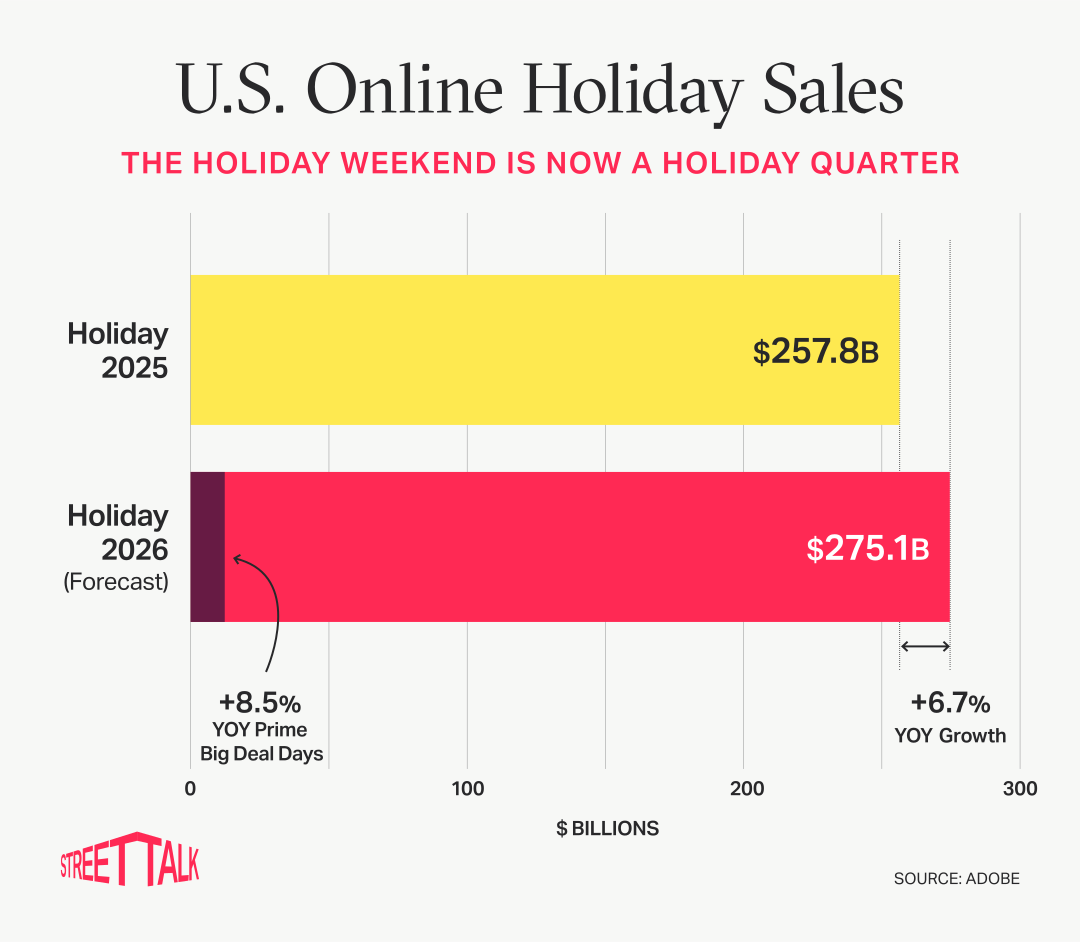
Even though there are these limitations on spending, the desire of consumers to take part in seasonal traditions is still there. Instead of changing the way or the time at which they spend their money, consumers are spreading out their spending over a longer period. The usual shopping weekend, which traditionally takes place between Thanksgiving and Cyber Monday, has now become a multi-month shopping marathon that can begin as early as October. Adobe expects U.S. online holiday sales to reach $275.1 billion between Nov. 1 and Dec. 31, up 6.7% from $257.8 billion a year earlier, and Amazon’s Prime Big Deal Days (Oct. 6–7) had already driven $9.86 billion in online spending at U.S. retailers, up 8.5% from $9.09 billion.
Retailers who depend only on the foot traffic they get in late November may end up losing the early shoppers who are actively looking for good value weeks before.
Why are Holiday Margins Under Pressure?
The change in consumer sentiment brings with it particular difficulties for retailers. Compression of margins is one of the main operational problems. Since customers are so focused on getting deals, companies are under strong pressure to offer large discounts. Yet if they discount too freely they will reduce their profit margins at a time when input, transportation, and labor costs are still high. Moreover, inventory management involves a careful balancing act: if demand is overestimated there will be expensive post-holiday liquidations, while if demand is underestimated there are out-of-stock messages, lost revenue, and harm to brand loyalty.
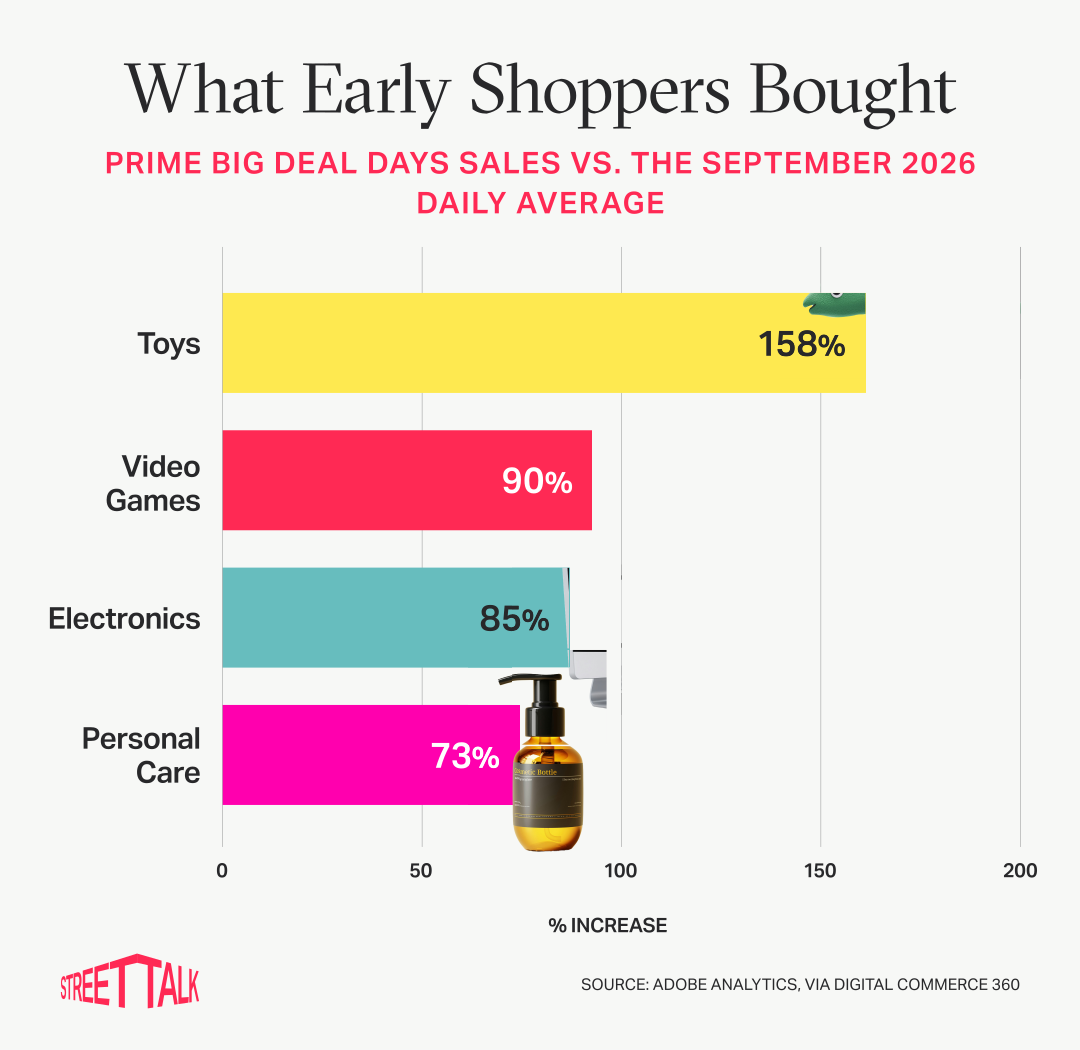
Amazon’s October event showed what that pressure looks like. Prime Big Deal Days markdowns reached up to 20%, yet the share of the most expensive goods rose 21% above the year-to-date average, according to Adobe. Compared with the September 2026 daily average, sales jumped 158% in toys, 90% in video games, 85% in electronics and 73% in personal care. Deals are pulling shoppers toward pricier items, not only cheaper ones, which makes blanket discounting an expensive way to win the early buyer.
What Should Retailers Prioritize This Holiday Season?
In the face of these difficulties there are considerable opportunities for companies to adjust to the present situation. In order to be successful this season retailers should concentrate on three main strategic priorities: targeted promotional strategies, seamless omnichannel execution, and an improved customer experience.
How Can Retailers Discount Without Destroying Margin?
In the first place, retailers should give up on offering wide-scale discounts and instead adopt a strategy based on precise pricing and personalization. By using insights from predictive analytics and their customer data platforms, companies should customize their promotional offers for different groups of consumers. It is important to work out which customers need a price reduction to convert and which ones are more likely to respond to exclusive items or loyalty points so that retailers can keep their profit margins while at the same time boosting sales.
Personalization should also include curated gift guides and tailored product recommendations to lessen the decision fatigue experienced by shoppers who are overwhelmed.
Why Does Omnichannel Matter More This Holiday?
Second, it is a must to have a unified omnichannel infrastructure. Today, shoppers expect a smooth shift from digital stores to physical outlets. Mobile is leading that shift: phones accounted for 52% of Prime Big Deal Days online sales, about $5.1 billion and up 12.8% from a year earlier, according to Adobe. Features such as buy online, pick up in-store and curbside fulfilment are no longer optional extras; they are now basic expectations. Physical stores have to act as dynamic brand showrooms as well as efficient micro-fulfilment centers.
Retailers who successfully integrate inventory visibility across all channels will be able to attract shoppers at the end of the season who can’t wait for delivery dates and who prefer the immediacy of collecting their orders locally.
What Makes Shoppers Pay Full Price At The Holidays?
In the end, brands need to go beyond just price when it comes to their value proposition. Since consumers tend to be careful about where they spend their money, trust in the brand and the customer experience become important deciding factors. Retailers can tell themselves apart by providing easy return policies, clear delivery times, and good customer service.
By offering a smooth checkout process, disclosing shipping costs clearly, and telling genuine stories about the quality of their products, they can convince buyers who are on the fence.
What Will Separate Holiday Winners From The Rest?
In the end, the busiest time of shopping will be the one that benefits those retailers who place a greater emphasis on accuracy than on sheer volume. Even though consumers are having to cope with actual economic difficulties, they still want to celebrate the holiday season by giving gifts thoughtfully.
Brands that match their promotional schedules with customers’ early shopping behaviors, provide outstanding omnichannel convenience, and safeguard their margins by using data-driven strategies will be in a good position to succeed in this ever-more competitive market.
Sources: Adobe Analytics, via Chain Store Age (Sept. 28, 2026), Digital Commerce 360 (Oct. 8, 2026) and Retail Dive (Oct. 9, 2026).
Related article: How October Spikes, AI Agents, and BNPL Are Reshaping Retail’s $275B Season
Street Talk is the weekly newsletter for retail and fashion executives who want analysis, not noise. New issues every Thursday. Subscribe today.