


Analysis
October 6 2026
Adobe forecasts record U.S. holiday e-commerce spend of $275.1 billion for November and December 2026, up 6.7%, after a further $95.8 billion in October. Retailers should start promotions and inventory positioning earlier, build mobile checkout with buy now, pay later, and structure product data so AI shopping agents can recommend them. The line between pre-season preparation and the traditional holiday
Corner of Fifth

Adobe forecasts record U.S. holiday e-commerce spend of $275.1 billion for November and December 2026, up 6.7%, after a further $95.8 billion in October. Retailers should start promotions and inventory positioning earlier, build mobile checkout with buy now, pay later, and structure product data so AI shopping agents can recommend them.
The line between pre-season preparation and the traditional holiday shopping rush is blurring into a single, extended retail marathon. According to Adobe’s online shopping forecast for the 2026 holiday season, U.S. e-commerce spend from November 1 to December 31 is projected to reach a record $275.1 billion, a 6.7% year-over-year increase.
Driven by data tracking over a trillion visits to retail sites across 100 million SKUs, the projections highlight a fundamental shift in consumer behavior. Shoppers are starting earlier, relying on artificial intelligence, embracing mobile purchasing and using flexible payment methods to manage household budgets.
Cyber Monday’s Threshold
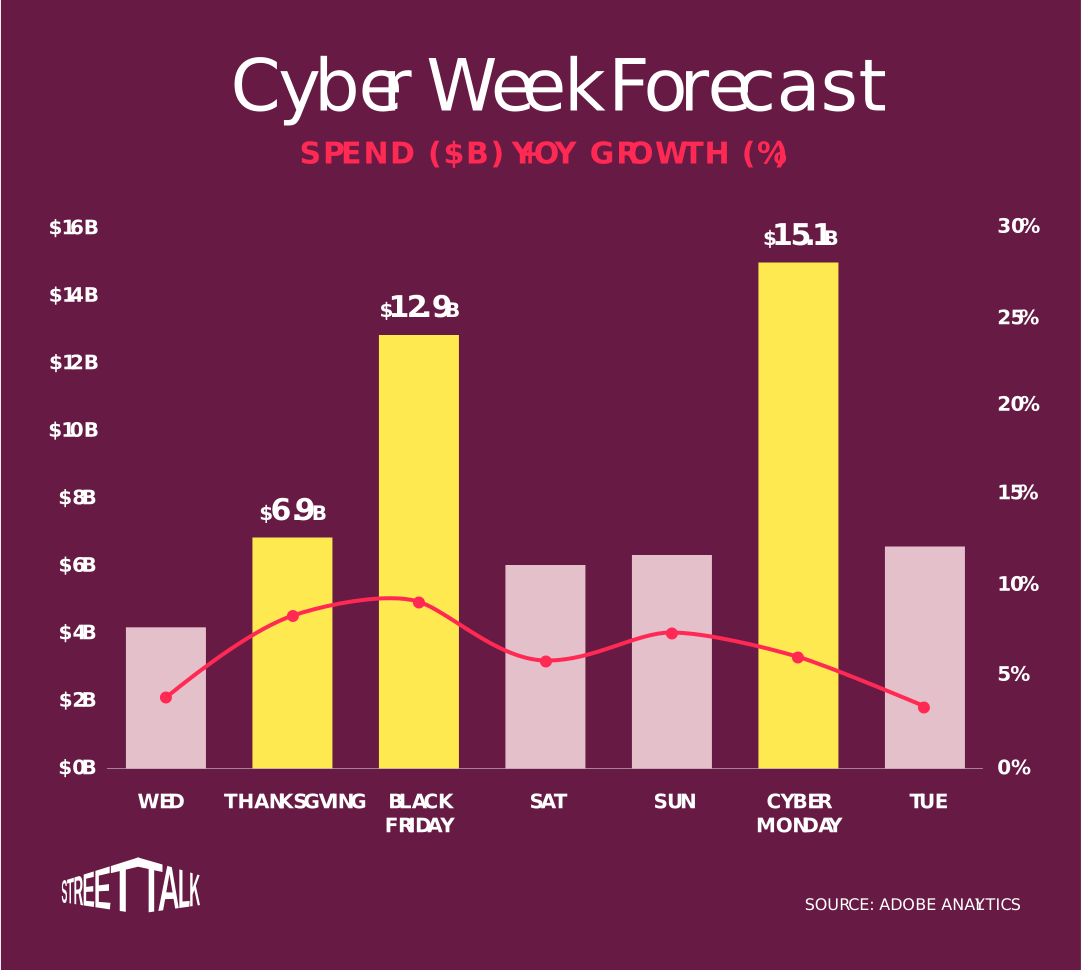
The traditional core of the season remains Cyber Week — the five days spanning Thanksgiving through Cyber Monday — which is expected to generate $47.5 billion, or 17.3% of total holiday revenue. Cyber Monday itself will cross a unprecedented threshold, exceeding $15 billion in a single day. However, Black Friday is capturing consumer momentum at a faster rate, growing 9.2% year-over-year to hit $12.9 billion.
This surge is fueled by deep promotional pricing on high-ticket categories like televisions, appliances and apparel.
Crucially, the holiday shopping window no longer begins in November. Early October promotional events like Amazon Prime Day are driving pre-season online spending in October to $95.8 billion, an 8% increase over last year. October’s early event alone is set to draw $9.9 billion as retailers offer discounts up to 19% off list prices. This shift forces brands to move their promotional strategies forward and manage inventory earlier in the fourth quarter to avoid missing the initial swell of buyer interest.
Non-Traditional Gifting Sectors are Expanding
Category growth demonstrates that while electronics ($63.3 billion) and apparel ($51.3 billion) remain the primary pillars of holiday sales, non-traditional gifting sectors are seeing the strongest percentage expansions. Researchers at Adobe said online grocery is projected to climb 10.3% to $26.1 billion, toys will rise 9.6% to $9.6 billion, and cosmetics will grow 9.5% to $9.2 billion.
Moreover, consumer motivation is shifting from purely promotional gifting to strategic household replenishment. Cyber Week is expected to see dramatic spikes over baseline September sales for essential items, including clothing basics (up 210%), personal hygiene products (up 150%), baby supplies (up 113%), and pet goods (up 93%).
Shopping habits are also reshaped by new technological tools and financial models. Referral traffic from AI-powered chat and browser agents is expected to rise 130% year-over-year, peaking on Thanksgiving Day with a 159% jump. Consumer sentiment data shows buyers using AI tools feel more confident in their purchases and report fewer returns. Mobile devices are set to account for 57.4% of total seasonal spend, peaking at 63% on Thanksgiving. This mobile preference supports the rise of Buy Now, Pay Later (BNPL) services, forecasted to drive $21.3 billion in spend, with 82% of BNPL volume on mobile screens.
From a marketing channel perspective, traditional paid search is seeing modest revenue growth of 4%, whereas social media (up 17%) and affiliate/partner channels (up 12%) are capturing significantly larger shares of consumer spend. Within affiliate networks, cashback and rewards partners dominate with a 36% traffic share, followed by creators and social influencers at 22%. Expected hot sellers across retail include next-generation tech like the Nintendo Switch 2, iPhone 18 Pro, and Meta AI Glasses, alongside viral lifestyle and toy products like Jellycat plushies and Beyblade X.
What Should Retailers Change Before The 2026 Holiday Season?
For retail leadership, these findings necessitate immediate tactical adjustments across forecasting, promotional timing, and customer experience orchestration.
First, the acceleration of October spending demands an agile operational calendar. Brands can no longer treat November as the formal start of the holiday push. Inventory must be fully positioned and promotional campaigns active by early autumn. Retailers that delay promotions risk exhausting consumer budgets before peak discounts launch in late November. Also, because shoppers seek deep discounts to stock up on essentials rather than just discretionary gifts, cross-merchandising basic consumables with high-margin holiday inventory can help brands maximize basket size during peak discount windows.
Second, the digital framework must prioritize friction-free mobile interfaces and flexible payment options. With over 80% of BNPL spend coming through mobile devices during impulse shopping, frictionless single-click mobile checkouts integrated with BNPL solutions are essential.
Retailers lacking seamless mobile financing risk abandonment from price-conscious consumers using installment payments to stretch purchasing power.
Third, marketing acquisition strategies must shift away from heavy reliance on search ads toward affiliate ecosystem depth and AI discoverability. As social media and influencer partnerships outpace traditional paid channels in driving conversion, brands must allocate budget to creator-led commerce and cash-back rewards programs that incentivize immediate purchases.
In addition, as consumers increasingly delegate product discovery to generative AI assistants, brand catalogs must be optimized with structured product data, detailed specifications, and real-time inventory feeds so AI agents can accurately surface products to highly intent-driven shoppers.
Related article: Are Consumers Cutting Back — or Just Choosing Differently?
Street Talk is the weekly newsletter for retail and fashion executives who want analysis, not noise. New issues every Thursday. Subscribe today.