

Retail
November 20 2026
For nearly 50 years, the enclosed shopping mall was the undisputed town square of North American life. From the sunbaked malls of Southern California to the vast sub-frigid suburbs of Toronto and Minneapolis, they were more than just places to shop; they were cultural institutions. They were the very heart of Saturday life for so many Americans and Canadians, the
By Guest Writer: Anthony Karabus

For nearly 50 years, the enclosed shopping mall was the undisputed town square of North American life. From the sunbaked malls of Southern California to the vast sub-frigid suburbs of Toronto and Minneapolis, they were more than just places to shop; they were cultural institutions. They were the very heart of Saturday life for so many Americans and Canadians, the place where you went to shop and furnish your family to live the middle-class life.
The retail ecosystem, which in the late 20th century seemed impervious to change, has been completely transformed. Today, the North American retail scene is split down the middle, with “ghost malls” on one end and highly profitable experiential mega-centers on the other.
To understand that transformation, you have to go back to the post-war housing boom, look at the infrastructure that created today’s geography, and consider the sheer force of competition that has fundamentally redefined what shopping is.
How Did Suburbia Create the Shopping Mall?
The birth of the modern shopping mall was inextricably linked to the massive demographic changes that occurred after the Second World War. With millions of veterans coming home to start families, the U.S. and Canadian economies boomed and the baby boom exploded. Under Eisenhower’s presidency, the policy of the nation and the mood of the nation were both in favor of a new way of life, which was essentially one of the single-family home, social stability and consumerism.
This was the era of suburbia’s rapid rise.
White-collar workers moved out of dense urban centers, drawn by cheap land, federally backed mortgages, and the desire for a peaceful residential existence. As vast tracts of green farmland were rapidly turned into suburban subdivisions, the problem was that these new residential areas had no urban infrastructure. You had homes and you had yards, but you had nowhere to go to buy your clothes, to get together for entertainment or to buy the stuff you needed for the household without making a long and time-consuming journey back into the city center.
Enter Victor Gruen, an Austrian-born architect with a revolutionary solution to suburban isolation. Southdale Center in Edina, Minnesota, was the first fully enclosed, climate-controlled shopping mall in North America, and it opened in 1956. Gruen’s original concept was of a European-style civic plaza, a pedestrian plaza, which would be protected from the winter snows and the summer heat, in which culture, art, dining and commerce would all be in a kind of natural coexistence.
Real estate developers quickly saw the financial genius of Gruen’s model. The model was to surround up to four competing department store anchors (Sears, Macy’s, Hudson’s Bay, JC Penney, etc.) with a host of smaller specialist shops in every enclosed shopping mall and, in doing so, create a very high density of retail space per square foot, which would in turn capture the maximum possible amount of consumer spend. The model was copied all over the U.S. and Canada.
Suburban downtowns were effectively created overnight within air-conditioned glass and concrete.
How Did Highways Move Retail Out of Downtown?
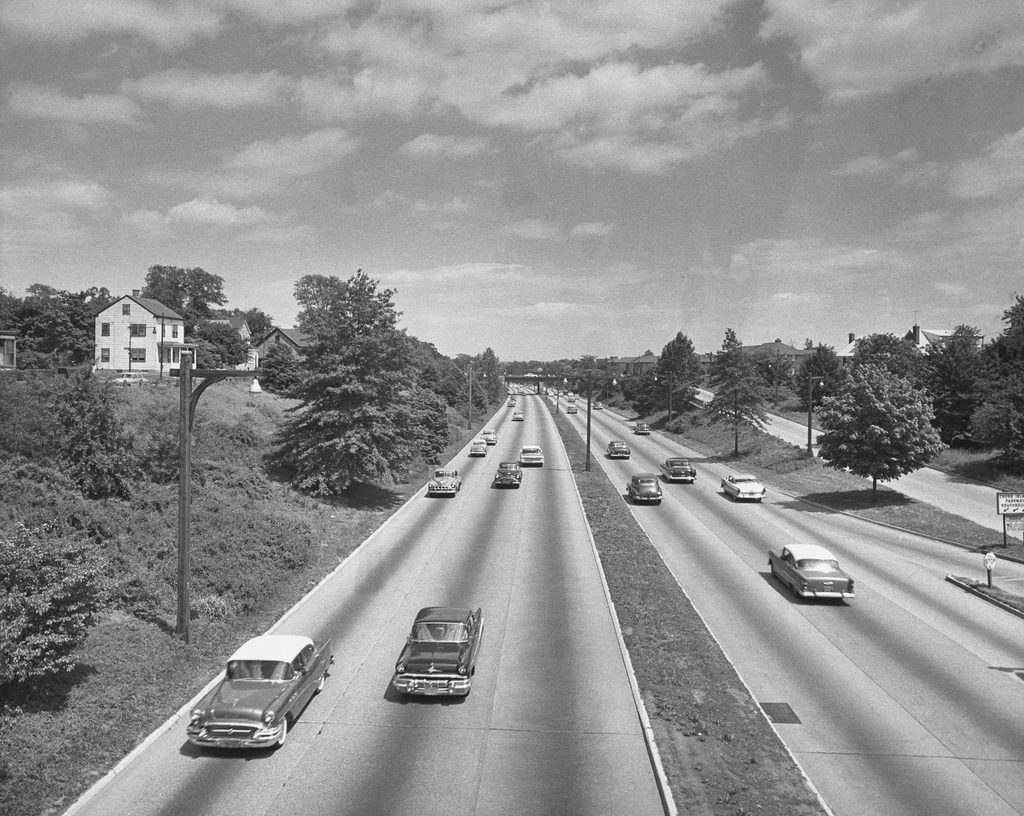
While suburbanization created demand for shopping malls, massive federal investment in infrastructure provided the highway system that enabled their explosive spread. The Federal-Aid Highway Act of 1956 (under Eisenhower) authorized the construction of the U.S. Interstate Highway System. It was designed to link major cities and allow the rapid movement of both civilians and the military. It completely changed the country’s face.
Canada had its own parallel transportation revolution in the 1950s and 60s with the Trans-Canada Highway and a whole host of regional expressways (Ontario’s 401 being the prime example).
These high-speed roads had a massive impact on the regional economy. The interstate highways were deliberately designed to avoid the traditional, congested downtown areas. Rather than have the traffic funnel into the cities, the interchanges were built in the far-flung, undeveloped suburbs where there was lots of land and it was cheap.
Retail shopping mall developers were absolutely aligned with this strategy. The malls were built close to the key interstate exits and highway junctions. The spatial logic was also aligned. A suburban family could drive out of their garage onto a smooth expressway and be at an enclosed shopping mall with free parking in less than 15 minutes.
That car-based accessibility was a death blow to the traditional downtown shopping business district. For well over a century, the city’s main streets were the center of retail activity in North America. Downtowns were always at a disadvantage for parking; streets were often restrictive and one-way, there was always downtown construction to build and/or remodel skyscrapers and aging infrastructure, and weather was a major issue in many markets. As highway ramps began funneling regional traffic directly into suburban shopping centers, footfall in the city center declined precipitously.
Department stores moved from flagship stores in the city to new, gleaming stores at the anchor points of suburban highways. That marked the beginning of the end for the traditional downtown, and the retail mall became the de facto center of commerce in the region.
Aside from locating retailers closer to where shoppers lived, suburban malls succeeded for many decades as they were built on a business model that was pure genius. Malls were designed to be typically anchored by four department stores, with sharply discounted rental rates per foot in exchange for providing foot traffic to the in-line specialty retailers located between the anchor stores. The specialty stores would pay much higher rent per foot in exchange for access to the footfall traffic generated by the anchor tenant department stores.
What Broke the Traditional Enclosed Mall?
For nearly 40 years, from the 1960s right through to the late 1990s, the mall was king. It was the definitive setting for youth culture, fashion, and suburban social life. The 21st century saw structural changes that exposed the inherent fragility of the traditional mall.
The first major driver of change was the explosion of e-commerce and the rise of the smartphone, which let consumers shop from their phones instead of going to the enclosed mall. Amazon, in particular, was the force that broke the enclosed-mall model. It offered an infinite aisle of products, with user reviews, competitive pricing, and seamless delivery right to your door. You didn’t need to spend hours trundling around the mall looking for a particular product.
While Amazon pioneered e-commerce in the late 1990s, momentum grew sharply around 2005. When Apple released the iPhone in 2007, and the Apple App Store and Android followed suit with its app market in 2008, everything changed. Today, e-commerce accounts for 17.1% of total U.S. retail sales (and roughly 20% to 21% globally), while mobile devices generate approximately 45% to 50% of U.S. e-commerce sales and 60% worldwide.
As digital matured and mobile devices made shopping a truly instant proposition, the number of people making regular trips to the mall for basics (clothes, electronics, books) dropped dramatically. The second major threat to the traditional enclosed malls was the emergence of the big-box retailers and off-price discount chains near highway exits. Walmart, Target, and Costco were massive disruptors in price and convenience, as were TJX, Ross and Burlington and they were all off-mall, taking tens or even hundreds of billions of dollars in retail sales from malls.
Walmart and Costco perfected the high-efficiency supply chain and extremely high sales productivity, so they could sell at much lower prices than traditional mall apparel stores and department stores and still be very profitable. Rather than walking through a multi-story mall, numerous time-starved suburban shoppers found it much more convenient to shop at an open-air “strip center” or standalone big-box format, where they could park outside a Target, Walmart or Costco, buy groceries, household goods, and clothes in one trip, and be on their way.
Department store anchors, which had anchored malls for generations, were caught in a vice between Amazon’s convenience and the big-box discounters’ pricing power. The demise of the anchors (Sears, Mervyn’s, Ames, Bradlee’s, Kaufman’s, Fortunoff, Goody’s, Lord&Taylor, F.W. Woolworth, Montgomery Ward, Zellers, The Bay, Bon-Ton, etc.) and the decline of other department stores still operating such as JC Penney and Macy’s were a key factor in the enclosed mall’s accelerated decline.
Is North America Over-Malled?
This highlighted the massive problem of over-malling in North America. The U.S. continues to lead the world in shopping center density at roughly 23.5 to 23.8 square feet per capita, a byproduct of decades of suburban sprawl, cheap land, and aggressive commercial real estate financing that generated 7.5 billion to 8 billion square feet of shopping center space — 10% to 15% of which consists of traditional enclosed malls — and balloons to around 36 square feet per person when standalone big-box and street retail are included.
Canada ranks second globally at 16.4 to 16.8 square feet per capita, yet its enclosed malls are far more productive per square foot than their American counterparts because harsh winters and dense population corridors around Toronto, Vancouver, and Montreal concentrate foot traffic, pushing top-tier centers like Yorkdale and the Toronto Eaton Centre well over $1,000 CAD per square foot.
By contrast, the United Kingdom sits at just 3.0 to 4.6 square feet per capita — roughly one-fifth to one-seventh the American rate — largely because strict post-war “Green Belt” zoning laws curbed out-of-town mall development to protect historic town centers and pedestrian High Streets, which bring total British retail space to roughly 19.5 square feet per capita when factored in.
Why Are Class B And C Malls Closing?
In the U.S. and Canada, the industry is now split down the middle with a very clear distinction between A, B and C tier properties. Class B and Class C malls have taken the brunt of the closures. They’re the lower end of the market in terms of sales per square foot, generally located in middle-tier suburban markets or smaller regional markets. When big anchor stores leave those malls, the co-tenancy clauses in smaller tenants’ leases often kick in, allowing specialty retailers to either break their lease or walk away with reduced rent or, worse, reduced percentage rent.
These weaker malls were in a self-fulfilling death spiral with significantly less free cash flow from operations. To preserve cash, maintenance was often deferred to the point that the malls became less desirable to shop at, outdated, and in need of increasing amounts of repairs. Many of them were converted to alternate uses, and others sat there as decaying eyesores; others were demolished and redeveloped as industrial logistics, residential, and mixed-use.
Why Are Class A Malls Thriving?
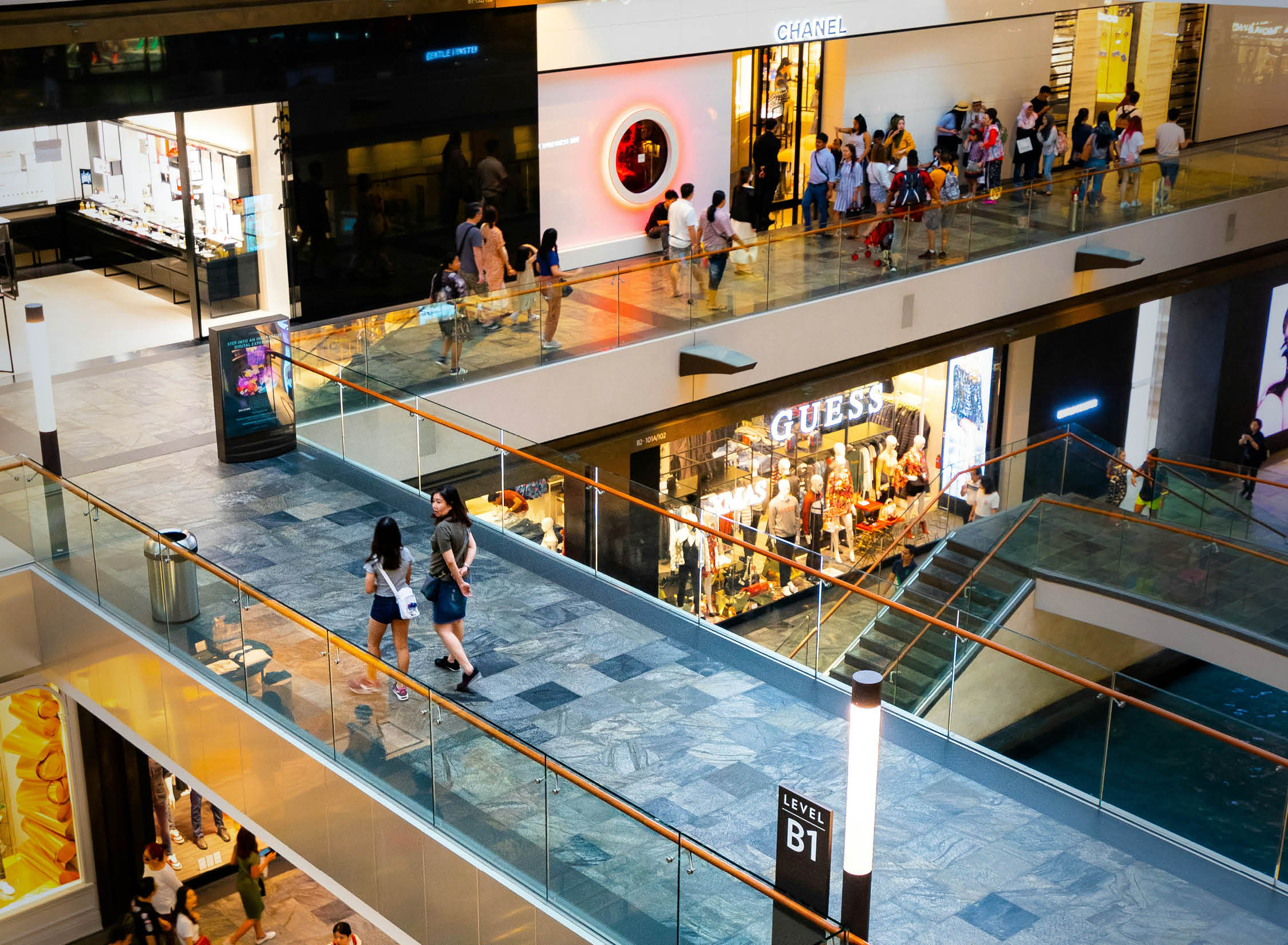
On the flip side, Class A malls have not just survived the retail shift; they’re actually doing very well. They’re in high-density, high-end urban and suburban centers, generating the best revenue per square foot and the highest occupancy rates. REITs have spent billions transforming these Class A centers from shopping centers into full-blown lifestyle centers.
The key to Class A success is providing an experience that you can’t get on a smartphone. Failing department store anchors in Class A malls have been replaced by a raft of luxury brand boutiques (Apple, Tesla, Gucci, etc.), high-end dining, indoor entertainment, fitness facilities, and luxury residential. Places like Yorkdale in Toronto, Northpark in Dallas, Easton Town center in Columbus, Bal Harbor in Miami, Mall of America in Minnesota, South Coast Plaza in Orange County, The Grove in LA and Westfield Century City in LA are visited not just to shop, but to eat, socialize, and be entertained.
The evolution of the North American shopping mall is a reflection of the changing habits, transport infrastructure and technology of society over the last 70 years. It emerged from the post-war boom in suburban development and was fueled by the expansion of the interstate highway system, which effectively displaced the traditional downtown as the center of commerce.
While digital commerce and big-box discounters dismantled the middle-tier commodity mall, the format itself has not vanished. Instead, it has adapted, shedding excess capacity and evolving into a denser, higher-end, more experiential environment for the modern era.
Antony Karabus is a Retail Advisor.
Sources:
Historical & Infrastructure
Gruen, Victor, and Larry Smith. Shopping Towns USA: The Planning of Shopping Centers. Reinhold Publishing Corporation, 1960. (Definitive primary documentation by the architect of Southdale Center on the planning, economics, and architectural intent of enclosed shopping centers).
Gillette, Howard. Here Comes the Sun: The Suburban Shopping Center and the Transformation of Mid-Century America. Temple University Press, 1985. (Examines the post-WWII Eisenhower administration policies, suburban migration, and the political economics of suburban commercial development).
Federal-Aid Highway Act of 1956. Pub. L. 84-627, 70 Stat. 374. (The landmark U.S. legislation authorizing the National System of Interstate and Defense Highways, which re-routed transit away from urban cores).
Jackson, Kenneth T. Crabgrass Frontier: The Suburbanization of the United States. Oxford University Press, 1985. (Comprehensive history of suburban growth, automobile reliance, and the economic decline of traditional city downtowns).
Retail Disruption & Economic Analysis
Fishman, Charles. The Wal-Mart Effect: How the World’s Most Powerful Company Really Works—and How It’s Transforming the American Economy. Penguin Books, 2006. (Detailed analysis of big-box pricing structures, supply chain logistics, and the displacement of department stores).
Stone, Brad. The Everything Store: Jeff Bezos and the Age of Amazon. Little, Brown and Company, 2013. (Chronicles the expansion of digital storefronts and e-commerce disruptions to traditional physical retail models).
International Council of Shopping Centers (ICSC). Research Reports on Tier A, B, and C Property Bifurcation and Tenant Health (2015–2024). (Industry metrics documenting sales per square foot benchmarks, tenant co-tenancy clauses, and structural vacancy trends across mall tiers).
CoStar Group & Green Street Advisors. U.S. Commercial Real Estate Mall Performance & Valuation Studies. (Provides empirical data on the survival rates, redevelopment strategies, and luxury/experiential pivot of Class A regional malls).
Related Karabus opinion article: The Off-Price Playbook: How TJX, Ross and Burlington Are Winning Market Share
Street Talk is the weekly newsletter for retail and fashion executives who want analysis, not noise. New issues every Thursday. Subscribe today.