


Analysis
September 28 2026
U.S. consumer sentiment fell to 70.4 in August — its lowest level in years — because record household debt, near-record credit card interest rates and persistently high gas prices are squeezing discretionary income even as the labor market stays stable. The consumer-driven economy in America is feeling the pinch of low household sentiment, with levels comparable to those seen at
Arthur Zaczkiewicz

U.S. consumer sentiment fell to 70.4 in August — its lowest level in years — because record household debt, near-record credit card interest rates and persistently high gas prices are squeezing discretionary income even as the labor market stays stable.
The consumer-driven economy in America is feeling the pinch of low household sentiment, with levels comparable to those seen at the lows of recent recessions. Still, the labor market is notable avoiding a collapse.
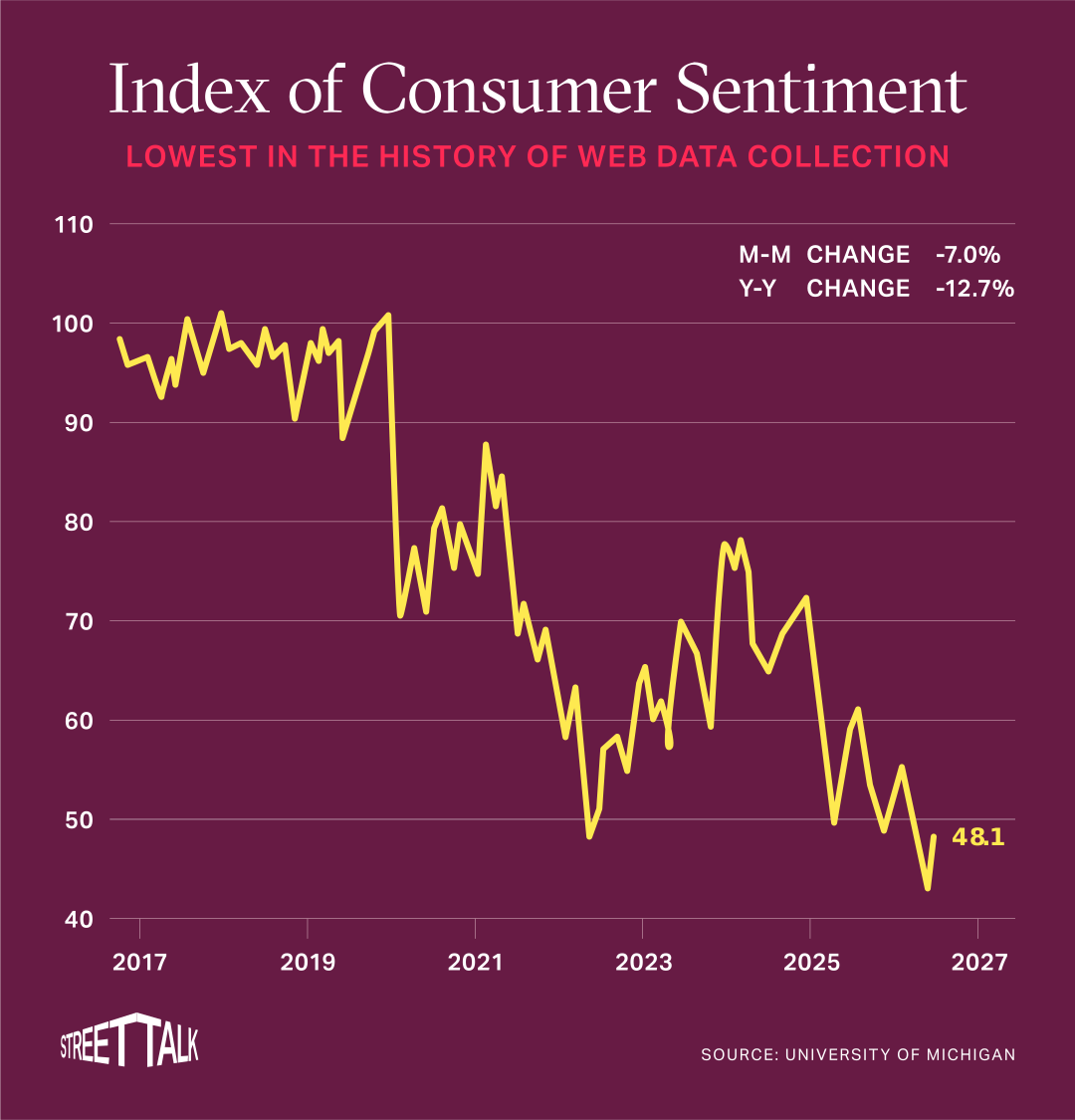
Sentiment surveys and labor market indicators for August suggest that, so far, consumers are less tortured by concerns over their jobs than their investment portfolios. But their outlook doesn’t look good. Last week, the University of Michigan’s long-established Consumer Sentiment Index plunged to 48.1 in September, making it the lowest reading in several years.
How Much Debt are U.S. Households Carrying in 2026?
Meanwhile, household finances are facing severe pressures from persistent inflation, increasing debt service expenses and higher fuel prices. And it is taking a toll on the consumer mindset, which is now focused intensely on basic expenses. Consumers have also seen little increase in real income over the past five years. As a result, consumer priorities have shifted.
While the headline inflation rate may have fallen in the last month, the overall price level of items that the average American consumes on a daily basis continues to rise at a historical high. This means that even though the monthly inflation numbers have recently fallen, the overall prices of items such as groceries, housing, utilities and insurance are at historical highs as a percent of middle-class and lower-income Americans’ income.
To cope, consumers are visiting discount stores like Aldi, choosing private-label over name brands and forgoing discretionary purchases. All in an effort to cut costs in the face of rising prices. As the long period of rising living costs drags on, more and more consumers are succumbing to what can be described as inflation fatigue. Industry analysts are concerned that earnings are unlikely to rise above the level of prices in the year ahead.
To keep up with the increased cost of living year after year, consumers have turned to debt. Total household debt has reached record levels, consisting largely of credit card debt and high interest personal loans. Initially intended to be a short-term fix for the sharp increase in basic expenses a few years ago, credit cards have become a long-term drag on the finances of millions of families. Consumers are also increasingly using Buy Now, Pay Later (BNPL) for making non-discretionary purchases.
In addition to the strain that ongoing price increases are having on families, the increasing burden of high rates of interest on outstanding debt has created yet another set of challenges for families. As rates on credit cards and other personal debt have increased to fight inflation, the average APR on credit cards has jumped to near record levels. As a result, a growing share of the income that households do generate is being devoted to make interest payments on outstanding debt rather than to fund new consumption. And delinquency rates on credit cards and other personal non-housing debt, such as auto loans, have begun to rise, with particularly sharp increases among younger households and those with lower incomes.
By consuming a growing share of household income, the interest on existing debt restricts consumption and forced savings and has contributed to a trend of declining discretionary spending by many households.

How Do Gas Prices Affect Retail Spending?
Another pain point are fuel prices. Since fuel is a non-negotiable expense for most households, higher fuel prices translate into lower spending on other discretionary products and services (dining out, entertainment, retail spending etc.).
Global energy supply constraints, combined with the impact of geopolitics and seasonal refinery shutdowns, have kept gasoline prices at historically high levels for an extended period of time. When households spend more to fill up their cars, they have less to spend elsewhere in the economy. Moreover, gasoline prices impact the cost of goods to be delivered to stores. Retailers of food and other necessities frequently pass on the increased cost of transportation in the form of higher prices at the store.
So, as debt pressure mounts, consumers have become increasingly particular in their expenditures. They are more value-focused. Sectors offering immediate and substantial value are faring well, while discretionary expenditure — particularly in respect of high-ticket items — is being rigorously rationed. For reasons related to high interest rates and uncomfortably high price tags, sales of new cars, home improvements and major domestic appliances have declined significantly. On the other hand, sales of essential goods and services — and of value-for-money products — continue to rise strongly.
When Will Consumer Confidence Recover?
While overall confidence remains low and consumers continue to engage in defensive purchasing behavior, there are pockets of value-based and affordable retail activity. Constrained household incomes and high debt levels continue to demand that consumers spend in areas they perceive to offer greatest value for the hard-earned dollars they do commit to expenditure. Retail is likely to continue to experience volatile sales in the short-term, as wealthy households continue to spend in an environment that is favorable to consumption while less affluent consumers are forced to maintain a rigorous “belt and braces” approach to expenditure in order to prioritize repayment of high-interest debt.
At the same time, higher-income households that have assets in good standing have returned to spending albeit at lower levels than in prior years. However, for the growing number of middle- and lower-income households that are subjected to a combination of debt service and a rising list of necessary expenditures at higher average costs, life continues to be very difficult.
Looking ahead, consumers will likely continue to be precarious even as the economy continues to benefit from low unemployment. In the short term, sentiment is likely to continue to remain at or near lows until there is some relief from core living costs, interest rates and fuel prices. In the long term, households will need to see some balance sheet repair and a reduction in debt service to return to a pattern of spending that supports growth in domestic spending — spending that is now operating in a very defensive, highly price sensitive environment.
Related article: Are Consumers Cutting Back — or Just Choosing Differently?
Street Talk is the weekly newsletter for retail and fashion executives who want analysis, not noise. New issues every Thursday. Subscribe today.