


Analysis
October 27 2026
Fashion shoppers want honest pricing, reliable fit and working stores, and AI agents are about to audit all of it. Retailers that fix the fundamentals first will earn the next customer, human or not. A significant shift is underway in the retail sector. The consumer playbook that relied on cheap synthetic fabrics, endless influencer promotions and static sizing is collapsing.
cornerof5th

Fashion shoppers want honest pricing, reliable fit and working stores, and AI agents are about to audit all of it. Retailers that fix the fundamentals first will earn the next customer, human or not.
A significant shift is underway in the retail sector. The consumer playbook that relied on cheap synthetic fabrics, endless influencer promotions and static sizing is collapsing. According to the AlixPartners 2026 Fashion Consumer Sentiment Index, which surveyed over 9,000 U.S. consumers, retail executives face an era defined by a complex mix of macroeconomic uncertainty, technological evolution and shifting body dynamics.
While consumers report low financial sentiment, spending intent has decoupled from macro conditions, leading shoppers to rationalize purchases by seeking long-lasting value, authentic store experiences, and algorithm-ready metadata.
To survive, retail executives must adapt to five core findings from the report, each carrying major operational and strategic implications for brands and stores.
How Will AI Shopping Agents Change Fashion Discovery?
Machine-driven commerce is quietly moving to the front door of retail discovery. While 10% of consumers overall and 14% of Gen Z and Millennials currently begin product discovery with AI tools, a sharp shift in consumer behavior is on the horizon. AI shopping agents do not evaluate curated imagery or persuasive marketing copy. Instead, they scan structured metadata, including garment specs, price points, real-time availability, and verified customer reviews.
This creates a sharp divergence in the retail landscape. High-end luxury purchases will remain emotionally driven and brand led. Conversely, commodity replenishment purchases, such as basic black leggings under $30, will turn strictly spec- and price-driven. Brands in the middle market face significant risk if their product data is incomplete, messy or not optimized for search agents.
For retailers and brands, the strategic imperative is clear: product metadata optimization is no longer just an IT back-office task; it is core brand protection. Brands must structure product feeds, taxonomy, and inventory availability so that autonomous agents surface their items. Companies must also identify which items in their assortment have been commoditized and focus on building unique value around their core products.
How Are GLP-1 Drugs Changing Fashion Sizing?
The rapid adoption of GLP-1 weight-loss medications, used by 11% of Americans, is introducing unprecedented volatility into fashion demand curves. Body changes are altering fit requirements, causing non-proportional waist-to-hip shifts and muscle loss. As a result, the importance of consistent fit and sizing in activewear nearly doubled between 2025 and 2026, rising from 29% to 54%.
At the same time, demand for extended sizing is softening. The importance of inclusive product options in activewear dropped from 55% in 2024 to 37% in 2026. Fast-fashion retailers such as ASOS and Reformation cut new plus-size arrivals by 32% and 60% respectively over two years. Meanwhile, demand for garment alterations has jumped 29%, particularly in activewear and outdoor categories. Accessories and jewelry have emerged as safe havens, remaining the only categories where consumers plan to increase spend, largely because they carry zero fit risk during body transitions.
Brands must overhaul legacy fit models and use real-time inventory forecasting instead of relying on outdated multi-year sizing data. Retailers should consider offering tailoring, fit-consultation, or alteration services in-store to capture market share. Sourcing teams must also build flexibility into production cycles to handle shifts in sizing demand without getting trapped with excess deadstock.
Are Influencers Still Worth the Marketing Budget?
The era of traditional influencer marketing is yielding diminishing returns. Consumer trust in paid influencer partnerships has plummeted because sponsored creators seem out of touch during tight economic conditions. Influencer partnerships dropped 13 percentage points in importance among specialty shoppers since 2025, ranking dead last among store experience attributes. Younger shoppers regularly scroll past sponsored posts or mute creators for over-promoting luxury goods.
However, brand collaborations and niche partnerships are filling the void. Millennial interest in unique brand, artist, or celebrity collaborations in luxury and jewelry nearly tripled, jumping from 14% to 42% in a single year. Strategic pairings, such as Gap partnering with designer Sandy Liang or outfitting cultural tastemakers, create a powerful brand halo that elevates social capital without feeling like a hard sell. Authentic creator mentions also generate the rich organic metadata needed to rank higher in AI discovery search engines.
Brands must reallocate marketing budgets from generic pay-for-play influencer impressions to deeply integrated, creative collaborations. Partnerships must deliver authentic cultural relevance and tangible proof of quality, not superficial promotional pushes.
What Is Fiber Fraud and Why Are Shoppers Angry?
Consumers are scrutinizing garment labels closely. Driven by rising clothing prices and a flood of synthetic materials, shoppers are actively calling out fiber fraud. EDITED data shows polyester overtook cotton in new womenswear arrivals in mid-2025, yet average advertised garment prices climbed to record highs.
Gen Z shoppers are spearheading this backlash. While Gen Z embraces budget-friendly dupes, they reject cheap synthetic blends priced like premium goods. As a result, 88% of shoppers demand transparent pricing, and 86% prioritize price-quality alignment. Consumers seek Y2K-era vintage apparel from brands like Ralph Lauren, Calvin Klein and J.Crew on resale platforms, recognizing that garments from previous decades often had higher natural-fiber content, such as pure wool, cotton, and silk. Modern brands that prioritize natural fibers, such as Theory, are seeing significant gains in consumer sentiment rankings.
Retailers must address material composition transparency across their supply chains. Lowering fabric quality while raising prices damages brand equity. Sourcing departments need to secure high-quality natural fibers, audit mill supply chains and communicate material integrity clearly on product tags.
What Do Shoppers Now Expect from Stores?
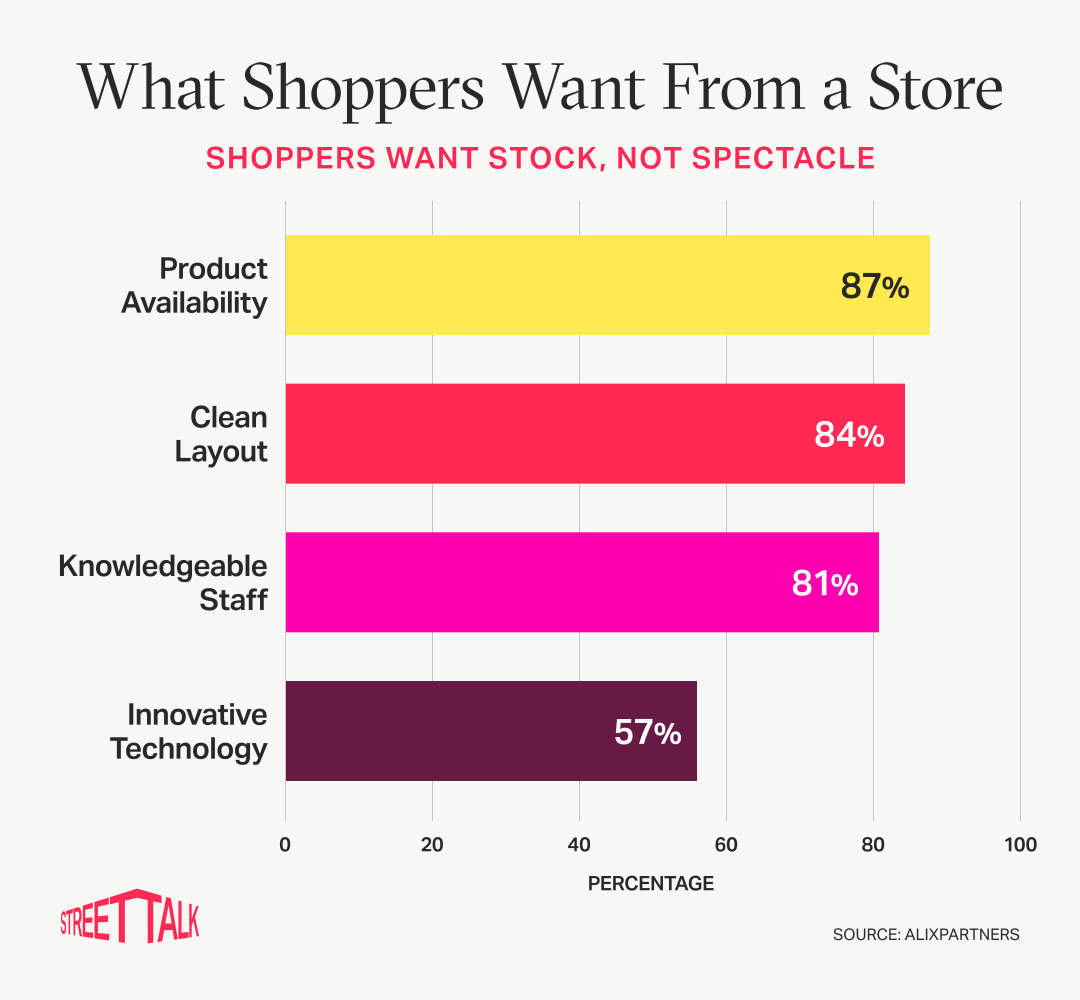
Physical stores are re-emerging as vital third spaces where consumers seek community and hands-on interaction. However, shoppers tune out superficial store-of-the-future tech gimmicks. CSI data shows non-shopping experiences (49%) and virtual try-ons (56%) rank near the bottom of purchase drivers. Instead, over 80% of shoppers demand core operational fundamentals: in-stock inventory (88%), clean and easy-to-navigate store layouts (84%) and knowledgeable floor staff (81%).
Retailers that combine flawless core service with functional interactivity are seeing direct financial returns. Dick’s Sporting Goods climbed to the top spot in outdoor retail by transforming stores into interactive hubs featuring batting cages, golf greens, and size-request monitors, lifting basket sizes by 3.4% year over year. Similarly, Coach drove 8% basket-size growth by deploying customized coffee shops and interactive craft stores.
Store operations must focus on getting the basics right before investing in novelty technology. Floor plans should be optimized for easy browsing. Inventory systems must maintain strict in-stock integrity. Store associates should be empowered to assist shoppers efficiently. Experiential investments should complement the product, giving customers tangible reasons to test gear, customize items, and connect with the brand.
Related Article: Retailers Face Hard-Earned Dollars as 2026 Holiday Budgets Shrink Back to 2024 Levels
The Street Talk newsletter delivers the sharpest fashion, beauty, and retail analysis every Thursday — straight from Arthur Zaczkiewicz, former Executive Editor at WWD. Subscribe today.