

Analysis
June 9 2026
The global luxury market has shifted from post-pandemic double-digit growth to single-digit normalization, driven by aspirational consumer pullback amid inflation fatigue. Mid-tier buyers now favour accessible luxury — beauty, fragrance, eyewear — over full-price hard luxury. To compete in this new normal, brands must combine unparalleled craftsmanship with digital-physical integration and regional cultural authenticity. The global luxury retail market has
Arthur Zaczkiewicz

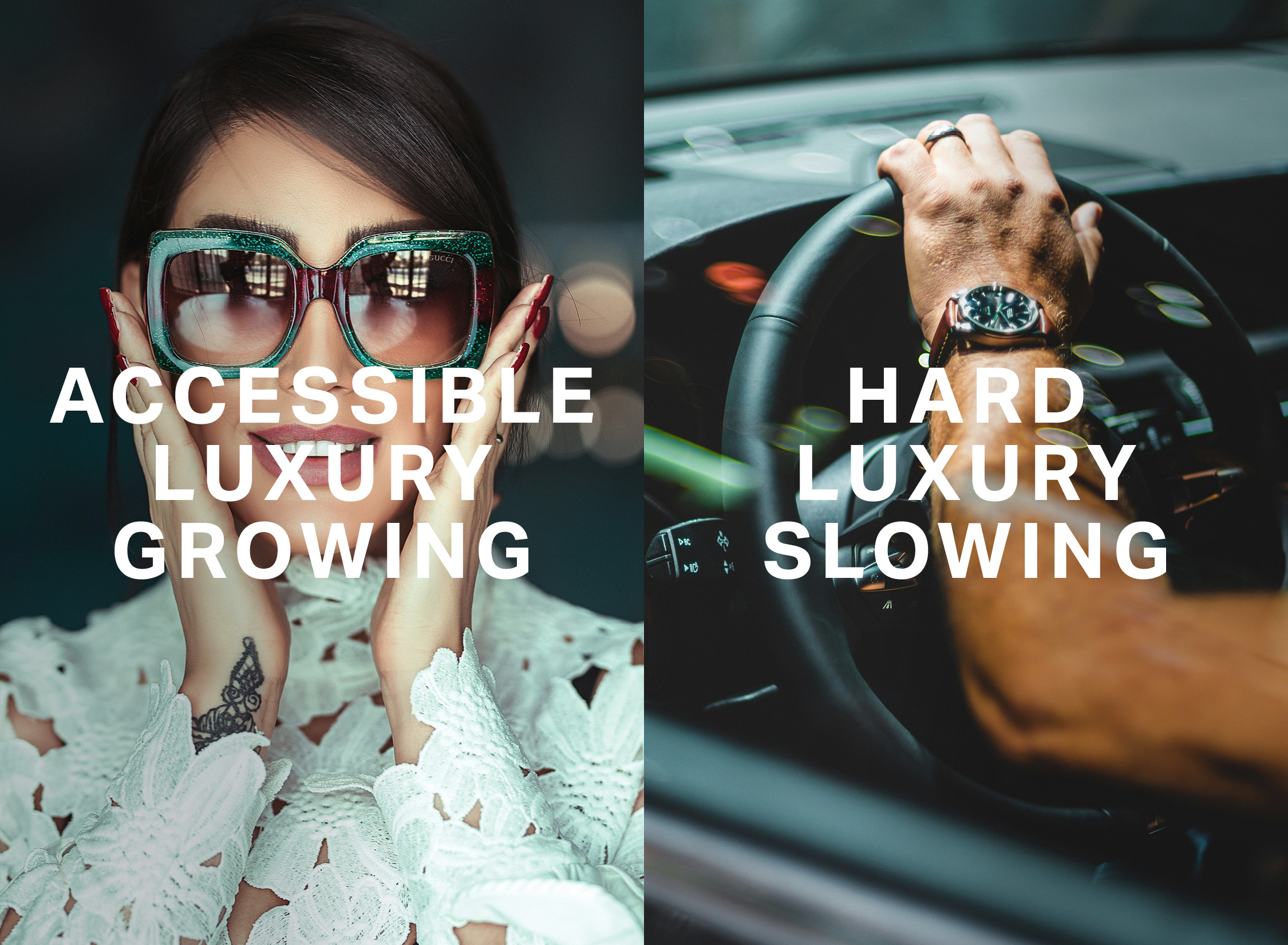
The global luxury market has shifted from post-pandemic double-digit growth to single-digit normalization, driven by aspirational consumer pullback amid inflation fatigue. Mid-tier buyers now favour accessible luxury — beauty, fragrance, eyewear — over full-price hard luxury. To compete in this new normal, brands must combine unparalleled craftsmanship with digital-physical integration and regional cultural authenticity.
The global luxury retail market has reached a critical turning point, shifting away from the historic post-pandemic boom into a period defined by cooler growth and intense strategic realignment as well heightened consumer selectivity.
Following years of double-digit expansion, the personal luxury goods sector is adjusting to a macroeconomic environment marked by fluctuating consumer confidence and persistent cost-of-living stresses. This transition represents a stabilization or “normalization” of the market, wherein total global luxury spending has hit a plateau, growing at a much more modest, single-digit pace compared to the rapid surges seen in previous years, according to data from Bain & Company & Fondazione Altagamma.
This slower trajectory is largely due to structural shifts among different segments of the luxury audience.
While ultra-high-net-worth individuals continue to purchase absolute expressions of luxury, aspirational consumers, historically a primary driver of high-volume growth, are pulling back significantly. Amid widespread inflation fatigue and economic uncertainty, these middle-tier luxury buyers are engaging in what experts term as “intentional indulgence,” becoming far more deliberate about how they save and where they choose to treat themselves.
Consequently, the luxury sector is undergoing a profound change in consumer habits, geographic performance and product trends, forcing brands to completely rethink their traditional business equations.
How Is The Secondary Market Reshaping Luxury Product Strategy?
Product trends heavily reflect this new consumer caution. A clear division has emerged within high-end fashion portfolios. Hard luxury categories such as watches, fine jewelry and statement leather goods are experiencing a distinct slowdown as shoppers avoid full-price impulse buying. Instead, consumers are finding solace in small indulgences. The “Lipstick Effect” remains alive and well, manifesting as robust demand for prestige beauty products, particularly high-end fragrances and creative eyewear lines, which serve as more accessible entry points into prestigious brands.
Concurrently, the secondary market has emerged as an unavoidable force. The second-hand luxury market has expanded rapidly, fueled by a mixture of opportunistic factors including greater affordability, faster acquisition times for rare pieces and a growing consumer focus on circularity. Major traditional institutions are taking note; department stores have launched dedicated pre-owned initiatives, and watchmakers like Rolex have overhauled their distribution models to incorporate officially authorized, pre-owned retail programs. The booming resale sector caters directly to the modern buyer’s quest for fair value, but it also presents a delicate challenge for legacy houses trying to maintain total control over their exclusive brand images.
Which Global Markets Are Leading Luxury Growth In 2026?
Geographically, the map of luxury consumption is being redrawn. Historically reliable strongholds like the U.S. have displayed intermittent signs of recovery, with regional foot traffic remaining volatile, while cross-border tourism disruptions continue to impact markets like Canada. Meanwhile, Japan has emerged as an unexpected leader in luxury sales growth, propelled by favorable currency dynamics that have attracted an enormous wave of tourist spending.
The most dynamic transformation continues to unfold in China. Over the past decade, the Chinese personal luxury market has experienced rapid exponential growth, but it is no longer a monolithic entity. Consumer behavior in cosmopolitan hubs such as Shanghai and Beijing are increasingly favoring modern aesthetics, impeccable product quality and highly immersive brand interactions over basic logo placement.
Simultaneously, international houses face the unique challenge of navigating Guochao, which isa profound sense of national pride in domestic culture among younger generations. Winning in this environment requires a hybrid strategy, where global design languages are thoughtfully blended with regional heritage and traditional craftsmanship to demonstrate genuine cultural respect without diluting the brand’s core international identity.
What Must Luxury Brands Do Differently In Slower-Growth Conditions?
The current economic cooling carries profound operational implications for luxury brands and retailers. First, companies must master the omnichannel paradox. Digital interactions now heavily influence the vast majority of luxury purchases, transforming how brand equity is measured. Success is increasingly defined by real-time online sentiment, visibility, and “share of search” metrics. Still, despite the double-digit growth of digital channels, physical real estate remains indispensable. Consumers are exhibiting a strong preference for human connection during the actual purchase stage, meaning that physical stores must evolve from mere transactional spaces into venues for curated, memorable, and deeply personalized storytelling.
Second, the integration of artificial intelligence is redefining customer relations. Consumers are widely embracing generative AI to deliver hyper-personalized content, lookbooks and streamlined digital routines, but they strongly demand that technological efficiency coexist with strict personal control and data transparency. Brands that leverage predictive AI to anticipate commerce trends while preserving a flawless, human-centric in-store environment will be best positioned to retain client loyalty.
Ultimately, the luxury market has entered an era where resting on heritage alone is insufficient. To thrive in this lower-growth “new normal,” brands must rediscover their foundational essence: unparalleled craftsmanship, true creativity and distinctive values. The future belongs to luxury brands and retailers that can successfully synthesize these timeless, old-school playbooks with flawless, tech-enabled execution and deep cultural authenticity.
References
Bain & Company, & Fondazione Altagamma. (2024).
Capgemini. (2026). What matters to today’s consumer 2026: Careful spending meets intentional indulgence.
EDHEC. (2026). Luxury consumption in China: A story of dynamic transformation
France, C., Davcik, N. S., & Kazandjian, A. (2025). Capturing digital brand equity with the L247 luxury brand index.
Murtas, A., & Pedeliento, G. (2025). The second-hand luxury market: Growth, distribution, and brand image implications.
Yiannakou, A., Chen, J., & P. P. Klaus. (2022). Store atmospherics, emotional connection, and repurchase intentions in luxury retail.
Eyewear photo by Ali Pazani
Watch photo by David von Diemar
Related article: A Decade of Sales Data Shows Millennials Are Treating Rolex Like Equity
Street Talk is the weekly newsletter for retail and fashion executives who want analysis, not noise. New issues every Thursday. Subscribe today.