

Retail
May 19 2026
Walmart, Target, Costco, and Dollar General collectively account for 17.5% of all U.S. brick-and-mortar foot traffic as of Q1 2026, up from 16.8% in 2019, according to Placer.ai. Their advantage comes from mission clarity — each serves a distinct shopping occasion — while mid-market retailers have struggled between consumers trading down on price and trading up on quality. The landscape
Arthur Zaczkiewicz

Walmart, Target, Costco, and Dollar General collectively account for 17.5% of all U.S. brick-and-mortar foot traffic as of Q1 2026, up from 16.8% in 2019, according to Placer.ai. Their advantage comes from mission clarity — each serves a distinct shopping occasion — while mid-market retailers have struggled between consumers trading down on price and trading up on quality.
The landscape of American brick-and-mortar retail is undergoing a new, powerful consolidation, with a select group of dominant giants capturing an increasing share of consumer foot traffic.
According to a new research from location intelligence firm Placer.ai, titled “Physical Retail in 2026: How the Giants Are Winning,” the combined traffic share of Walmart, Target, Costco Wholesale and Dollar General rose from 16.8% in 2019 to 17.5% in the first quarter of 2026.
This ongoing consolidation highlights how these massive players are successfully leveraging their consumer data, vendor leverage and operational efficiencies to distance themselves from the competition.
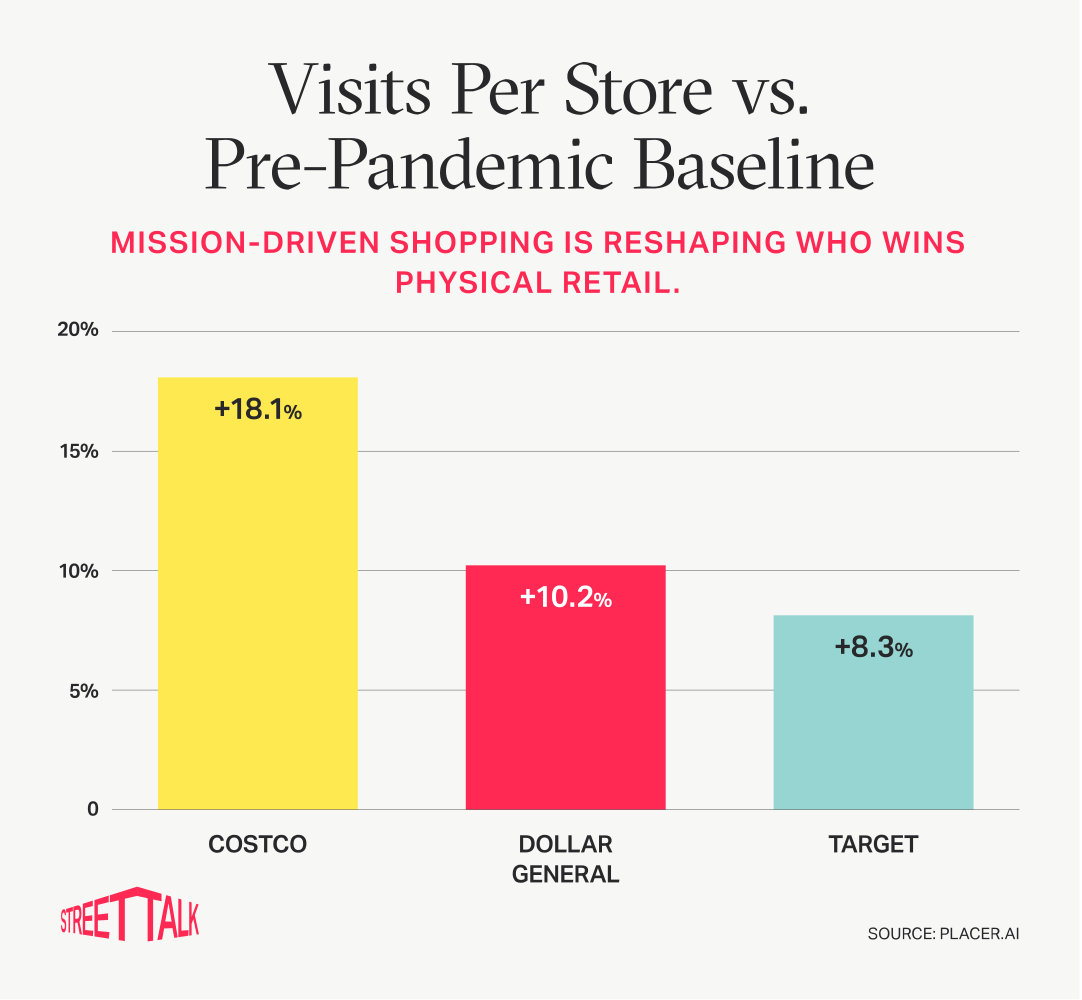
While industry dominance is widespread, the report also reveals a meaningful divergence in how individual retail giants are performing. Costco and Dollar General, for example, are leading the pack in traffic growth, propelled by major footprint expansions and rising productivity per location. In 2025, visits per store exceeded pre-pandemic levels by 18.1% for Costco and 10.2% for Dollar General. Meanwhile, Walmart remains the absolute titan of the physical retail space, single-handedly accounting for 9.7% of all traffic to major brick-and-mortar chains in 2025, a massive market share that has held steady over the last three years.
Why are Value and Bulk Retailers Outperforming Mid-Market Chains?
The data also signals an encouraging turning point for Target, whose visit share had previously remained flat amidst stalled momentum. Early 2026 foot traffic data points to emerging signs of a successful turnaround for the retailer, with its first-quarter visits tracking 8.3% higher than the same period in 2019. Industry experts view Target’s recent struggle and subsequent recovery as a reflection of a broader bifurcation in the retail market, where middle-market brands have found themselves caught between consumers trading down to extreme value and those trading up to high quality.
The report concludes that winning in today’s retail climate requires a nuanced delivery of value tailored to specific consumer missions. Shoppers are increasingly favoring purpose-driven trips, choosing between extreme value paired with convenience at Dollar General and bulk value paired with loyalty at Costco. For commercial real estate operators and consumer packaged goods companies, the major takeaway from 2026 is clear: success no longer hinges solely on low prices, but on optimizing specific store formats that cater to whether a customer is embarking on a quick fill-in run or a major stock-up mission.
Photo by Cam Ballard
The Street Talk newsletter delivers the sharpest fashion, beauty, and retail analysis every Thursday — straight from Arthur Zaczkiewicz, former Executive Editor at WWD. Subscribe today.