

Podcast
September 15 2026

QBuster, the queue management platform operating in over 10,000 retail locations, now manages more than one billion customer transactions annually — saving an estimated half a million hours of consumer time per year. CEO Keith Carpentier reveals why checkout remains retail’s highest-friction point, how single-line queue architecture consistently outperforms multi-lane setups, and why networked queue screens are becoming a new
Cass Spencer

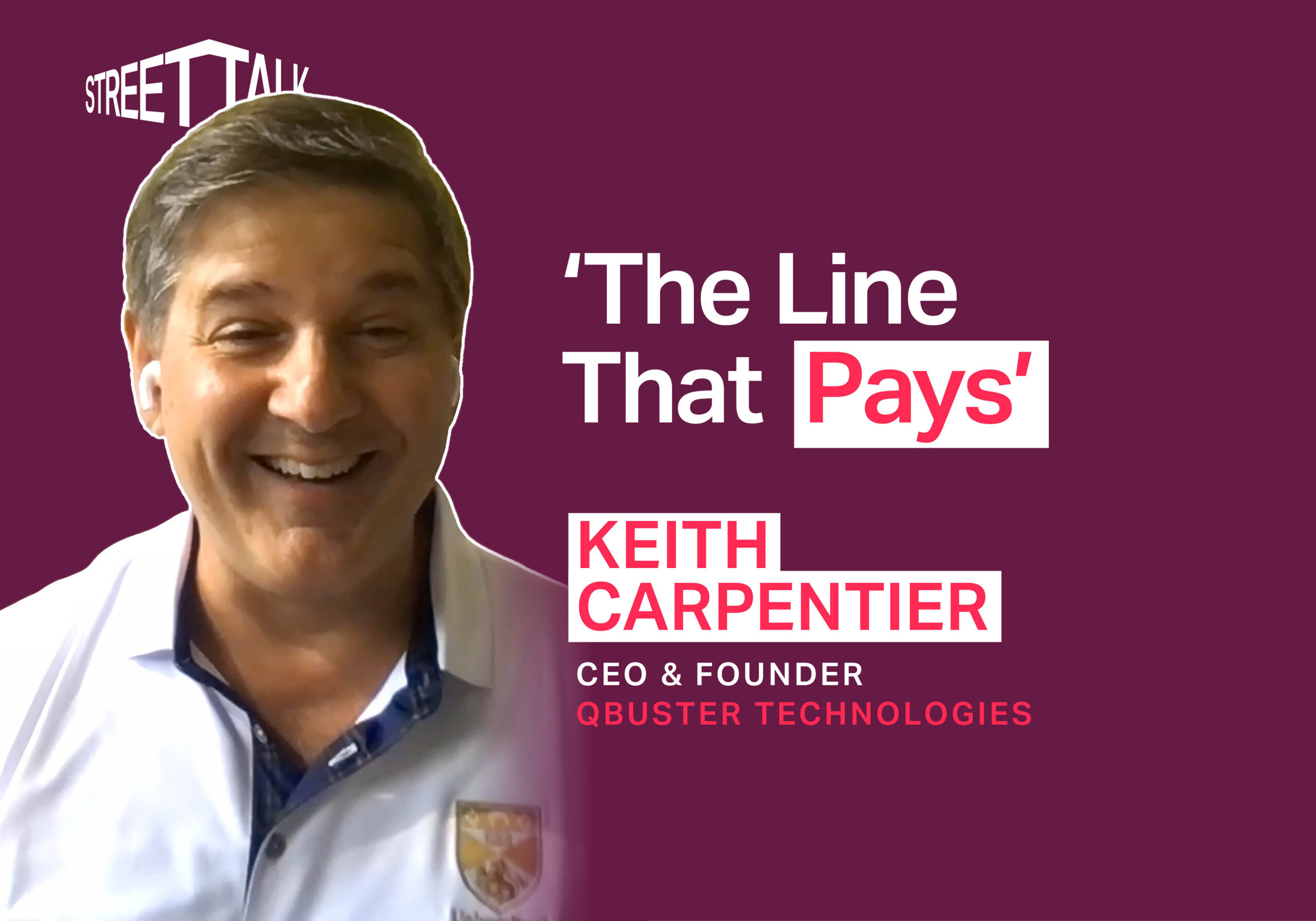
QBuster, the queue management platform operating in over 10,000 retail locations, now manages more than one billion customer transactions annually — saving an estimated half a million hours of consumer time per year. CEO Keith Carpentier reveals why checkout remains retail’s highest-friction point, how single-line queue architecture consistently outperforms multi-lane setups, and why networked queue screens are becoming a new retail media revenue channel.
Checkout is retail’s dirty secret. Every operator knows the queue is a problem. Almost none of them have solved it — because solving it means confronting a collision of physical architecture, labor economics, customer psychology, and legacy infrastructure all at once. Keith Carpentier built QBuster eleven years ago because he saw that gap and knew nobody else was closing it.
QBuster is now in over 10,000 stores, processing north of a billion customer transactions a year. The math on that number is striking: two seconds saved per transaction scales to half a million hours returned to consumers annually. But Carpentier’s view of the opportunity runs deeper than the throughput metrics. The real leverage, he argues, is in perception — the gap between the wait customers experience and the wait they feel. An occupied wait always feels shorter. A fair queue always performs better. And a retailer who understands that is already ahead of one who’s just counting heads at the register.
What’s faster than SCO?
The self-checkout debate, the push toward frictionless walk-out, the collapse of impulse revenue at the front end — Carpentier has a take on all of it, and none of them are the takes you’d expect. SCO isn’t going anywhere; it’s just slower than a professional cashier and nobody wants to say so out loud. Walk-out peaked and pulled back. And the single-line queue, the format Disney proved decades ago, is still the most consistently misunderstood format in retail — because it looks longer, even when it moves faster.
Keith Carpentier joins Arthur Zaczkiewicz to trace the evolution of checkout from friction point to strategic lever — and to explain why QBuster’s newest hardware is being designed for the Retail Safety Workers Act before most retailers have even read it.
Arthur Zaczkiewicz[00:01]
Hi, I’m Arthur Zaczkiewicz and welcome to Street Talk — where we hear from industry leaders and executives to discuss retail, fashion, apparel, technology, real estate, and more. Today we welcome Keith Carpentier, CEO and founder of QBuster. Keith, welcome.
Hi, I’m Arthur Zaczkiewicz and welcome to Street Talk — where we hear from industry leaders and executives to discuss retail, fashion, apparel, technology, real estate, and more. Today we welcome Keith Carpentier, CEO and founder of QBuster. Keith, welcome.
Keith Carpentier[00:18]
Thank you, Arthur. Great to be here.
Thank you, Arthur. Great to be here.
Arthur Zaczkiewicz[00:22]
Before we start, let’s tell everybody what QBuster is and what you do in the market.
Before we start, let’s tell everybody what QBuster is and what you do in the market.
Keith Carpentier[00:28]
We occupy a curious little niche — something most people overlook. It’s called queue management. Big retailers, water parks, banks, movie theaters, TSA — they all use QBuster to help manage customer flow. There are various layers to it, but the long and short is: until there’s a perfect balance between staff and customer flow, there’s a need for QBuster to help bridge that gap.
We occupy a curious little niche — something most people overlook. It’s called queue management. Big retailers, water parks, banks, movie theaters, TSA — they all use QBuster to help manage customer flow. There are various layers to it, but the long and short is: until there’s a perfect balance between staff and customer flow, there’s a need for QBuster to help bridge that gap.
Arthur Zaczkiewicz[01:08]
What is the single biggest friction point in the physical checkout process that you solve?
What is the single biggest friction point in the physical checkout process that you solve?
Keith Carpentier[01:16]
It’s certainly no secret that within the shopping journey, checkout is one of the number one friction points — or complaint points. And checkout is hard because it’s so variable. The flow of guests through the door is a bit random. Retailers generally know the ebb and flow, but it can’t be predicted precisely enough to evenly match customers and staff. So inevitably that leads to a line or a queue — which, to our way of thinking, is actually a good problem to have. If you’re a retailer with more paying customers than you can serve at any one moment, that’s a good thing.
It’s certainly no secret that within the shopping journey, checkout is one of the number one friction points — or complaint points. And checkout is hard because it’s so variable. The flow of guests through the door is a bit random. Retailers generally know the ebb and flow, but it can’t be predicted precisely enough to evenly match customers and staff. So inevitably that leads to a line or a queue — which, to our way of thinking, is actually a good problem to have. If you’re a retailer with more paying customers than you can serve at any one moment, that’s a good thing.
Keith Carpentier[02:10]
I know queue and line can feel like a dirty word, but we take the mindset that this is a bit of reality — and we can help you make lemonade out of lemons.
I know queue and line can feel like a dirty word, but we take the mindset that this is a bit of reality — and we can help you make lemonade out of lemons.
Arthur Zaczkiewicz[02:26]
How do you balance the need for physical hardware with AI-driven, invisible queue management? Retailers face increasing pressure to modernize.
How do you balance the need for physical hardware with AI-driven, invisible queue management? Retailers face increasing pressure to modernize.
Keith Carpentier[02:29]
You’re definitely standing online. [laughs] Retailers work hard to stay at the forefront, but given the reality of legacy real estate, architecture, and infrastructure, it’s difficult at scale for brick-and-mortar to outrun physical constraints. That’s actually part of our mission — helping physical retail, which is burdened in ways e-commerce simply isn’t.
One thing I’m particularly proud of: QBuster is now in over 10,000 retail stores. And this year we crossed a threshold — we’re now managing over one billion customer transactions a year. When the team and I did a deeper dive on what that number actually means, we realised the hidden beneficiary is the customer. Do the math: a billion transactions a year, and we save on average about two seconds per transaction — that scales to half a million hours a year we’re giving back to customers.
You’re definitely standing online. [laughs] Retailers work hard to stay at the forefront, but given the reality of legacy real estate, architecture, and infrastructure, it’s difficult at scale for brick-and-mortar to outrun physical constraints. That’s actually part of our mission — helping physical retail, which is burdened in ways e-commerce simply isn’t.
One thing I’m particularly proud of: QBuster is now in over 10,000 retail stores. And this year we crossed a threshold — we’re now managing over one billion customer transactions a year. When the team and I did a deeper dive on what that number actually means, we realised the hidden beneficiary is the customer. Do the math: a billion transactions a year, and we save on average about two seconds per transaction — that scales to half a million hours a year we’re giving back to customers.
Arthur Zaczkiewicz[04:52]
The shopping journey ends when you leave the store. But what do shoppers really expect when they’re queuing up? What kind of experience do they want?
The shopping journey ends when you leave the store. But what do shoppers really expect when they’re queuing up? What kind of experience do they want?
Keith Carpentier[05:09]
One of our core mantras is that satisfaction really is the experience minus the perception. Those are two very critical details. Operations teams love to measure reality; customer experience teams are focused on perception, which is harder to quantify. What do customers want? They want a fair queue. They want it to be efficient and equitable — meaning someone who arrived later isn’t being served before them. They want to know they’re moving forward.
One of the principles of waiting we often reference: an occupied wait always feels shorter than an unoccupied one. That’s a lever we help retailers pull.
One of our core mantras is that satisfaction really is the experience minus the perception. Those are two very critical details. Operations teams love to measure reality; customer experience teams are focused on perception, which is harder to quantify. What do customers want? They want a fair queue. They want it to be efficient and equitable — meaning someone who arrived later isn’t being served before them. They want to know they’re moving forward.
One of the principles of waiting we often reference: an occupied wait always feels shorter than an unoccupied one. That’s a lever we help retailers pull.
Keith Carpentier[06:28]
There are two primary forms of queuing. The single-line queue — what you experience at TJ Maxx, Marshalls, or HomeGoods — and the multi-lane queue you’d find in a traditional grocery environment. Visually, the single queue looks longer. Disney figured this out years ago, but it moves faster. The typical pushback: guests don’t like the single-line queue because it looks longer. The half-truth in that — and what’s often left out — is what happens once guests actually try it.
There are two primary forms of queuing. The single-line queue — what you experience at TJ Maxx, Marshalls, or HomeGoods — and the multi-lane queue you’d find in a traditional grocery environment. Visually, the single queue looks longer. Disney figured this out years ago, but it moves faster. The typical pushback: guests don’t like the single-line queue because it looks longer. The half-truth in that — and what’s often left out — is what happens once guests actually try it.
Keith Carpentier[07:20]
Once guests try it, they prefer it. You’ve taken out risk, made it equitable, made it faster. When retailers layer in QBuster, there’s a constant reinforcement to move forward. Guests understand — even subconsciously — that the queue is moving. That’s what creates a better experience and a satisfied customer.
Once guests try it, they prefer it. You’ve taken out risk, made it equitable, made it faster. When retailers layer in QBuster, there’s a constant reinforcement to move forward. Guests understand — even subconsciously — that the queue is moving. That’s what creates a better experience and a satisfied customer.
Arthur Zaczkiewicz[07:49]
You’re probably familiar with Hannaford supermarkets. One local store tried a single line, but without automated lights — they had a person standing there directing people to open registers. They eventually went back to the old system. What you’re saying is it’s really art and science — you have to understand the consumer and what they want to experience.
You’re probably familiar with Hannaford supermarkets. One local store tried a single line, but without automated lights — they had a person standing there directing people to open registers. They eventually went back to the old system. What you’re saying is it’s really art and science — you have to understand the consumer and what they want to experience.
Keith Carpentier[08:27]
Absolutely. I’m familiar with that Hannaford pilot. Grocery does have that added element of carts. Allocate for a person standing in a queue — about two feet. Add a cart and two feet becomes six feet. That intersects with architecture and makes grocery environments considerably more challenging.
Absolutely. I’m familiar with that Hannaford pilot. Grocery does have that added element of carts. Allocate for a person standing in a queue — about two feet. Add a cart and two feet becomes six feet. That intersects with architecture and makes grocery environments considerably more challenging.
Arthur Zaczkiewicz[09:10]
What about self-checkout?
What about self-checkout?
Keith Carpentier[09:15]
SCO feels like it’s become our collective societal whipping boy. The reality is SCO is not going anywhere. Labor economics in retail today means SCO is here to stay.
I don’t remember the outcry when ATMs came out — nobody was picketing to save the tellers. It’s the same evolution with SCO. The pendulum swung hard, everybody adopted it, some retailers got headlines for removing all manned tills. Then there was a collective freak-out, and the narrative became ‘SCO is bad.’ That’s just the normal evolution of onboarding new technology — it’ll find its level, find its place. Because there is a place. If you’re grabbing five or ten items, you want to jump on a SCO unit, check out, and get out.
SCO feels like it’s become our collective societal whipping boy. The reality is SCO is not going anywhere. Labor economics in retail today means SCO is here to stay.
I don’t remember the outcry when ATMs came out — nobody was picketing to save the tellers. It’s the same evolution with SCO. The pendulum swung hard, everybody adopted it, some retailers got headlines for removing all manned tills. Then there was a collective freak-out, and the narrative became ‘SCO is bad.’ That’s just the normal evolution of onboarding new technology — it’ll find its level, find its place. Because there is a place. If you’re grabbing five or ten items, you want to jump on a SCO unit, check out, and get out.
Keith Carpentier[10:37]
SCO is not all things to all people, but as a society we love to label things in their extreme. There’s still room for improvement — these environments can be refined.
SCO is not all things to all people, but as a society we love to label things in their extreme. There’s still room for improvement — these environments can be refined.
Keith Carpentier[11:06]
SCO banks — or pods, as they’re called — are typically nonlinear: a horseshoe, an L-shape. What that means is when you’re queuing for them, you don’t have clear line of sight. You don’t always know what’s open or what isn’t.
When SCO first came out, it was a technology gold rush. IT departments were the star of the show because of the labor savings — totally understandable. But we’ve moved through that initial phase. Customers are now realising: how are you actually queuing for these pods? It’s a bit vague. We’ve had discussions with major CPG companies about this, because in traditional retail those checkout lanes were beautifully merchandised with impulse products. The CPG companies are not happy. They’ve lost a significant chunk of front-end impulse revenue.
SCO banks — or pods, as they’re called — are typically nonlinear: a horseshoe, an L-shape. What that means is when you’re queuing for them, you don’t have clear line of sight. You don’t always know what’s open or what isn’t.
When SCO first came out, it was a technology gold rush. IT departments were the star of the show because of the labor savings — totally understandable. But we’ve moved through that initial phase. Customers are now realising: how are you actually queuing for these pods? It’s a bit vague. We’ve had discussions with major CPG companies about this, because in traditional retail those checkout lanes were beautifully merchandised with impulse products. The CPG companies are not happy. They’ve lost a significant chunk of front-end impulse revenue.
Keith Carpentier[12:56]
The dirty secret nobody likes to talk about with SCO is that it’s slower. A professional cashier checks people out all day, every day. When I check myself out — I’m clumsy, I have to figure out what a rutabaga weighs — I’m slower. But you’re not paying my labor. So it disappears under the rug.
The dirty secret nobody likes to talk about with SCO is that it’s slower. A professional cashier checks people out all day, every day. When I check myself out — I’m clumsy, I have to figure out what a rutabaga weighs — I’m slower. But you’re not paying my labor. So it disappears under the rug.
Arthur Zaczkiewicz[13:29]
The masters of the impulse buy, in my mind, are the TJX Companies — long queue, everything you can imagine right there. Who else does it really well? Michaels, I think — they have something very similar. And I never thought about it until you mentioned it — the conversion loss on those items. And they’re hardly low-margin items.
The masters of the impulse buy, in my mind, are the TJX Companies — long queue, everything you can imagine right there. Who else does it really well? Michaels, I think — they have something very similar. And I never thought about it until you mentioned it — the conversion loss on those items. And they’re hardly low-margin items.
Keith Carpentier[13:58]
Exactly. That front end at TJX is one of their most productive departments. They actually refer to it as its own department. Once they got their head around it, it completely took off.
Exactly. That front end at TJX is one of their most productive departments. They actually refer to it as its own department. Once they got their head around it, it completely took off.
Arthur Zaczkiewicz[14:19]
Let’s talk about the impetus behind founding the company. What was that like? And it’s still family-owned, correct?
Let’s talk about the impetus behind founding the company. What was that like? And it’s still family-owned, correct?
Keith Carpentier[14:30]
Yes, family-owned. I’ve been in the industry a long time and fully understood what retailers needed — and that those needs weren’t being met. The tools in the toolkit weren’t there. They were problematic, they weren’t 360, there wasn’t a long roadmap for layering in new technology. We knew there were problems and, candidly, we knew we could do it better.
Being family-owned means we’re not beholden to a leveraged buyout board or private equity — which, unfortunately, can have negative side effects for service businesses like ours. We saw the opportunity and took the chance eleven years ago. I’m very proud of where we are. We’re the number one provider. We have the privilege of supporting TSA, Disney, TJ Maxx, Notre Dame, and hospitals. Healthcare is actually our fastest-growing market.
Yes, family-owned. I’ve been in the industry a long time and fully understood what retailers needed — and that those needs weren’t being met. The tools in the toolkit weren’t there. They were problematic, they weren’t 360, there wasn’t a long roadmap for layering in new technology. We knew there were problems and, candidly, we knew we could do it better.
Being family-owned means we’re not beholden to a leveraged buyout board or private equity — which, unfortunately, can have negative side effects for service businesses like ours. We saw the opportunity and took the chance eleven years ago. I’m very proud of where we are. We’re the number one provider. We have the privilege of supporting TSA, Disney, TJ Maxx, Notre Dame, and hospitals. Healthcare is actually our fastest-growing market.
Arthur Zaczkiewicz[15:52]
Healthcare makes sense — baby boomers are aging and entering the system at a rapid pace. How would you describe your leadership style?
Healthcare makes sense — baby boomers are aging and entering the system at a rapid pace. How would you describe your leadership style?
Keith Carpentier[16:12]
Transparency is really key. We’re a small team — we don’t believe in needing hundreds of people if dozens can do the job efficiently. We rely on a lot of technology, but it’s really about involving the whole team in the mission and the goal — including the successes and the occasional miss.
Nothing motivates a team like knowing your individual contribution matters. It’s hard to create that level of attachment to a company any other way. The business needs what I’m doing, it’s vital, and everybody’s accountable. That’s how we do it.
Transparency is really key. We’re a small team — we don’t believe in needing hundreds of people if dozens can do the job efficiently. We rely on a lot of technology, but it’s really about involving the whole team in the mission and the goal — including the successes and the occasional miss.
Nothing motivates a team like knowing your individual contribution matters. It’s hard to create that level of attachment to a company any other way. The business needs what I’m doing, it’s vital, and everybody’s accountable. That’s how we do it.
Arthur Zaczkiewicz[17:21]
You mentioned working across different formats — supermarkets, specialty, off-price, department stores. What about movie theaters? Queuing at movie theaters is a genuine frustration for me.
You mentioned working across different formats — supermarkets, specialty, off-price, department stores. What about movie theaters? Queuing at movie theaters is a genuine frustration for me.
Keith Carpentier[17:40]
You’re absolutely right. We’re currently in several hundred movie theaters. The biggest chain we’ve onboarded is Cinemark. They moved from a classic closed-cell architecture to an open-cell single-line queue where customers can pick what they want from the queue. They’re adding 50 to 60 new theaters with us every year.
Here’s something cool: we’re running those QBuster systems networked — pushing digital content to the QBuster screens at the head of the queue. Once you layer in that infrastructure, it opens up the conversation about retail media network revenue — the buzzword throughout retail right now. Cinemark is one of the first we’ve worked with at real scale with the networked approach. It’s a testament to the robustness of the technology that it passed security muster with their very competent IT team.
You’re absolutely right. We’re currently in several hundred movie theaters. The biggest chain we’ve onboarded is Cinemark. They moved from a classic closed-cell architecture to an open-cell single-line queue where customers can pick what they want from the queue. They’re adding 50 to 60 new theaters with us every year.
Here’s something cool: we’re running those QBuster systems networked — pushing digital content to the QBuster screens at the head of the queue. Once you layer in that infrastructure, it opens up the conversation about retail media network revenue — the buzzword throughout retail right now. Cinemark is one of the first we’ve worked with at real scale with the networked approach. It’s a testament to the robustness of the technology that it passed security muster with their very competent IT team.
Arthur Zaczkiewicz[19:22]
Years ago, my daughter was with me at a gas station and she screamed — ‘Dad, you’re on the gas pump!’ It was a clip from Cheddar TV where I was talking about holiday spending. She was more excited by that than seeing me on real TV.
Years ago, my daughter was with me at a gas station and she screamed — ‘Dad, you’re on the gas pump!’ It was a clip from Cheddar TV where I was talking about holiday spending. She was more excited by that than seeing me on real TV.
Keith Carpentier[19:43]
Isn’t that a perfect example of an occupied wait feeling shorter than an unoccupied one? Full circle.
Isn’t that a perfect example of an occupied wait feeling shorter than an unoccupied one? Full circle.
Arthur Zaczkiewicz[19:51]
Last question, because we’re about to run out of time — how do you see QBuster evolving over the next ten years?
Last question, because we’re about to run out of time — how do you see QBuster evolving over the next ten years?
Keith Carpentier[20:05]
I think the next ten years will be more evolution than revolution. Until everything is walk-out, there’s a need for QBuster. And even that pendulum — walk-out technology peaked and has pulled back a bit.
Our vision is to keep doing what we do really well, and to skate to where the puck is going. One example: our next-generation product, QBuster 3, includes a multi-function button. Every cashier would have two buttons — one to call the next guest, and one that can be programmed however you want.
Why does that matter? The Retail Safety Workers Act is being implemented in New York State starting in January. Any retailer with 500 or more front-end workers needs to provide some mechanism for those workers to silently call for help — a panic button. QBuster is already at the front end of hundreds of stores, so it’s one less piece of hardware retailers need to buy and maintain. That’s anticipating where the needs are going and designing for them.
I think the next ten years will be more evolution than revolution. Until everything is walk-out, there’s a need for QBuster. And even that pendulum — walk-out technology peaked and has pulled back a bit.
Our vision is to keep doing what we do really well, and to skate to where the puck is going. One example: our next-generation product, QBuster 3, includes a multi-function button. Every cashier would have two buttons — one to call the next guest, and one that can be programmed however you want.
Why does that matter? The Retail Safety Workers Act is being implemented in New York State starting in January. Any retailer with 500 or more front-end workers needs to provide some mechanism for those workers to silently call for help — a panic button. QBuster is already at the front end of hundreds of stores, so it’s one less piece of hardware retailers need to buy and maintain. That’s anticipating where the needs are going and designing for them.
Keith Carpentier[21:54]
I don’t believe all checkout will be walk-out in the next five to ten years. There’s definitely a role for managing customers in large-format stores.
I don’t believe all checkout will be walk-out in the next five to ten years. There’s definitely a role for managing customers in large-format stores.
Arthur Zaczkiewicz[22:11]
Keith, thank you so much for your time. It was a great conversation. We’ll have to have you back — maybe when the new version is available. And thanks to everyone for tuning in. We’ll see you soon.
Keith, thank you so much for your time. It was a great conversation. We’ll have to have you back — maybe when the new version is available. And thanks to everyone for tuning in. We’ll see you soon.
Keith Carpentier[22:16]
I would love that. Absolutely. Thanks, Arthur.
I would love that. Absolutely. Thanks, Arthur.
Related episode: Ep. #023: ‘The Frontline Intelligence Layer’ — David Harouche & Jodi Harouche, Multimedia Plus
The Street Talk newsletter delivers the sharpest fashion, beauty, and retail analysis every Thursday — straight from Arthur Zaczkiewicz, former Executive Editor at WWD. Subscribe today.