

Retail
May 20 2026
Urban danger rankings — measuring crime, fraud, traffic risk and natural disaster exposure across major U.S. cities — are direct retail performance indicators. Driving up commercial insurance premiums, compress operating hours, suppress discretionary foot traffic, and accelerate consumer migration to e-commerce. Even lower-risk cities carry distinct fraud and disaster profiles that require localized loss-prevention and marketing strategies. A comprehensive new
Arthur Zaczkiewicz

Urban danger rankings — measuring crime, fraud, traffic risk and natural disaster exposure across major U.S. cities — are direct retail performance indicators. Driving up commercial insurance premiums, compress operating hours, suppress discretionary foot traffic, and accelerate consumer migration to e-commerce. Even lower-risk cities carry distinct fraud and disaster profiles that require localized loss-prevention and marketing strategies.
A comprehensive new study by Angel Reyes & Associates has mapped the combined risks of crime, public health, traffic danger and natural disasters across 47 major U.S. cities. While the findings serve as a stark warning for public policy, they also provide a critical roadmap for corporate strategists.
For retailers and brands, these rankings, which place Baltimore, Louisville and Memphis at the pinnacle of urban risk, are not just statistics, they are leading economic indicators that dictate inventory costs, consumer foot traffic, operational overhead and localized spending habits.
The data also serves as strategic insights for retail real estate investors.
How Does Violent Crime Affect Physical Retail Operations and Costs?
The data reveals that traditional brick-and-mortar operations face highly distinct, regionalized headwinds. In top-ranked Baltimore, Maryland, which swept the number-one spot for violent crime, property crime and identity theft, the implications for physical retail are severe. High-risk environments inherently suppress spontaneous evening foot traffic, compressed operating hours, and drive up the “cost of doing business” via skyrocketing commercial insurance premiums and heavy investments in private security.
In addition, high rates of motor vehicle theft and larceny, which is prominent not only in Baltimore but also in second-place Louisville and third-place Memphis, directly alter how consumers interact with physical stores. When shoppers fear car theft or property crime, they increasingly bypass traditional strip malls and downtown shopping districts in favor of fortified, well-lit suburban lifestyle centers or the frictionless safety of e-commerce.
This shifts the geographic distribution of consumer spending entirely.
How Do Safety Concerns Change Where and How Consumers Shop?
Brands operating in the highest-risk clusters, which include Detroit and Las Vegas rounding out the top five, must anticipate an accelerated migration to digital sales channel strategies. However, even e-commerce faces a localized bottleneck in these regions. The study highlights severe property crime and fraud risks. In cities plagued by larceny and identity theft, package piracy (porch piracy) becomes a major friction point, forcing brands to invest in secure alternative pickup networks, such as localized digital lockers, to maintain consumer trust.
The report also introduces nuanced public health and transportation metrics that impact consumer behavior in unexpected ways.
Take Albuquerque, New Mexico, for example, which ranked sixth overall. The city claimed the worst score for public health and transportation safety, leading the nation in traffic fatalities and uninsured drivers. Memphis followed closely in these categories.
How Do Traffic Danger and Uninsured Drivers Affect Retail Logistics?
For retail operations, high rates of uninsured drivers and dangerous roads create an invisible tax on logistics, increasing localized supply chain friction and fleet maintenance costs. From a consumer perspective, treacherous commuting environments disincentivize casual, multi-stop shopping trips, pushing consumers toward consolidation by making fewer, larger-basket trips or relying entirely on delivery services.
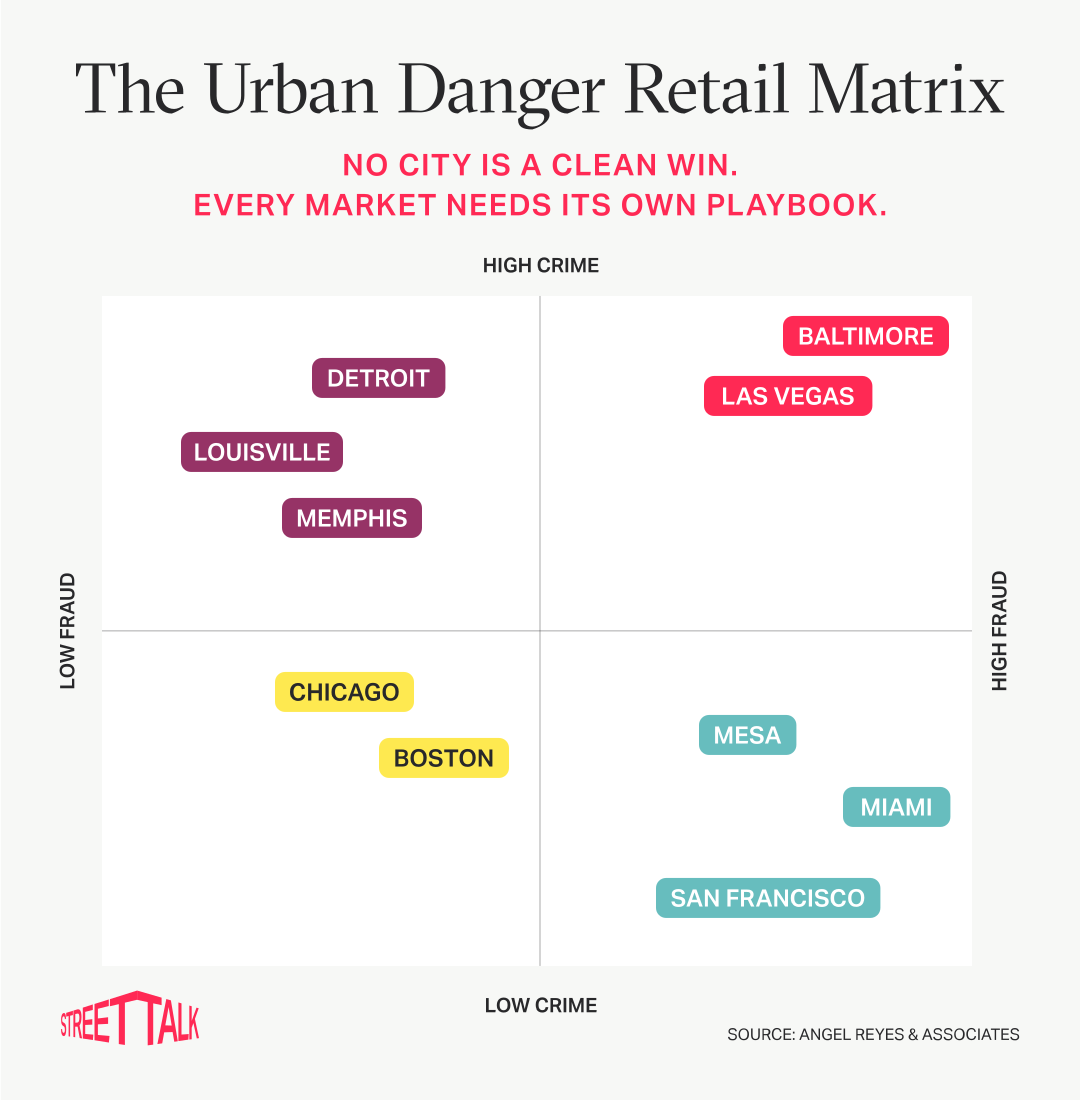
Conversely, the cities ranking at the bottom of the danger index signal the safest environments studied while presenting vastly different market dynamics. Miami, Florida, crowned the least dangerous city, alongside Mesa, Boston, San Francisco and Chicago, represents an environment where physical retail can theoretically thrive with lower security overhead.
Still, the data warns brands against complacency.
Despite Miami’s low violent crime rates, it ranked fifth for fraud complaints, while Mesa ranked second. In these markets, retailers must pivot their loss-prevention strategies away from physical security guards and toward sophisticated cybersecurity, point-of-sale fraud detection and digital identity verification.
Why Do National Retail Strategies Fail in Fragmented Urban Markets?
Even in lower-risk cities, unique hyper-local anxieties dictate consumer spending priorities. San Francisco’s low violent crime ranking is offset by its looming earthquake vulnerability, while Boston grapples with elevated hate crime data despite excellent property safety scores.
For brands, this means marketing and corporate social responsibility must be hyper-localized. In disaster-prone regions like San Francisco or ninth-place hurricane-threatened Baltimore, consumer spending cyclically spikes in hardware, home reinforcement and emergency preparedness goods.
Ultimately, the Angel Reyes & Associates report underscores that American consumers are managing a complex matrix of anxiety. In high-risk hubs such as Baltimore, Louisville and Memphis, the consumer wallet is weighed down by defensive spending — allocating more household income toward home security, personal safety and rising insurance premiums, which cannibalizes discretionary spending on fashion, entertainment and luxury goods. To survive and thrive in this fragmented landscape, retailers and brands must discard blanket national strategies and, instead, adopt a hyper-local approach that respects the safety realities of the modern urban consumer.
Methodology: the study ranked the most dangerous U.S. cities using a weighted scoring system based on four main categories: Violent Crime & Community Safety, Property Crime & Fraud Risk, Public Health & Transportation Safety, and Natural Disaster Risk. Each city received a total score based on the following metrics and weights.
The Street Talk newsletter delivers the sharpest fashion, beauty, and retail analysis every Thursday — straight from Arthur Zaczkiewicz, ex-Executive Editor at WWD. Subscribe today.