

Retail Real Estate
May 26 2026
U.S. retail vacancy rose to 5.9% in Q1 2026 after negative net absorption for the third straight year, but rents grew 2.3% as new construction covers less than 0.3% of existing inventory. For brands weighing physical store decisions, this is a market argument for moving sooner — available quality space won’t get easier to secure. The national retail real estate
Arthur Zaczkiewicz

U.S. retail vacancy rose to 5.9% in Q1 2026 after negative net absorption for the third straight year, but rents grew 2.3% as new construction covers less than 0.3% of existing inventory. For brands weighing physical store decisions, this is a market argument for moving sooner — available quality space won’t get easier to secure.
The national retail real estate market entered 2026 facing a first-quarter slowdown, marked by negative net absorption for the third consecutive year, according to the latest quarterly market analysis report from Cushman and Wakefield.
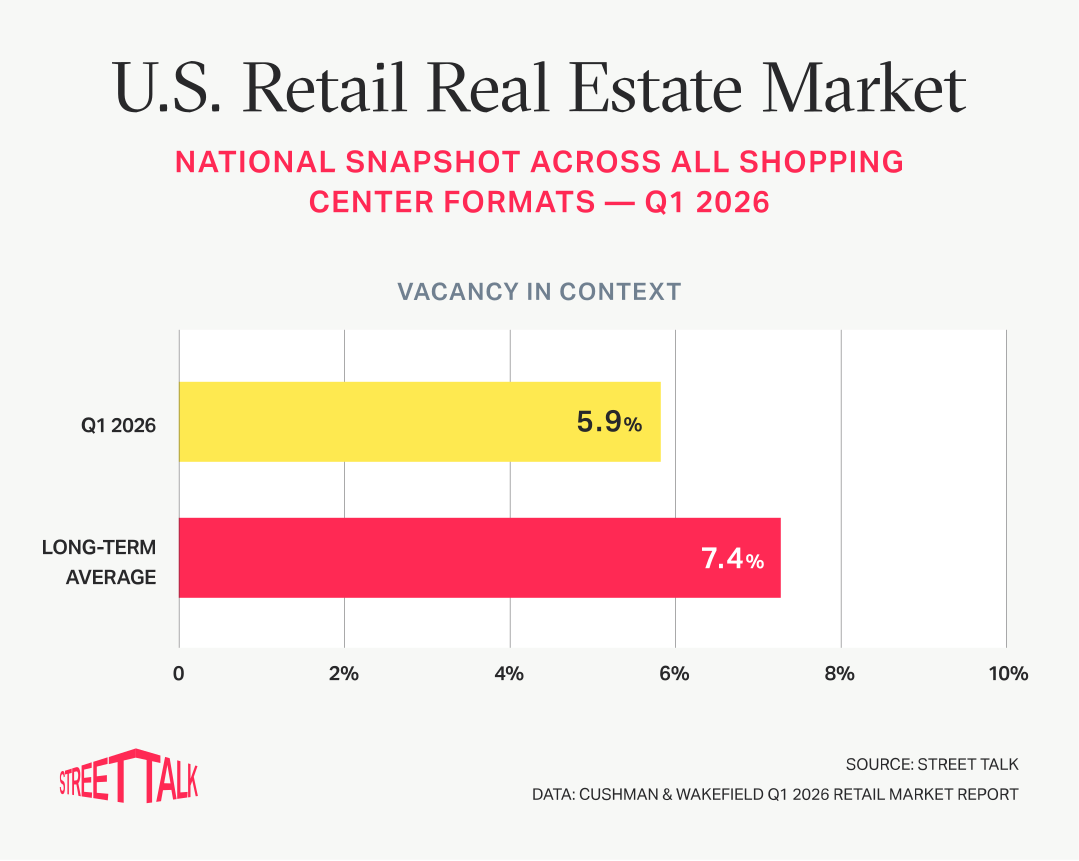
Researchers at the real estate company said the U.S. market gave back 4.6 million square feet across all shopping centers, reversing a positive gain from the final quarter of 2025. This contraction was heavily influenced by previously planned store closures and severe winter weather across multiple regions. Consequently, the national vacancy rate edged upward by 10 basis points to 5.9 percent, though it remains well below its long-term historical average of 7.4 percent.
Why Are Retail Asking Rents Still Rising Despite Higher Vacancy?
Despite the temporary softening in occupancy, structural supply constraints provided a firm floor for rental performance, authors of the report said. Asking rents grew 2.3 percent year-over-year to a national average of $25.48 per square foot. This pricing resilience is largely sustained by an incredibly tight construction environment, with only 2.1 million square feet delivered during the first quarter and an active pipeline representing less than 0.3 percent of total existing inventory.
Geographically, the data showed clear differences as market performance diverged significantly during the first three months of the year. The Midwest experienced the most pronounced softening, with a substantial vacancy increase of 0.3 percentage points as winter weather patterns disrupted regional commercial activity.
In contrast, select major metro areas in the South and West exhibited strong stability. Southern markets such as Miami and Raleigh-Durham maintained some of the lowest vacancy rates in the nation, while the West Coast saw notable economic traction and vacancy declines in San Francisco and San Jose.
What Are the Near-Term Risks for Retail Real Estate in 2026?
Looking ahead, consumer fundamentals remain relatively firm due to low unemployment and wage growth outpacing inflation. However, a complex array of macroeconomic headwinds is building, including a spike in energy costs following geopolitical tensions and a subsequent rise in distribution, food and travel expenses.
Real estate experts anticipate that near-term leasing activity will become highly bifurcated. Well-capitalized discount, grocery and health-oriented retail formats are positioned to drive demand and backfill vacancies, while broader discretionary retailers face more challenging near-term conditions.
Related article: How Urban Danger Metrics Are Redefining Retail Strategy and Consumer Spending
Street Talk podcast
Retail Real Estate episode: Who You Lease From Is a Brand Decision — Ward Kampf, Northwood Retail
Retail Real Estate episode: Experiential Retail is Key to Attracting Younger Consumers — Bruce Findlay, Landsec
The Street Talk newsletter delivers the sharpest fashion, beauty, and retail analysis every Thursday — straight from Arthur Zaczkiewicz, ex-Executive Editor at WWD. Subscribe today.