

artificial intelligence
May 26 2026
Gen Z graduates are rejecting AI because universities banned it for four years while employers now demand they embrace it — a rules-change that registers as institutional betrayal. For retail employers this creates a talent pipeline problem: how brands communicate AI adoption to an incoming workforce will determine whether Gen Z workers engage or opt out of the industry entirely.
Arthur Zaczkiewicz

Gen Z graduates are rejecting AI because universities banned it for four years while employers now demand they embrace it — a rules-change that registers as institutional betrayal. For retail employers this creates a talent pipeline problem: how brands communicate AI adoption to an incoming workforce will determine whether Gen Z workers engage or opt out of the industry entirely.
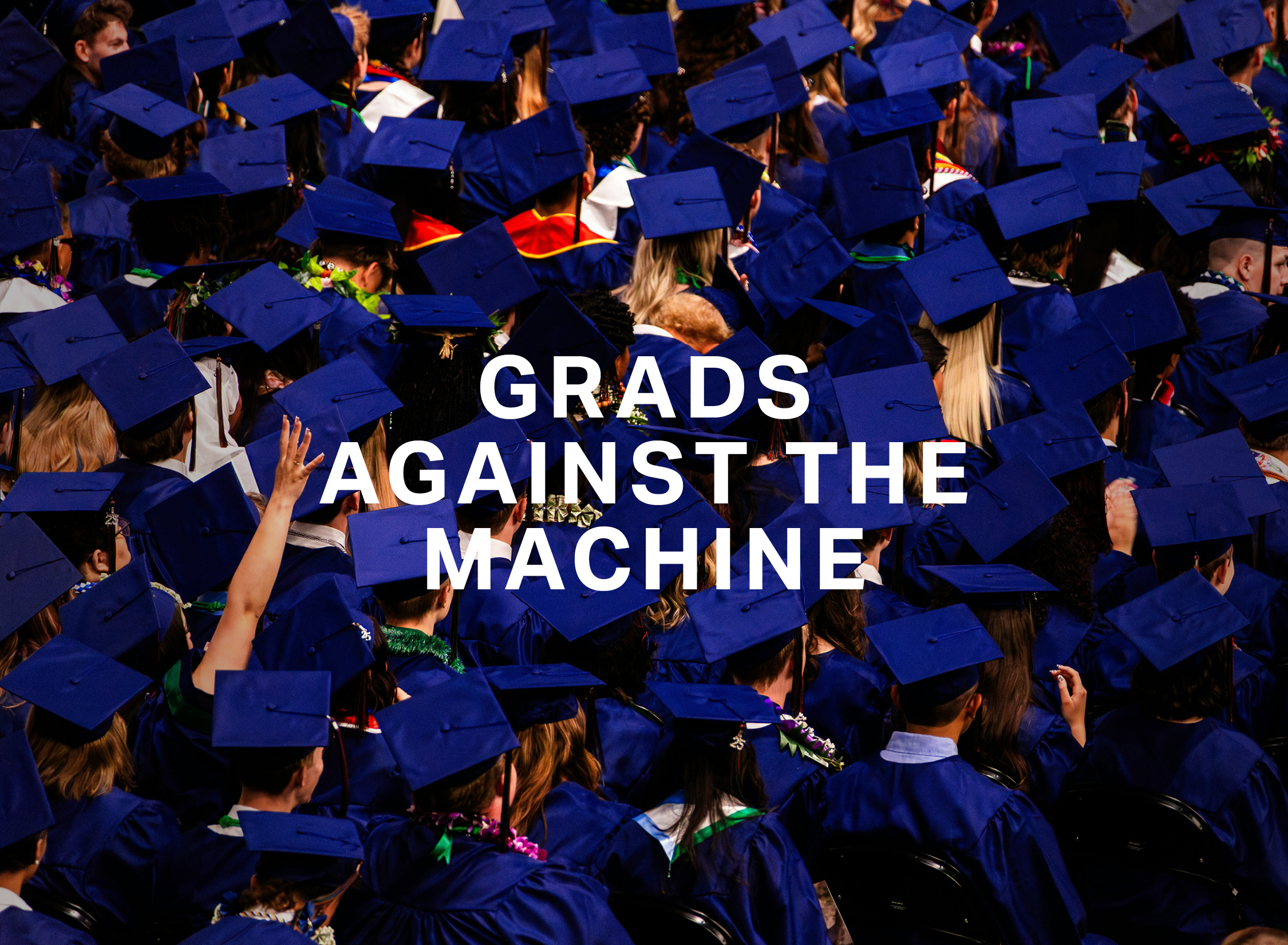
A generational rift has burst into the open at college graduation ceremonies across the U.S. this month. As corporate executives and tech titans took to podiums to deliver optimistic pep talks about the future, graduating students responded with a chorus of stadium-wide boos. It was brutal.
The source of their anger is artificial intelligence, a technology increasingly championed by university guests, but viewed with deep anxiety by the young adults entering the workforce.
What Happened When a Google CEO Addressed Gen Z Graduates?
The backlash unfolded prominently at the University of Arizona, where former Google chief executive officer Eric Schmidt addressed a crowd of roughly 10,000 graduates. When Schmidt began explaining how AI will touch every profession and relationship, the audience erupted into persistent jeers. Schmidt acknowledged the negative reaction from the stage, noting that he could hear the students and understood their fear that jobs are evaporating.
According to a report by The Guardian, Schmidt attempted to reassure the crowd by stating that the ultimate question is whether humans will shape the technology, but his remarks still left many graduates feeling alienated.
This friction stems from a stark disconnect between the reality of the college experience and the expectations of the modern job market. Throughout their academic careers, members of the graduating class have faced strict penalties for utilizing automated systems, as universities implemented strict bans on AI to protect academic integrity. Students expressed frustration that they were forbidden from touching these tools in the classroom, only to be told on graduation day that they must bow to an AI revolution.
Similar scenes played out at other colleges, revealing that the frustration is widespread. At the University of Central Florida, real estate development executive Gloria Caulfield was visibly surprised when her mention of AI as the next industrial revolution provoked a wave of booing. At Middle Tennessee State University, music executive Scott Borchetta told graduates that the technology is actively rewriting production and told them to deal with it, drawing immediate ire from the stadium.
Additionally, an article from The Associated Press highlighted a situation at Marquette University, where students went so far as to launch a petition against an artificial intelligence expert selected as their undergraduate speaker, later booing his message on stage.
How Widespread Is the Gen Z AI Backlash?
The hostility is grounded in economic anxiety. Polling from the Harvard Kennedy School Institute of Politics reveals that roughly 70% of college students view AI as a threat to their job prospects. Recent labor statistics indicate that the unemployment rate for young adults remains notably higher than the national average, making corporate lectures on automation feel entirely out of touch with the financial realities of debt-burdened graduates.
Compounding the problem, universities have begun integrating the technology into the graduation ceremonies themselves, often with disastrous results. At Glendale Community College in Arizona, administrators deployed an automated voice system to read off graduate names. The system malfunctioned, skipping students and mispronouncing names, which prompted immediate booing from the audience.
As detailed by Fast Company, the college president had to pause the event to apologize, telling the audience that it was a lesson learned for the administration.
For the graduates, commencement is supposed to be a celebration of human achievement, dedication, and years of hard work. By turning the spotlight onto automation, speakers transformed an inspirational milestone into a reminder of an uncertain automated future.
The vocal protests across campuses suggest that while the tech industry views AI as an inevitable triumph, the young professionals tasked with navigating its consequences are not ready to applaud it.
Related article: How Agentic AI is Rewiring the Global Retail Engine
Photo by Ethan Gowans