

Executive Leadership
August 11 2026
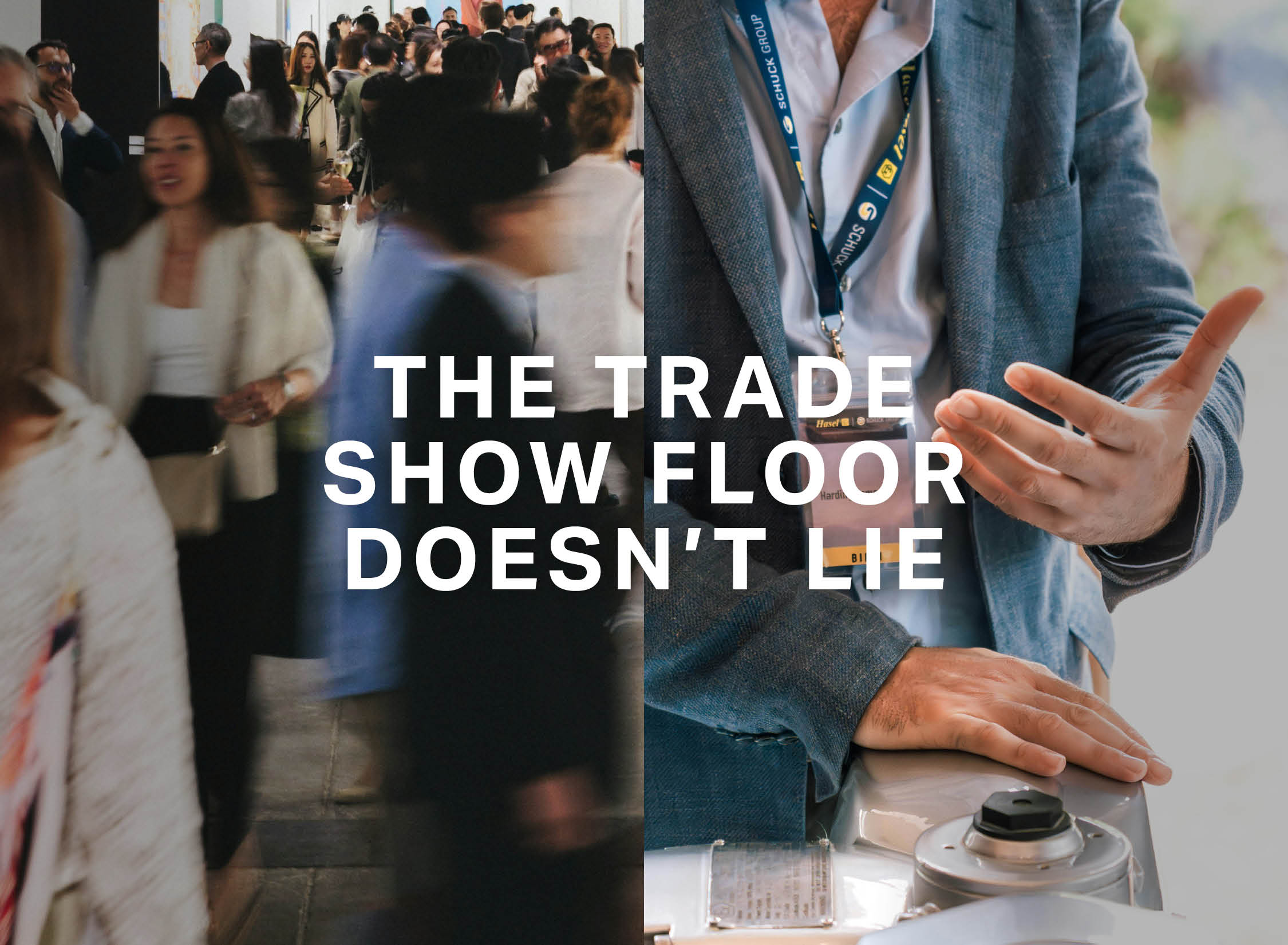
Retail and fashion executives should attend trade shows in person because it delivers faster, more current market insight than internal reporting, which is filtered and time-lagged. In-person attendance also signals commitment to partners and vendors, accelerating follow-through, and gives executives direct visibility into supply chain realities, competitor priorities, and emerging technologies before they surface in press releases. Attending retail and
Arthur Zaczkiewicz

Retail and fashion executives should attend trade shows in person because it delivers faster, more current market insight than internal reporting, which is filtered and time-lagged. In-person attendance also signals commitment to partners and vendors, accelerating follow-through, and gives executives direct visibility into supply chain realities, competitor priorities, and emerging technologies before they surface in press releases.
Attending retail and fashion apparel trade shows is often treated like an administrative chore — something to schedule around travel budgets, product launches and quarterly targets.
But for executives, those events can be far more than a networking stop or a booth-to-booth stroll. Done with intention, trade shows become a strategic advantage: they compress months of industry discovery into a few days, elevate decision quality and create a practical pipeline of ideas (and partnerships). Attending trade shows are create momentum that can be carried straight into the next planning cycle.
Why Does Trade Show Attendance Deliver Faster Market Insight?
In my opinion, the most immediate benefit is speed to insight. Retail and apparel move fast, and the “what’s changing” conversation rarely arrives neatly through email. Trade shows convene manufacturers, distributors, technology providers, logistics specialists, marketing platforms and brand builders all in one place, and all with a vested interest in showing what’s new and what’s next.
When executives attend, they can see the direction of the market in real time. This includes materials, design approaches, merchandising technologies, inventory strategies, sustainability claims, consumer engagement tools, fulfillment innovations and merchandising formats that actually work in the hands of professionals.
The value isn’t simply that information exists, it’s that the information is current and connected to the people building it.
How Do Trade Shows Widen an Executive’s Perspective?
This matters because executive decisions are often constrained by partial perspectives. Leaders are excellent at integrating data, but data has a lag, and reporting tends to arrive filtered through internal priorities. Trade shows widen the lens.
An executive who walks the floor can compare multiple perspectives side-by-side and see what suppliers say they’re investing in, what retailers are asking for, and which technologies are being adopted for measurable outcomes.
That exposure improves the quality of executive thinking, not by adding noise, but by grounding priorities in what the industry is actively doing rather than what it used to do.
There is also a benefit that’s easy to undervalue: influence. Trade shows are where relationships become reputations. In retail and apparel, credibility is built through a series of small interactions; a shared language about lead times, quality standards, packaging expectations, seasonal forecasting realities and the unglamorous details that determine whether a collaboration survives after the honeymoon phase.
When executives attend, they signal commitment. They don’t just evaluate vendors, they listen with authority and communicate direction. That changes how partners perceive an opportunity, and it often results in faster follow-through once you return to headquarters.
How Does In-Person Attendance Build Executive Influence?
Executives also gain a sharper understanding of supply chain and operational feasibility. Retail is not merely a marketing machine. It is a choreography of sourcing, production, compliance, distribution and returns. Many challenges in apparel are predictable but not visible until you ask the right questions of the right people. Trade shows give executives direct access to operational truth.
This includes how lead times are behaving, what bottlenecks are developing, how new materials perform at scale, what packaging changes affect handling and what sustainability strategies hold up under real requirements. This reduces the risk of committing to initiatives that sound good in concept but struggle in execution. It also helps executives anticipate where costs and timelines are likely to shift, enabling proactive planning rather than reactive firefighting.
What Do Trade Shows Reveal About Operational Feasibility?
Then there is the benefit of competitive awareness that doesn’t require guesswork.
Executives can learn what competitors are prioritizing without waiting for press releases or industry rumors. Trade shows reveal where energy is being invested, whether that is in new product categories, in alternative sourcing or in omnichannel capabilities. Seeing these moves firsthand helps executives avoid the trap of building strategies based on outdated assumptions.
How Can Executives Track Competitor Moves Without Guesswork?
Trade shows can also strengthen executive alignment across functions. When leadership attends together or debriefs afterward, it creates a shared reference point that’s hard to replicate through internal presentations.
Finally, executives should attend because trade shows are, at their best, a form of leadership. You cannot delegate your way out of understanding the market’s trajectory. It’s not about pretending you can master every detail on the floor. It’s about demonstrating that you care enough to engage directly with the people and products shaping your customers’ experience. When executives show up, they attract the right conversations. People return calls. Partners take meetings. Vendors prioritize your follow-ups. And internally, the organization understands that leadership is not merely informed — it is involved.
Related article: The Circularity Gap: Why Fashion Keeps Falling Short on Its Own Promises
Street Talk is the weekly newsletter for retail and fashion executives who want analysis, not noise. New issues every Thursday. Subscribe today.