


Retail
September 15 2026
The global resale market exceeds $220 billion and is growing at 11% annually toward a $340 billion projection by 2030. The driver is economic pressure, not lifestyle preference — when consumer sentiment falls to 47.8, secondhand becomes necessity. Goodwill hit $7 billion in 2025 revenue. Off-price retail now faces a structural squeeze: competing with resale below while losing department store
By Guest Writer: Antony Karabus

The global resale market exceeds $220 billion and is growing at 11% annually toward a $340 billion projection by 2030. The driver is economic pressure, not lifestyle preference — when consumer sentiment falls to 47.8, secondhand becomes necessity. Goodwill hit $7 billion in 2025 revenue. Off-price retail now faces a structural squeeze: competing with resale below while losing department store surplus above.
The retail landscape is shifting beneath our feet. This transformation isn’t merely about where consumers shop — it’s a fundamental overhaul of how they value goods, who they buy them from and why they are drawn to the hunt.
In this retail landscape, a new breed of treasure hunter has emerged. Armed with patience and a sharp eye, these consumers scour thrift stores and peer-to-peer platforms and consignment sites like ThredUp, eBay, Grailed, Poshmark, Depop, Vinted and Etsy, turning the act of snapping up underpriced gems into both a lifestyle and a lucrative side hustle. These sites are buttressed by authentication platforms for luxury goods such as the Vestiaire Collective, Fashionphile and The RealReal.
Reselling has evolved from a niche hobby into a mainstream economic engine. This surge isn’t just about thrift; it is fueled by the thrill of discovery, environmental consciousness and the rapid collapse of the stigma surrounding secondhand goods. The younger generation has embraced vintage and resale with open arms, driven by both sustainability and the simple joy of scoring a deal. The notion that previously worn items are somehow lesser has vanished.
How Big Is the Thrift and Resale Sector, And Who Leads It?
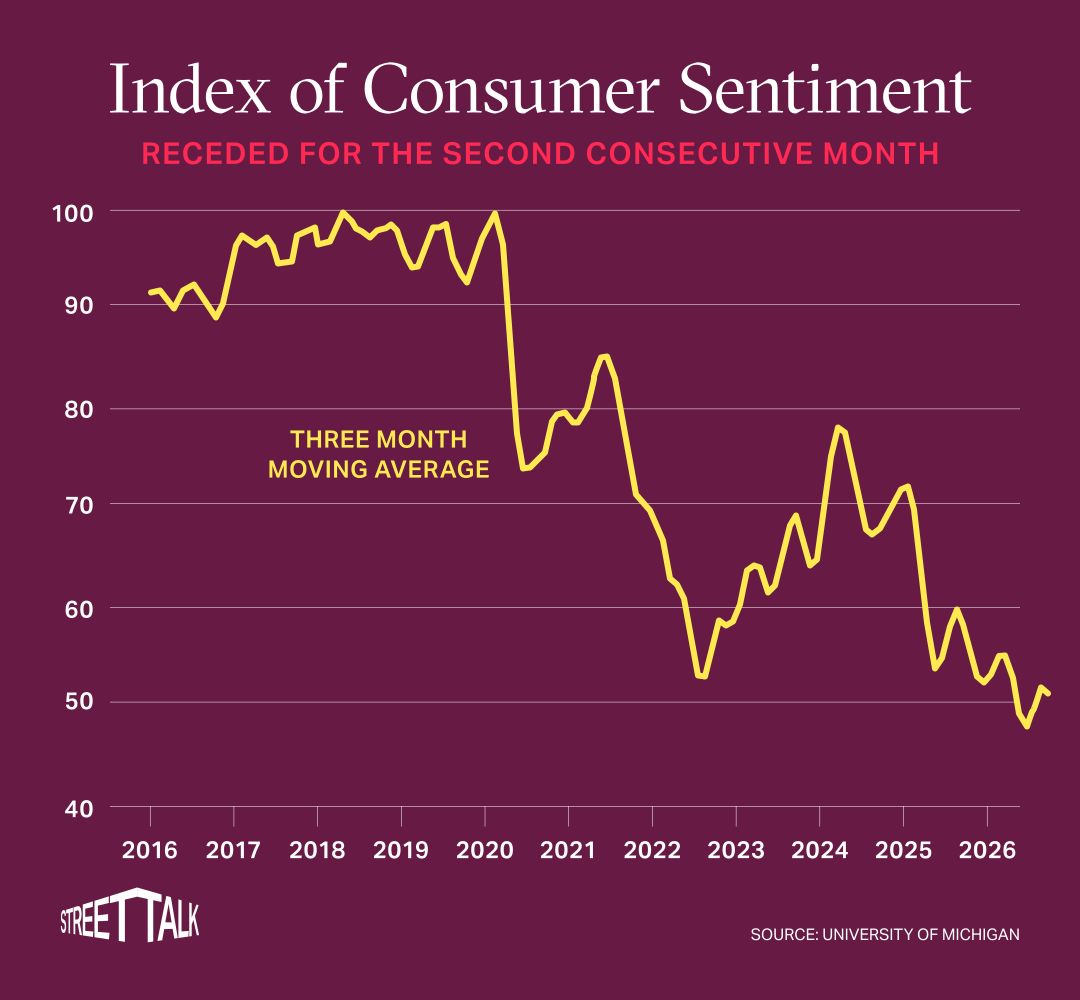
But this shift isn’t just cultural. It’s economic. The consumer is in deep trouble, even if no one wants to admit it. The consumer sentiment index from the University of Michigan dropped to 47.8 in September 2026, which marks a 7.5% decrease from August. It is down for the second month in a row. Meanwhile, wealth has concentrated at the top, leaving many unable to afford even the off-price options they once relied on. When inflation accounts for 40% or more of nominal retail growth, as some analysts argue, the picture becomes clearer: a large percent of consumers other than the well-off are stretching their dollars further, and that means turning to resale shops such as Savers Value Village, Goodwill and Value Village. These aren’t just alternatives; they’re becoming necessities and the numbers prove it.
Savers Value Village, Goodwill and Value Village (which operates under the Savers umbrella in many regions) represent the leading forces in North America’s thrift and secondhand retail market. Savers Value Village, the largest for-profit thrift operator in the U.S. and Canada, reported annual sales of approximately $1.68 billion for its most recent fiscal year. The retailer currently operates 375 stores across the U.S., Canada and Australia under various banners, including Savers, Value Village and Unique.
The company continues to expand, with plans to open about 25 new stores this year, capitalizing on growing consumer demand for value and sustainability.
Goodwill Industries, a nonprofit, stands as the sector’s largest player by revenue and store count, with over 3,200 independent retail thrift stores in the U.S. and Canada. In 2025, Goodwill achieved record revenue of $7 billion, driven by strong in-store performance and a thriving online marketplace, ShopGoodwill.com, which generated $450 million in gross merchandise value. Goodwill plans to open 100 new stores this year, further solidifying its market leadership and mission-driven approach.
Meanwhile, the broader global resale market, valued at over $220 billion, is compounding at more than 11% annually and is projected to clear $340 billion by 2030.
Is The Resale Surge About Sustainability, Or About Consumers Running Out of Options?
This meteoric rise of thrift is putting pressure on traditional off-price retailers, who also face a looming structural crisis. Historically, off-price chains fed on massive department store liquidations and corporate inventory miscalculations. But that well is running dry. The era of sweeping department store closures has largely played out; the bulk of the footprint reduction is already behind us.
The off-price retailers are benefiting from the same consumer trends. But they face a double challenge. First, they’re increasingly competing with each other in a more crowded space. Second, they’re up against the rise of AI, which promises to sharpen forecasting, inventory management and allocation with unprecedented precision.
Yet, as department stores continue to shrink their footprints — Macy’s closing 150 locations, for example — the supply of excess inventory that once fed off-price channels is diminishing. The result? Off-price chains may soon rely more on “special make-up” from vendors, which are items designed specifically for them but with fewer embellishments, cheaper zippers and potentially lower-quality materials.
How Does Europe’s Unsold Goods Ban Reshape Global Resale Supply?
The single wild card that could offset this shortage is Europe. In July 2026, the European Union implemented a landmark ban prohibiting large companies from destroying unsold apparel, accessories and footwear. This legislation forces brands to redirect surplus inventory into the global circular economy rather than discarding it, potentially unleashing a massive new wave of high-quality supply into the off-price ecosystem.
Retail is bifurcating into extremes. Luxury dominant at the top, thrift and value expanding at the bottom, and traditional off-price caught in the middle, pinched by supply constraints and forced into product compromises.
As the middle market contracts, the ultimate question isn’t just where we will shop next, but what level of quality we will be forced to sacrifice to get there.
Read more from Antony Karabus
Related Article: How a K-Shaped Economy Is Fueling an Off-Price Boom
The Street Talk newsletter delivers the sharpest fashion, beauty, and retail analysis every Thursday — straight from Arthur Zaczkiewicz, former Executive Editor at WWD. Subscribe today.